
The black robin (karure) has won Forest & Bird’s Bird of the Year competition. It’s an extraordinary comeback story. In 1980, just five birds survived, including a single breeding pair. All of today’s black robins descend from that last breeding female, Old Blue, whose offspring helped rescue the species from extinction.
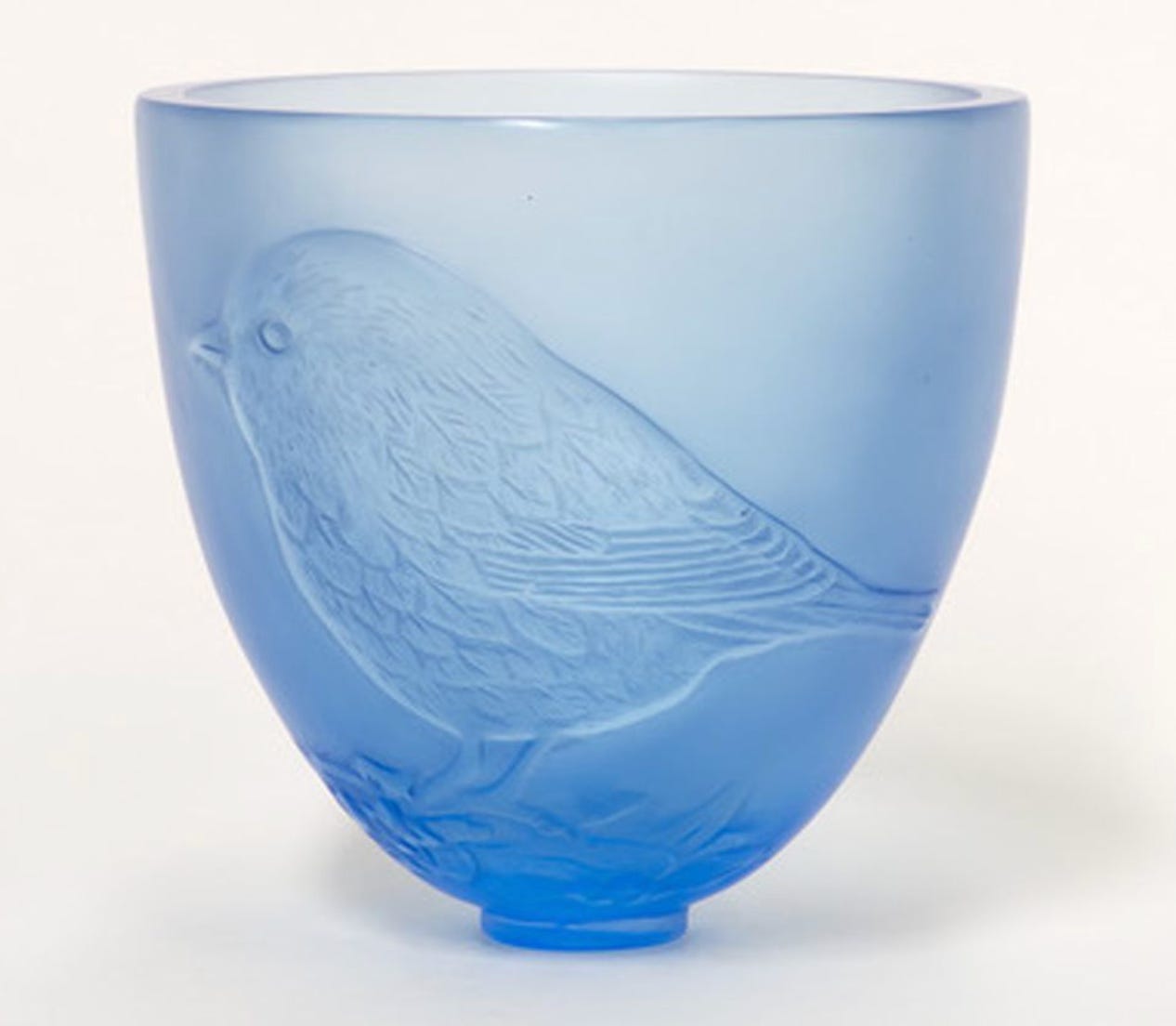
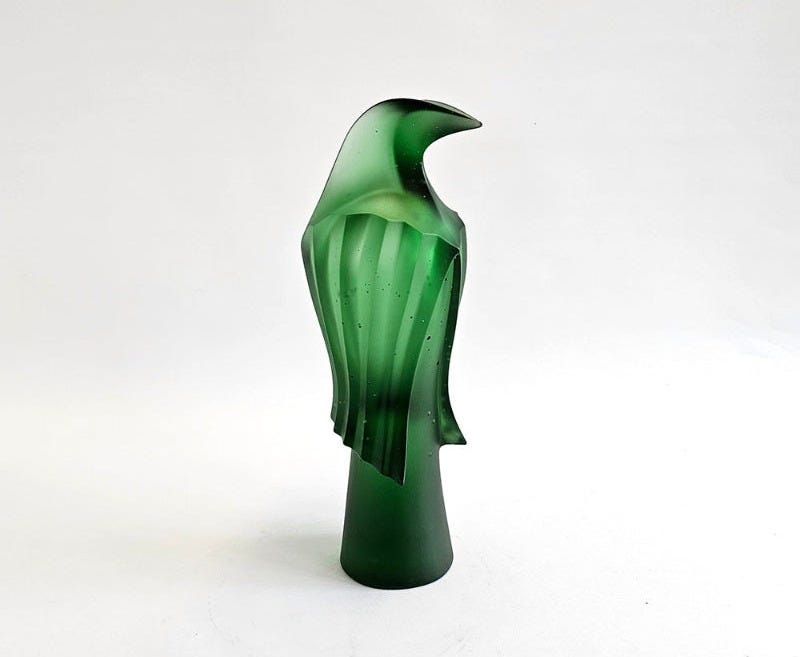
I went looking for artworks depicting the bird and found surprisingly few. My favourite among them is Layla Walter’s Black Robin, a small cast-glass vessel that gives this unassuming bird a rather lovely home.
That search led to a broader question of where to look to find our native birds amongst artworks. On the one hand, there are plenty of possibilities, including paintings, photographs, and sculptures. On the other hand, the market is quite consolidated around just a few artists who have made birds central to their practices.
The Underbidder is an independent newsletter providing art market and collecting insights across Australia and New Zealand. Click the button below to become a free subscriber and receive weekly updates including my regular Collector Guides series.
The artists and their birds
For several established New Zealand artists, native birds have been a recurring subject throughout their careers.
Don Binney is an obvious place to start, although his major paintings require a substantial budget. Heron’s Departure, New Spring, Te Henga sold for approximately $1.1 million at Art & Object. His kingfisher in Swoop of the Kotare fetched about $855,000 at International Art Centre.
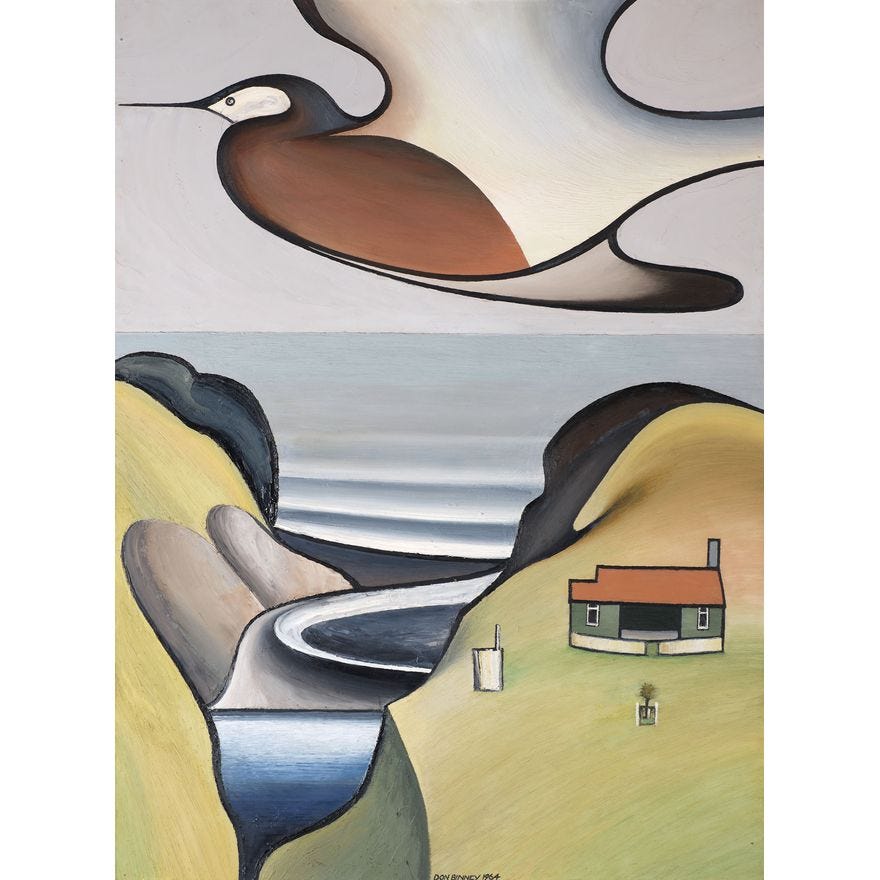
Much of the appeal lies in how Binney brings the bird and landscape together, reduced to “strong graphic elements, bold lines, and areas of colour.”1 His birds occupy a commanding share of the picture, above his distinctive hard-edged landscapes. Binney was prolific in painting a wide range of birds including, kingfishers (kōtare), wood pigeons (kererū) and the shining cuckoo (pīpīwharauroa).
For a different encounter with native birds, Fiona Pardington is especially relevant this year. Her Venice Biennale presentation, Taharaki Skyside, centres on photographs of birds preserved in museum collections. Her photographs show the preserved birds in remarkable detail, down to individual feathers and the curve of a beak.
While the huia has featured most strongly in her practice, Pardington’s top auction result belongs to the kea, with her diptych Davis Kea Wings (Above) selling for approximately $133,000. With more patience, you can find a Pardington native bird work for between $10,000 and $20,000 at auction.

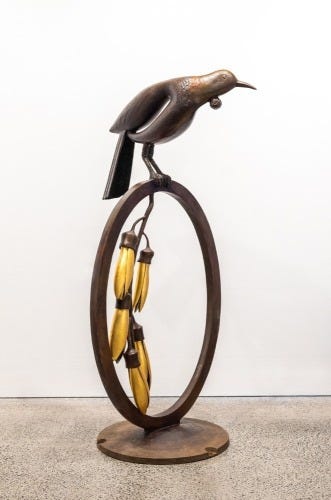
The huia also appears repeatedly in Paul Dibble’s sculpture. His bronze Huia Above, from Ron Sang’s collection, sold for approximately $256,000. His works frequently appear at auction. But be prepared as even a more modest Dibble work of a huia is likely to set you back at least $30,000.
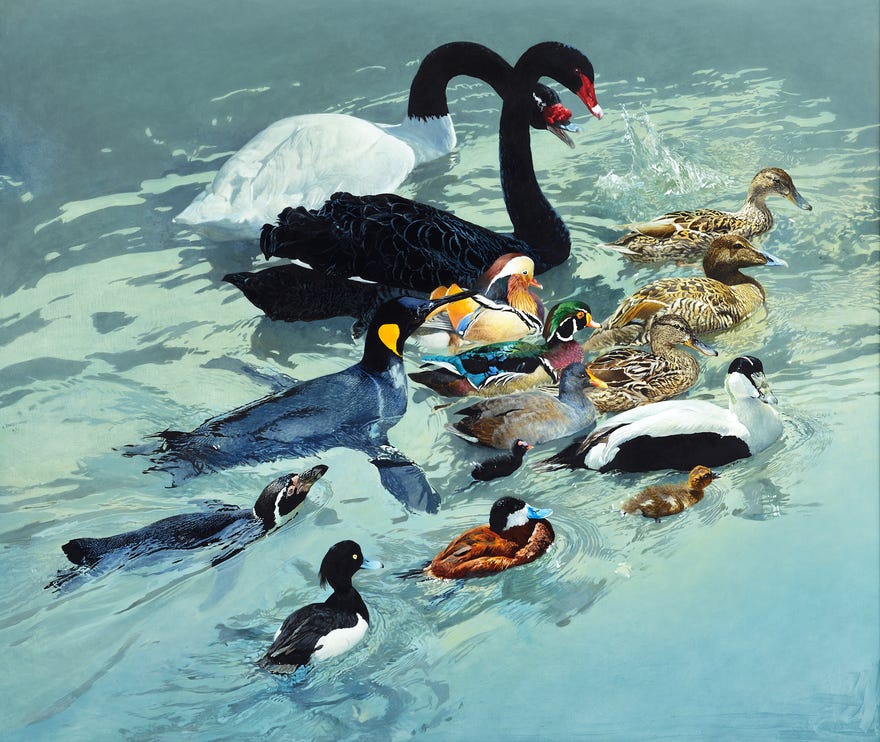
Raymond Ching is known for his detailed, realistic paintings of birds, including kingfisher (kōtare), kea and kiwi. I particularly like his works that bring different species together, like an avian version of Noah’s ark or an artist’s rendering of The Conference of the Birds. His subjects also extend well beyond New Zealand, including his illustrations for The Reader’s Digest Book of British Birds, published in 1969.
Although probably not names familiar to most, Layla Walter and Mike Crawford have both incorporated native birds into their glass practices extensively and are worth exploring. At Masterworks Gallery, Crawford’s bird works are listed at prices around $10,000 – $20,000, while Walter has works priced starting at $2,750, though many are priced above $10,000.
There are other artists to explore as well, though native birds have not been as central to their practices. Robin White’s screenprint, White Oystercatcher and Harbour Cone, frequently appears at auction. Shane Cotton has often included native birds in his works, while a kingfisher appears prominently in Michael Smither’s Sea Wall and Kingfisher. Bill Hammond is known for his half bird, half man creatures. While these don’t directly depict our native birds, they were inspired by them, including the yellow eyed penguin (hoiho) and the extinct Haast eagle (hokioi).
Birds on a Budget
Many of the artists and works mentioned above require a substantial budget. But for collectors who would like to bring home a native bird, there are other options worth exploring at more modest prices.
There are still Don Binney prints available for under $10,000. His estate has partnered with Gow Langsford to release a limited edition print of New Summer Te Henga I at $5,500, featuring a shining cuckoo (pīpīwharauroa) and a fernbird (kōtātā). There is also the Motutapu Takahe print which can be found at auction for around $3,000.2
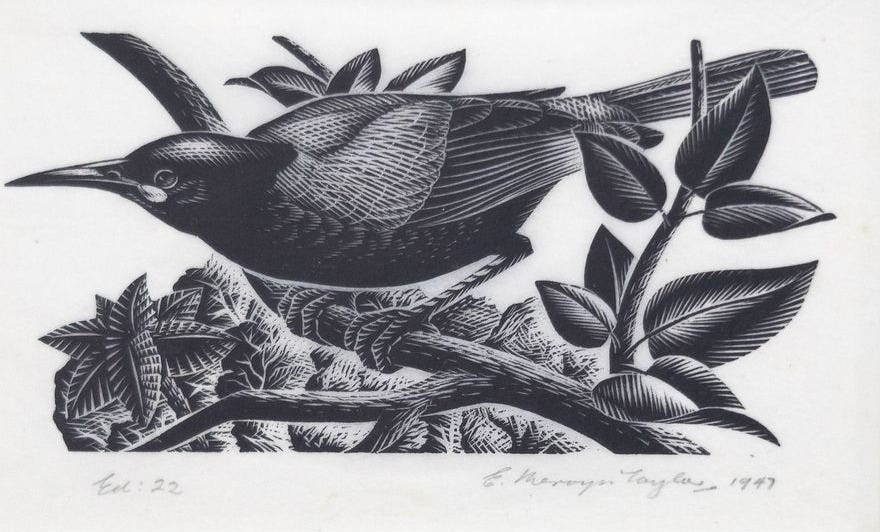
Mervyn Taylor was a notable New Zealand engraver, commercial artist, and publisher, who is worth exploring. His small, finely detailed studies include native birds such as fantails (pīwakawaka) and morepork (ruru). As a broad guide, signed limited editions can be found for around $1,000 to $2,500, while plates from his books sell for anywhere between $100 to $1,000.
At a lower price, Fishmob has a dedicated collection of bird prints, with many under $100 depending on size. Frank Gordon’s compositions are one option, his Blossoming Birds of Aotearoa combines native birds with a blossom-filled background for a substantial burst of colour.
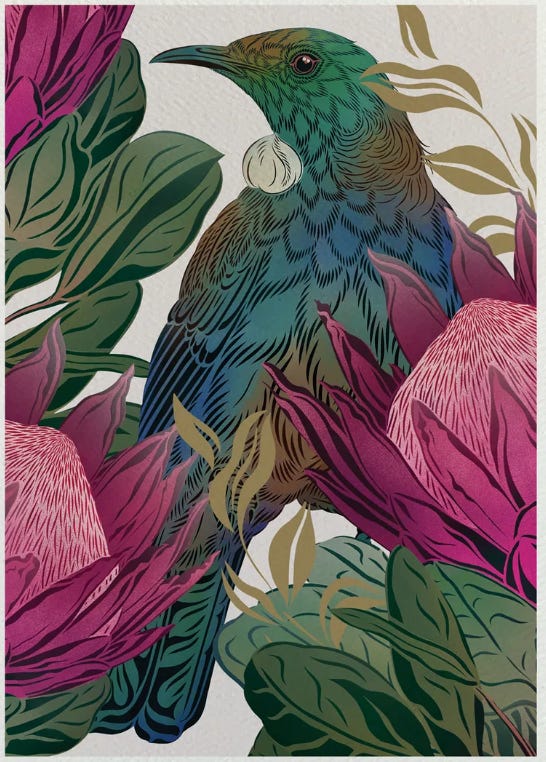
I’ve been impressed by the commercial practice that Flox has built around her work. Native birds among brightly coloured foliage are a recurring theme, offered across a wide range of formats and price points. At the more affordable end, take a look at her paper works, starting at $60, including tūī, kōkako and morepork (ruru).
The Elusive Kiwi
After looking through all these birds, the one I expected to encounter more often was the kiwi. Huia and tui feature strongly, alongside fantails (pīwakawaka), kingfishers (kōtare) and shining cuckoos (pīpīwharauroa). But given the kiwi’s place in our national identity, it appeared less frequently than I anticipated.
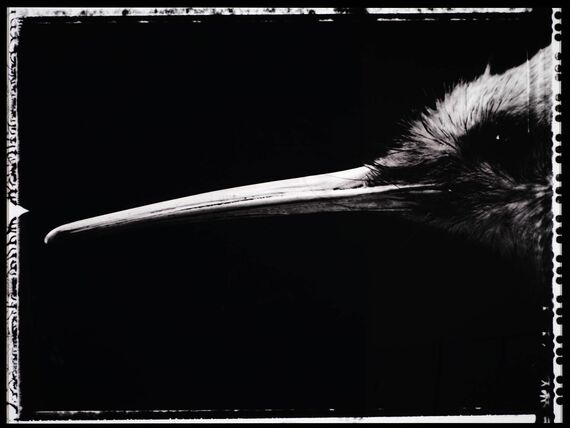
There are examples in Pardington’s photographs, Ching’s paintings and Dibble’s sculptures. But I have yet to see a kiwi in Binney’s works3 and Pardington chose not to include the kiwi in her Venice Biennale show.
Perhaps the most enjoyable way to approach this subject is to start with a favourite bird and see where it takes you. Mine began with a black robin and led to a glass vessel. A search for a huia, tūī or kererū could take you through several very different kinds of art before you find the one you want to live with.

Two other notable Don Binney prints, Grackle and the Pacific Frigate Bird, frequently sell under $10,000 but they are not native birds.
Gregory O’Brien’s book, Don Binney: Flight Path, records that Binney’s surviving childhood exercise books from the 1940s are filled with drawings of “storks, ostriches, kiwi and weka.”