
Gordon Walters is best known for his koru paintings, these have become icons of modern New Zealand artwork. His paintings are also amongst the most expensive artworks to sell in New Zealand. Yet his screenprints can offer collectors a surprisingly affordable entry point.
Walters produced around 13 screenprints during his lifetime (I call these the “Legacy Prints”). After his death, the Walter Estate has continued to release limited edition prints of his famous works (“Estate Prints”).
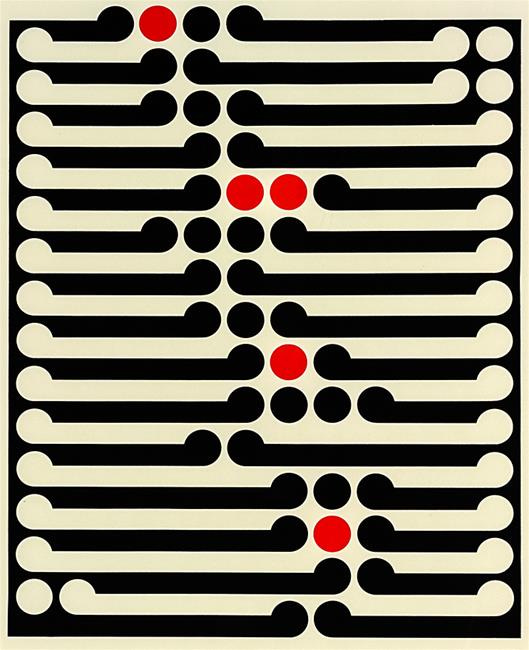
You can view all the Legacy Prints and his other works on the Walters Estate website. It’s fascinating browsing, giving a good overview of all his work, and a reminder that his practice extended well beyond the koru forms that came to define him.
Today, I’m focusing on the Legacy Prints and Estate Prints, with a short look at his works on paper. And you’ll find my buying recommendations at the bottom.
In the 2020s, almost 80% of Walters’ works coming to auction have been prints, up from roughly 50% in the 2010s (and even lower at the start of that decade). Two factors explain the shift. First, the Estate Prints that started being released in 2016, bringing fresh material to market. Second, there’s been a rise in posters and photos (classified here as “Other Prints”), such as Tama, a 2005 poster for Artspace.
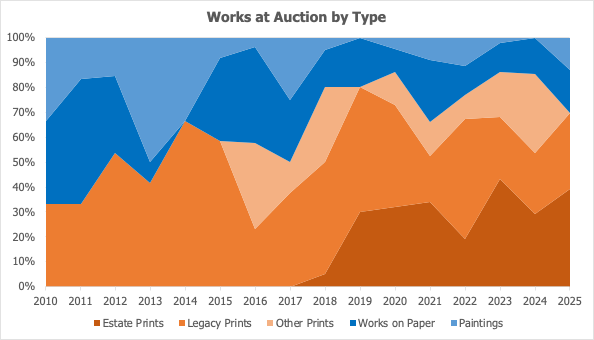
Paintings are excluded for now, as the lack of sales makes it more challenging to provide useful insights, though they remain among the most valuable artworks ever sold in New Zealand.
Legacy Screenprints: Resilience Beneath the Noise
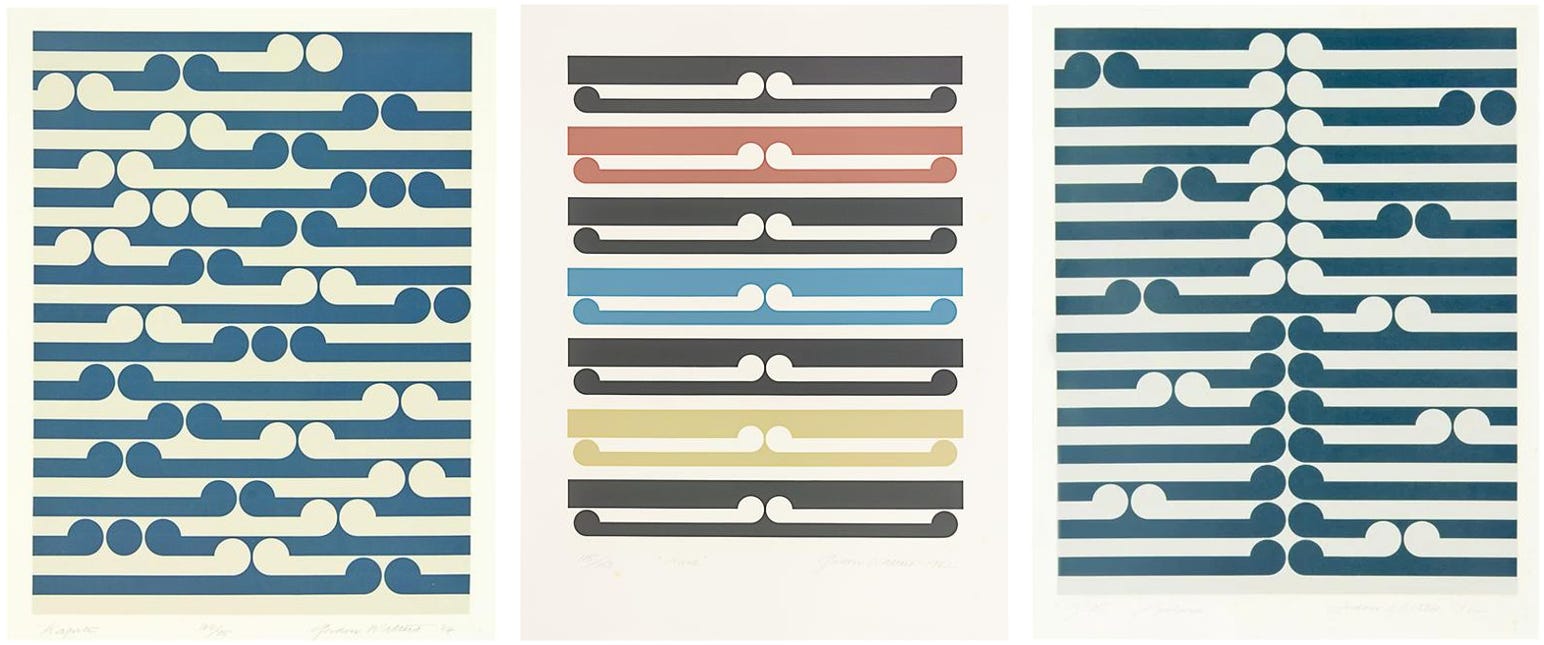
I’ve selected seven of Walters’ Legacy Prints with the most sales: Tawa (1968), Amoka (1972), Then (1980), Kura (1982), Arahura (1982), Tamaki (1983), and Kapiti (1984). Edition sizes range from 25 for Amoka through to 150 for Kura, with Tawa an open edition from the Barry Lett prints.
Some observations on general price trends:
Most of these Legacy Prints hit highs in 2022, which is interesting because this came a year later than the highs for the Estate Prints, those were already falling in price in 2022. Prices have cooled from the 2022 highs but also look to have now mostly stabilised.
Edition size appears not to drive price: Kura, with the largest edition size of 150, achieved some of the highest prices.
There was wide price dispersion in 2022, often 2x between low and high sales in the same year. For example, Arahura sold both at $42,423 and $14,340, and Tamaki sold both at $35,850 and $17,925 (both works had additional sales somewhere inbetween these extremes). Similar price dispersion also occured with Then, Tawa, and Kura.
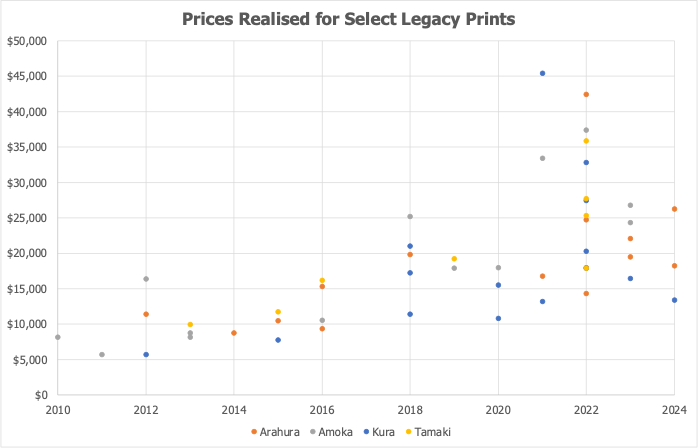
The most interesting insight though, is that when excluding 2021 and 2022 sales figures (and acknowledging a 2018 spike), the Legacy Prints have mostly held up or increased in value. We’ll see a different outcome when we look at the Estate Prints.
Grown: Amoka - 2023 average sales above pre-2021 prices; Arahura - second highest price achieved in 2024 and averaging above pre-2021 prices; Kapiti - record price achieved in 2024 and above pre 2021 prices;
Mixed: Tawa - Barry Lett print, higher than pre-2020 prices; Then - achieved high prices in 2018, has continued downwards throughout 2023 - 2025; Kura - prices in 2023 and 2024 have been similar to 2018 - 2021 prices (with an exception of an outlier in 2021), but has had a low sell through rate in 2023 and 2024); Tamaki - no sales since 2022.
Estate Screenprints: A Bubble and a Correction
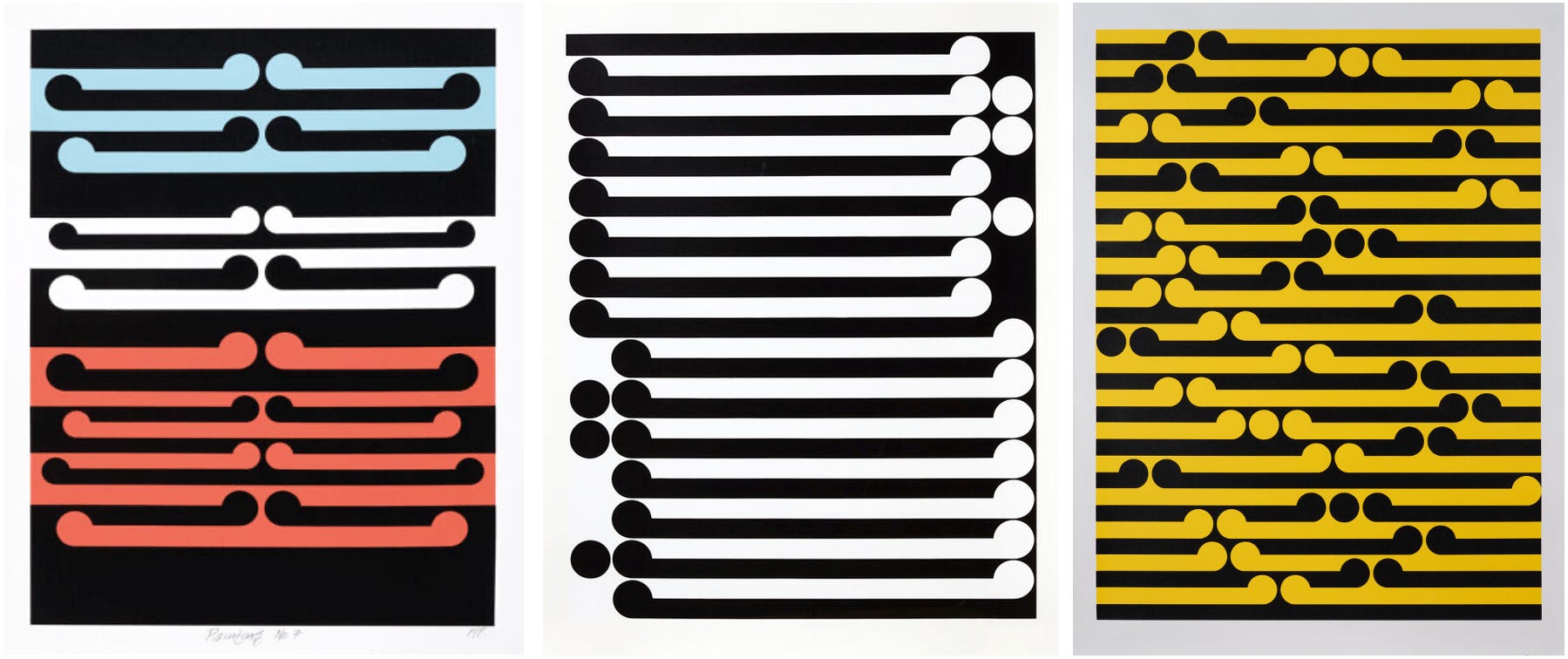
The Walters Estate began releasing prints in 2016, revisiting his most famous works, each is in a limited edition of 100: Painting No. 7 (2016); Untitled, 1978 (2018); Genealogy III, 1971 (2020); Tahi, 1969 (2021); Tiki II, 1966 (2022); Genealogy 5, 1971 (2023); and Tautahi, 1970 (2024). In 2023 there was also a very small print released, Te Whiti, 1964 (2023), measuring just 26cm x 19cm.
Looking at auction data for the editions from 2016 to 2022:
Prices peaked across all editions in 2021 (except Tiki II which hadn’t been released). Prices then fell through 2022 and 2023, before stabilising in 2024 and 2025. Prices have now settled around $5,000 to $8,500.
Similar to the Legacy Prints, the highest price achieved was often double the lowest in the peak year of 2021. For example, Tahi, 1969 (2021) sold for both $24,625 and $11,950, remarkable for a print released only months earlier.
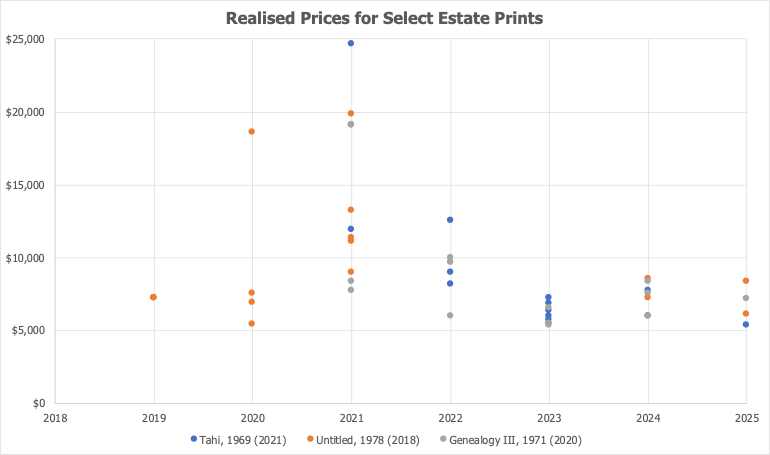
It’s astonishing to think that three of these prints, which fetched around $20,000 at their 2021 peak, now can trade for less than a third of that. The scale of the decline is best shown by these examples (also depicted in the graph above):
Untitled, 1978 (2018): Peaked at $19,820 in 2021 but then sold for just $6,093 in 2025. A 69% drop in price.
Genealogy III, 1971 (2020): Peaked at $19,120 in 2021 but then sold for just $5,975 in 2024. Another 69% drop in price.
Tahi, 1969 (2021): Peaked at $24,625 in 2021 but then sold for for just $5,377 in 2025. A significant drop of 78% in price.
The other two recent prints, Painting No. 7 (2016) and Tiki II, 1966 (2022), didn’t reach the same peak in prices, but have seen similar falls in value.
Unlike the Legacy Prints, we can’t easily make a comparison with pre-pandemic prices as only Painting No. 7 (2016) and Untitled, 1978 (2018) were released. The limited sales data shows recent prices averaging on par or below the pre-2021 prices.
It’s an cautionary example of how enthusiasm can inflate prices and then correct rapidly. Art is not a guaranteed investment.
Works on Paper: Steady but Flat
On average, 3 - 5 works on paper sell at auction each year, occasionally hitting double digits in 2018 and 2021. However, prices have remained remarkably flat since 2010. Unlike the Legacy Prints, which show steady long-term growth, these works show little price appreciation.
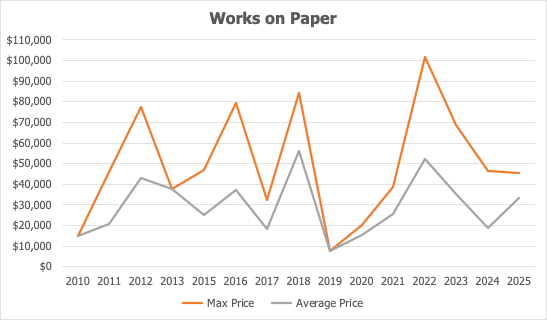
In addition to flat performance, sell-through rates have slipped slightly, consistent with the broader Walters print market.
Conclusions & Buying Recommendations
We’ve looked before at the overall art market peak of 2021–22, but those were broad averages. When you zoom in on individual works, the scale of the surge becomes clear, with prices in some cases quadrupled.
It feels like prices are now stabilising overall. Though there are still records being set… in both high and low directions, so caution and expertise is still needed. Below are my buying recommendations.
Legacy Screenprints: The highest quality prints, such as Amoka, Arahura, and Kapiti have held their value and remain the “blue-chips” of the Walters print market. These are the prints I would choose to own, and are probably good value for around $20,000. Other prints such as Then and Tawa have not held up as well, but also haven’t seen the extreme devaluations of the Estate Screenprints. They could be good buying opportunities now with potential upside and offer a more affordable entry point around $5,000 - $6,000.
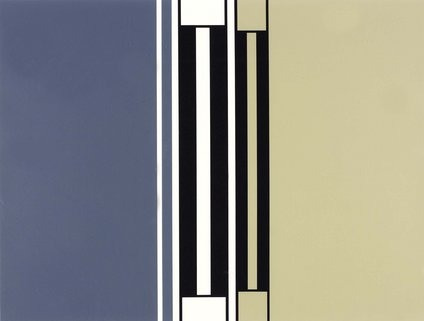
Estate Screenprints: These newer prints showcase Walters’ most famous koru forms. At $5,000 - $6,000 they may now represent good value (though at that price point, I would choose Then or Tawa). Have they reached their bottom? Probably. But with some selling below $5,000, it suggests there is lingering softness. Collectors can also go direct to Starkwhite to get the latest print, Tautahi, 1970 (2024), for $5,550.
Works on Paper: This category shows no clear price growth with increasing softness in sell-through rates. There are some fantastic Walters’ works on paper, but I think it’s too hard to judge fair value. I would happily own one of Walters’ koru works, but that’s probably going to be a $40,000 purchase for something the size of an A4 piece of paper.
Like much of the New Zealand market, Walters’ prices have normalised after the pandemic surge. The correction has created room for genuine collectors to re-enter, and for prices to rebuild on steadier ground. Of all his works, the Legacy Prints stand out as the most enduring and they’d be my pick for anyone looking to own a piece of Walters at his best.