
A few weeks ago I wrote about the masterpieces hiding in New Zealand’s universities. This time, I want to test whether AI could make a judgment on the value of those works.
I’ve selected 10 of those works and imagined they are coming up for auction. I set my own estimates first, before asking ChatGPT, and kept my estimates to myself so they wouldn’t influence its assessment. I then gave it access to my database of auction results and asked it to research each work online.
The works I’ve selected are all by artists with meaningful auction history and substantial published commentary. That gives both ChatGPT and myself meaningful inputs to work with. But there are multiple factors to consider, such as which sales are genuinely comparable, how exceptional an artwork is compared to others by that same artist, and how far a buyer might stretch to acquire it. These are subjective decisions that shape the challenge for both ChatGPT and myself in landing on an estimate.
I’ve deliberately kept my assessments short because I think people will be more interested in reading’s ChatGPT analysis of these art works.
Read on to see how we did and if you agree…
The Underbidder is an independent newsletter providing art market and collecting insights across Australia and New Zealand. Click the button below to become a free subscriber and receive weekly updates including my regular Collector Guides series.
Robin White, Sam Hunt, Bottle Creek
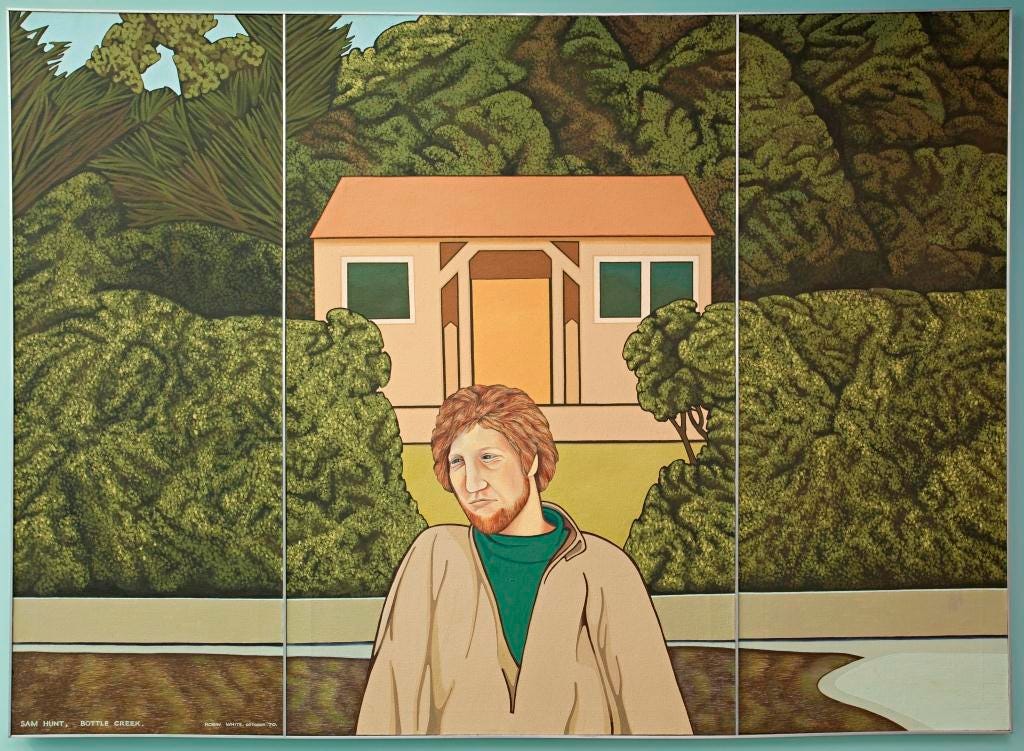
The Underbidder: Robin White’s work of Sam Hunt is a significant work. It’s a triptych measuring 122 cm x 171 cm painted in 1970. The closest comparable work to sell at auction is Glenda at Tahakopa that was bought by Te Papa for $406,300 in 2022, but that work is notably smaller. Given the rarity of these portrait works and the size of this one in particular, I would expect a record to be set.
The Underbidder estimate: $420,000 - $500,000
ChatGPT: Sam Hunt, Bottle Creek combines substantial scale, an important early position in Robin White’s career and a subject central to her artistic development. One of four major oil portraits she painted of Hunt over seven years, it captures the personal and creative relationships that shaped her formative Bottle Creek period. Its significance extends across New Zealand painting and literary history.
The strongest comparables are Glenda at Tahakopa, which achieved $406,300 including buyer’s premium in 2022, and Paremata Landscape, which made $334,600 including premium in 2024. Glenda offers the closest comparison through its combination of portraiture, architecture and place. I would assign Sam Hunt a premium for its larger scale, ambitious triptych composition and the sitter’s particular significance within White’s work.
The painting also has considerable visual authority: the enclosing foliage and frontal cottage frame Hunt with an almost ceremonial stillness. Those qualities support treating it as an exceptional early White. The estimate represents a deliberate step above the closest established auction results, justified by this particular work’s importance, with the upper end dependent on competitive bidding and good condition.
ChatGPT estimate: $450,000–550,000
Don Binney, Arts-Commerce Kaka
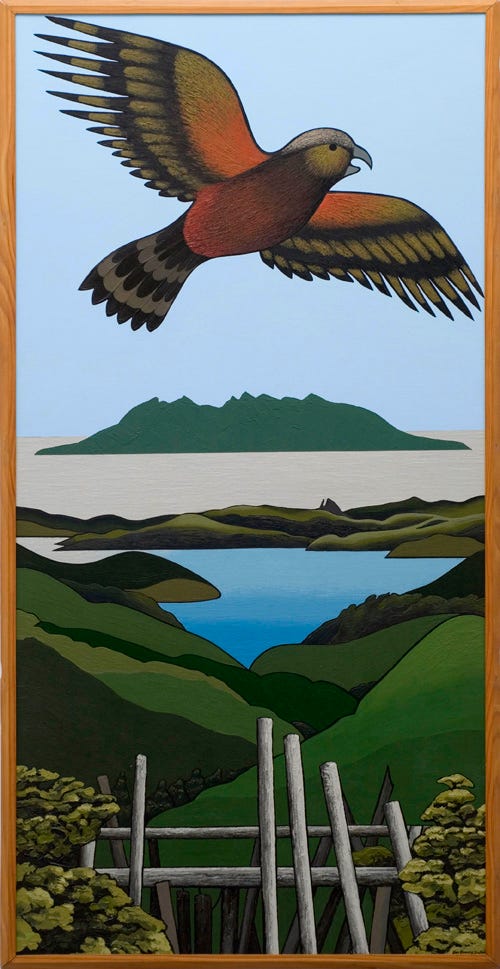
The Underbidder: This is one of the largest Don Binney paintings I’m aware of, measuring 201 cm x 103 cm. It was painted in 1984, around the same time as Swoop of the Kotare that sold at auction in 2024 for around $850,000 (but that work is a significantly smaller work). Another comparable reference point is Heron’s Departure which achieved $1,110,000 and set the record for Binney at auction in 2022. Given the quality and the size, I’m confident that this work would break that record.
The Underbidder estimate: $1,250,000 - $1,500,000
ChatGPT: At just over two metres high, Don Binney’s Arts-Commerce Kākā combines his most recognisable imagery—a commanding native bird above a distinctly New Zealand landscape—with the scale and presence of a major institutional painting. Its commission through Pat Hanly and inclusion in Binney’s 1989 survey exhibition strengthen its standing within his mature work.
The closest comparison in auction lots is Last Flight of the Kōkako (1979), another tall, substantial conservation painting, which achieved $543,725 including premium in 2017. The 1983 Swoop of the Kōtare provides a particularly useful benchmark from the same period: the auction house subsequently recorded $700,000 hammer, after it initially passed during bidding. Together, these results support a substantial valuation for an important 1980s bird painting.
The painting also has a clear environmental argument: the abandoned kauri dam beneath the flying kākā connects the beauty of Aotea Great Barrier Island with its logging history. That gives the composition historical and thematic substance. My central expectation of $550,000 balances these strengths against its later date, allowing for its exceptional scale and documented history while remaining below the strongest comparable result.
ChatGPT estimate: NZ$500,000–600,000
Michael Parekowhai, Kapa Haka
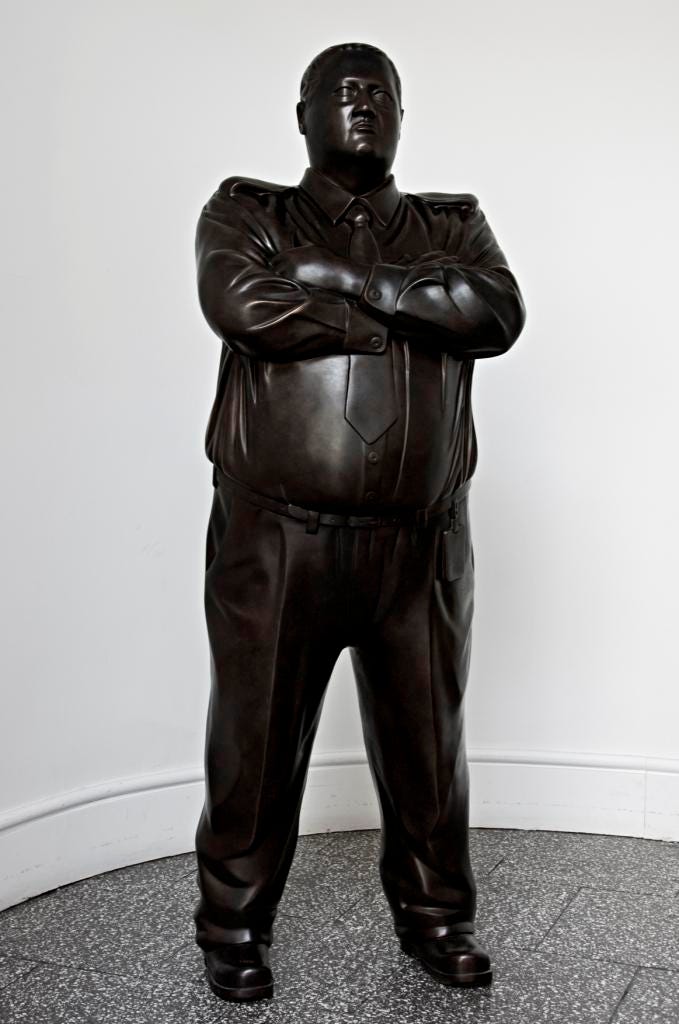
The Underbidder: Kapa Haka was made in 2008 from bronze and measures 182 cm tall. This one is cheating a bit as a similar one sold at auction in 2022 for $579,360 with an estimate of $500,000 - $800,000. There was a pandemic spike in prices, so I’m reluctant to believe it would achieve even more now. But I think it would be in the same ballpark.
The Underbidder estimate: $400,000 - $480,000
ChatGPT: Michael Parekōwhai’s Kapa Haka is a substantial bronze example of one of his most recognisable subjects: the security guard modelled on his brother. The crossed arms and imposing stance give an often overlooked service worker the authority of a public monument, while the title introduces a tension between Māori performance and the figure’s deliberate stillness. Dealer documentation records the 2008 bronze version in a small edition of three plus an artist’s proof, supporting its scarcity.
The strongest price evidence is unusually direct: Kapa Haka (Officer Taumaha) (2011), a bronze with identical dimensions, selling for NZ$480,000 hammer at Art+Object in August 2022. That particular cast appeared in Parekōwhai’s 2011 Venice Biennale presentation, giving it an exceptional exhibition history. It provides a compelling benchmark, while suggesting some restraint about placing the University’s example above that result.
More recent demand is supported by the life-size fibreglass Kapa Haka (Pango), which achieved A$319,091 including buyer’s premium in April 2026. Although its material, edition and provenance differ, it confirms substantial demand for the subject. Together, these results support a central expectation around NZ$450,000, subject to satisfactory condition and confirmation of the University bronze’s edition details.
ChatGPT estimate: NZ$400,000 – $500,000
John Pule, Mercy
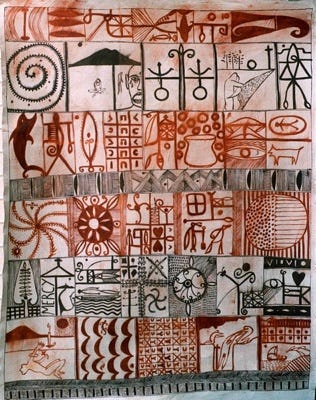
The Underbidder: John Pule is one of the few artists in this list still practising with the market still testing prices for his works. For that reason I thought it would be interesting to include. The largest John Pule sold at auction, Niniko Lalolagi/Dazzling World, was 2.0m x 4.0m and sold for $140,128 in 2025. While the auction record was set in 2022 for We Stayed All Day achieving €119,700 (approx $230,000 NZD at current exchange rates). I think the subject matter of Mercy sets it apart from the two Pule works mentioned above, but those are still useful anchor points in giving a valuation.
The Underbidder estimate: $80,000 - $120,000
ChatGPT: Mercy is a substantial, visually compelling example of Pule’s important 1990s work inspired by Niuean hiapo. Its red-brown and black palette, densely populated compartments and varied pictographs bring together the cultural, religious and personal themes that established his distinctive painting language. At 2.5 metres high, it also has considerable physical presence.
Its history strengthens the case for a premium. Pule produced it during his 1996 Waikato Writer in Residence fellowship, and the University’s 2001 exhibition Cross Purposes was built around Mercy and its imagery of the cross. This gives the painting a documented curatorial significance alongside its compositional strength.
The closest recent comparison is What I May Need (1999), which achieved $53,775 including buyer’s premium in August 2026. I would favour Mercy for its richer imagery, stronger colour contrasts and exhibition history. Meanwhile, the $115,000 hammer achieved by Dazzling World in 2025 and $131,000 hammer for Uku/Anoint in 2021 establish higher benchmarks. The proposed range recognises Mercy as a particularly desirable early painting while remaining below those stronger results for major later canvases.
ChatGPT estimate: $70,000 – $100,000
Colin McCahon, Gate III (I AM)

The Underbidder: As I’ve said before, this is probably the best McCahon work that exists, and arguably the best work of any New Zealand artist. So there is no doubt it would set a new record for McCahon. It measures an immense 3.1 m x 10.7m across 7 panels.
The current McCahon auction record was set in 2022 for Is there anything of which one can say look this is new? which came from the BNZ Collection. It sold for $2,390,000 and measures 194 cm x 178 cm. But this work is significantly more important than that. Its immense size also supports a higher valuation with Gate III over 5 times as wide as the work from the BNZ Collection.
I would expect this work could achieve $10m including buyer’s premium. But here comes the reality: I think finding a buyer in New Zealand willing to spend that much would be incredibly difficult.
The Underbidder estimate: $7,500,000 - $9,000,000
ChatGPT: My estimate reflects Gate III’s standing as one of McCahon’s defining monumental paintings. Completed in 1970, it brings together landscape, religious questioning and the commanding “I AM” motif in an ambitious public statement against nuclear destruction. Its relationship to Victory over death 2 places it within a particularly important period of his career.
The strongest financial benchmark is Te Papa’s purchase of Walk (Series C) for NZ$2.75 million excluding GST in 2004. That transaction demonstrates the value attached to a landmark, multi-panel McCahon beyond ordinary auction comparisons. The NZ$2.39 million including buyer’s premium achieved by Is there anything of which one can say look this is new? in 2022 provides another reference point. I consider Gate III’s exceptional importance sufficient to justify a substantial premium, although the evidence cannot precisely determine its size.
Australian sales establish credible regional buying capacity: Nolan’s First-Class Marksman achieved A$4.5 million hammer, and Whiteley’s Henri’s Armchair A$5 million hammer. These support the possibility of a NZ$5 million result for a defining McCahon. However, Gate III’s 10.7-metre width restricts potential buyers, so the upper end would depend on strong competition from collectors or institutionally supported bidders.
ChatGPT estimate: $4,500,000 – $5,500,000
Gordon Walters, Kahukura
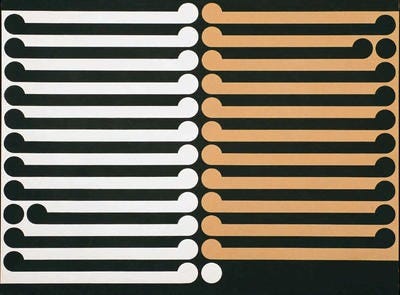
The Underbidder: This work by Walters is from 1968 and measures 114 cm x 152 cm. Other comparable top tier Walters works include the following three that sold in 2021 and 2022:
Koru - $785,000 (183 cm x 138 cm)
Makora - $705,000 (153 cm x 114 cm)
Mokoia - $649,000 (122 cm x 98 cm)
But a counterpoint to these high sales is Painting No. 9 that sold for just $244,000 in 2025, below its estimate of $300,000 - $400,000. This tempers my estimate a bit. Nevertheless, I think demand for Walters still remains high.
The Underbidder estimate: $450,000 - $550,000
ChatGPT: Kahukura combines an important early date, substantial scale and a particularly memorable composition. Painted in 1968, just two years after Walters first exhibited his koru paintings, it represents the early maturity of his defining visual language. The contrasting white and ochre sections, opposing circular terminals and carefully placed interruptions give the repeated forms considerable tension and movement.
The strongest auction benchmarks are Koru (1971), which sold after auction at its reserve of $650,000 hammer in 2021, and Makora (1979), which achieved $705,050 including buyer’s premium in 2022. Makora is almost identical in painted area. I would place Kahukura above that later work for its original 1968 execution and established art-historical standing, while recognising that this premium is a valuation judgment.
The University’s acquisition in 1969 and the dedicated Ellis–Skinner catalogue published in 1999 strengthen its significance as an individual painting. However, the $200,000 hammer result for Painting No. 9 in 2025 shows that buyers remain selective. Those competing considerations support the proposed range, with the upper end dependent on good condition and competition for a major early Walters.
ChatGPT estimate: $650,000 - $750,000
Rita Angus, Untitled [Mountain Biological Station, Cass]
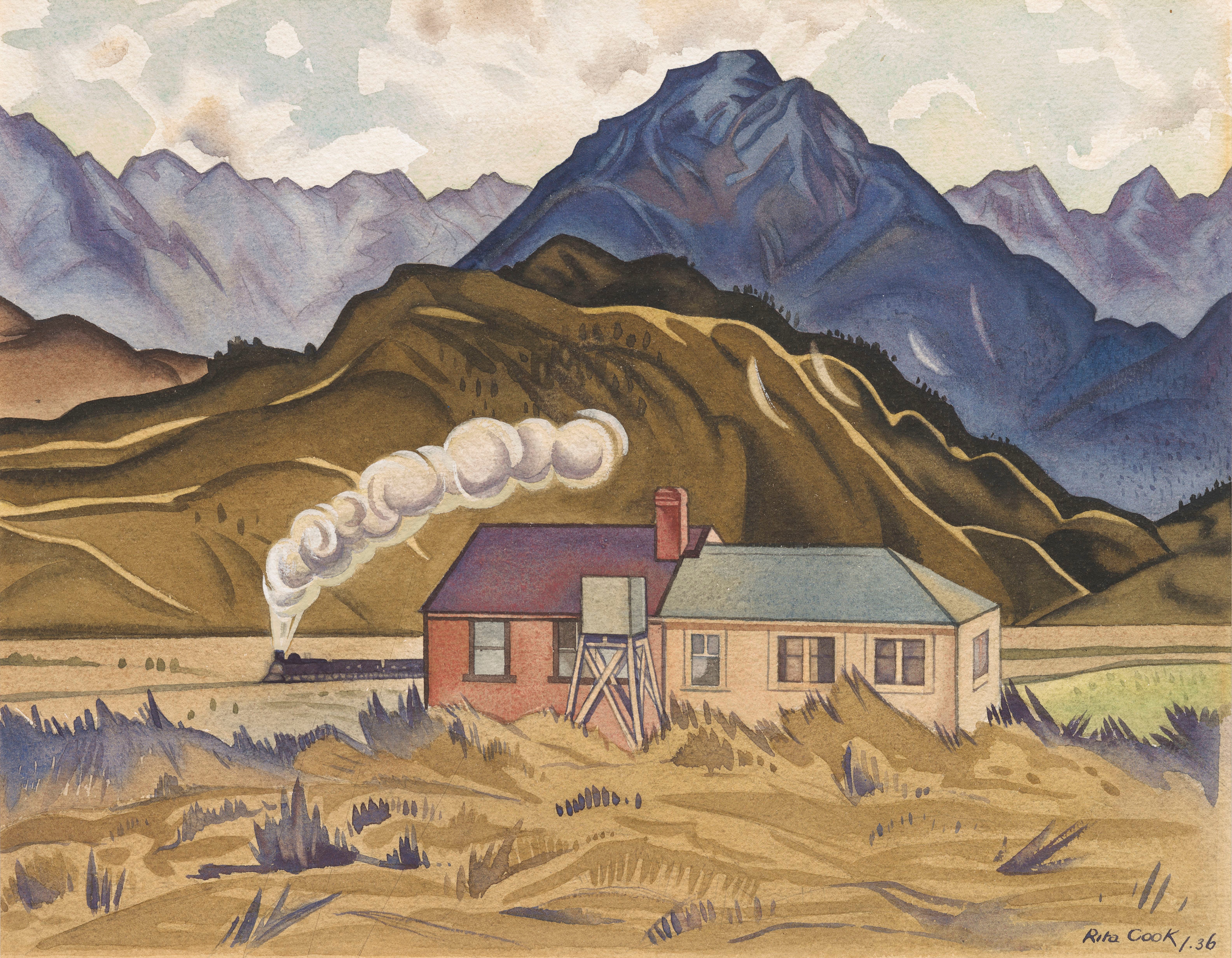
The Underbidder: On the one hand, this is a small work measuring just 23 cm x 29 cm (roughly an A4 piece of paper) and is only a watercolour on paper. On the other hand, the connection of this work to Angus’ iconic Cass work is impossible to ignore.
Recent watercolours have sold in the range of $100,000 to $200,000, so that sets a useful reference point, but given the subject matter, this would go for much more. My estimate is around $300,000 at hammer. But I think demand would be hot and bidding could potentially go north of $500,000.
The Underbidder estimate: $250,000 - $350,000
ChatGPT: The estimate reflects the painting’s quality and its place within Angus’s pivotal 1936 Cass group. Its sharply defined buildings, patterned hills and dramatic mountains demonstrate her emerging landscape style. Its association with the trip that produced Cass, together with established scholarly and exhibition recognition, gives it particular significance within her oeuvre.
The strongest auction comparison is Lake Wanaka, Pembroke (1939), a watercolour of almost identical dimensions that achieved $150,000 hammer in 2022. The larger Seaside Baches (1933) made $110,000 hammer in 2026. I would place this work above those results because of its specific Cass connection and documented importance. The proposed range therefore incorporates a meaningful historical premium, while recognising its small size and the variability of Angus’s watercolour market.
Its provenance from Angus through the Percival family to the university strengthens that assessment. However, historical reports of exposure above the field-station fireplace make condition a material qualification. The central expectation of approximately $225,000 assumes a satisfactory conservation report; substantial unresolved staining, fading or paper damage would warrant a lower estimate.
ChatGPT estimate: $200,000– $250,000
Bill Sutton, Plantation Series XVIII
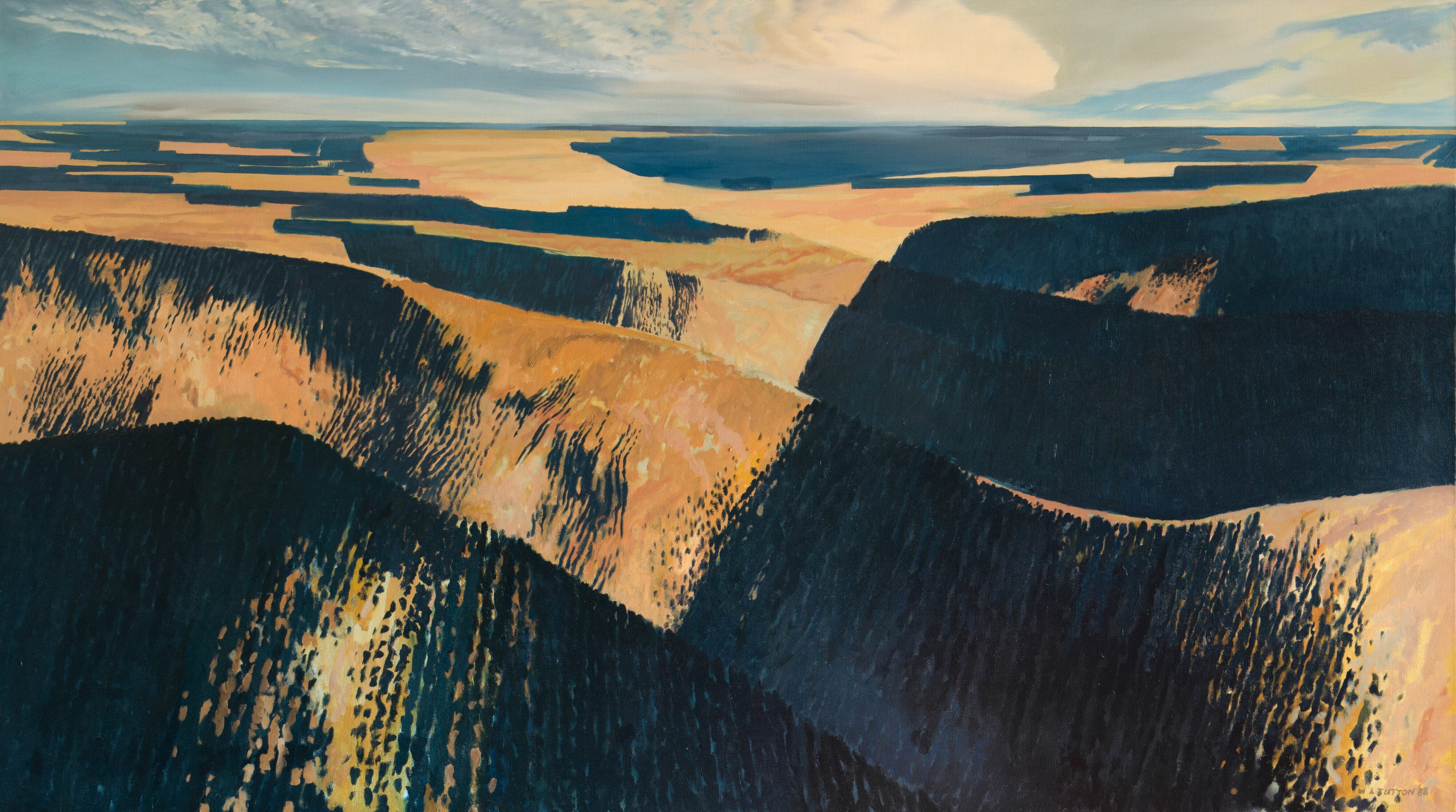
The Underbidder: Plantation Series XVIII is an oil on canvas work, measuring 138 cm x 244 cm, created in 1988. Three relevant sales that help establish an estimate:
The record for Bill Sutton was set in 2022 for Landscape Synthesis (1980), which sold for $286,800 against an estimate of $65,000 - $85,000, demonstrating strong interest in Sutton’s work. Landscape Synthesis is a smaller work than this Plantation Series work.
Plantation Series XXIII was sold at auction in March 2024 for $47,800. That work was significantly smaller at just 50 cm x 90 cm.
Land and Sky VIII is a work of similar size to Plantation Series XXIII and sold for $65,000 last year.
I think the Landscape Synthesis series is probably more prized by collectors and attracts a premium, though it was also sold during the pandemic auction frenzy. However, the larger size of Plantation Series would give it a boost on that factor.
The Underbidder estimate: $125,000 - $175,000
ChatGPT: Plantation Series XVIII warrants a premium as a major example of Sutton’s final important landscape series. Its monumental scale, powerful contrasts between dark plantations and golden countryside, and accomplished composition give it considerable presence. Its documented history from Sutton to Lincoln University, extensive publication references and recognised importance within the collection strengthen its standing.
The auction evidence supports that premium while encouraging restraint. Smaller Plantation works have achieved approximately $38,000 hammer and $47,800 including premium, while Land and Sky VIII made $65,000 hammer in 2025. However, a similarly sized Te Tihi O Kahukura and Sky recorded only $97,990 including premium in 2024. Against those results, $150,000–200,000 recognises XVIII’s exceptional qualities without treating the unusually high $286,800 recorded for Landscape Synthesis in 2022 as Sutton’s normal price level.
ChatGPT estimate: $150,000 - $200,000
Frances Hodgkins, Friends (Double Portrait)
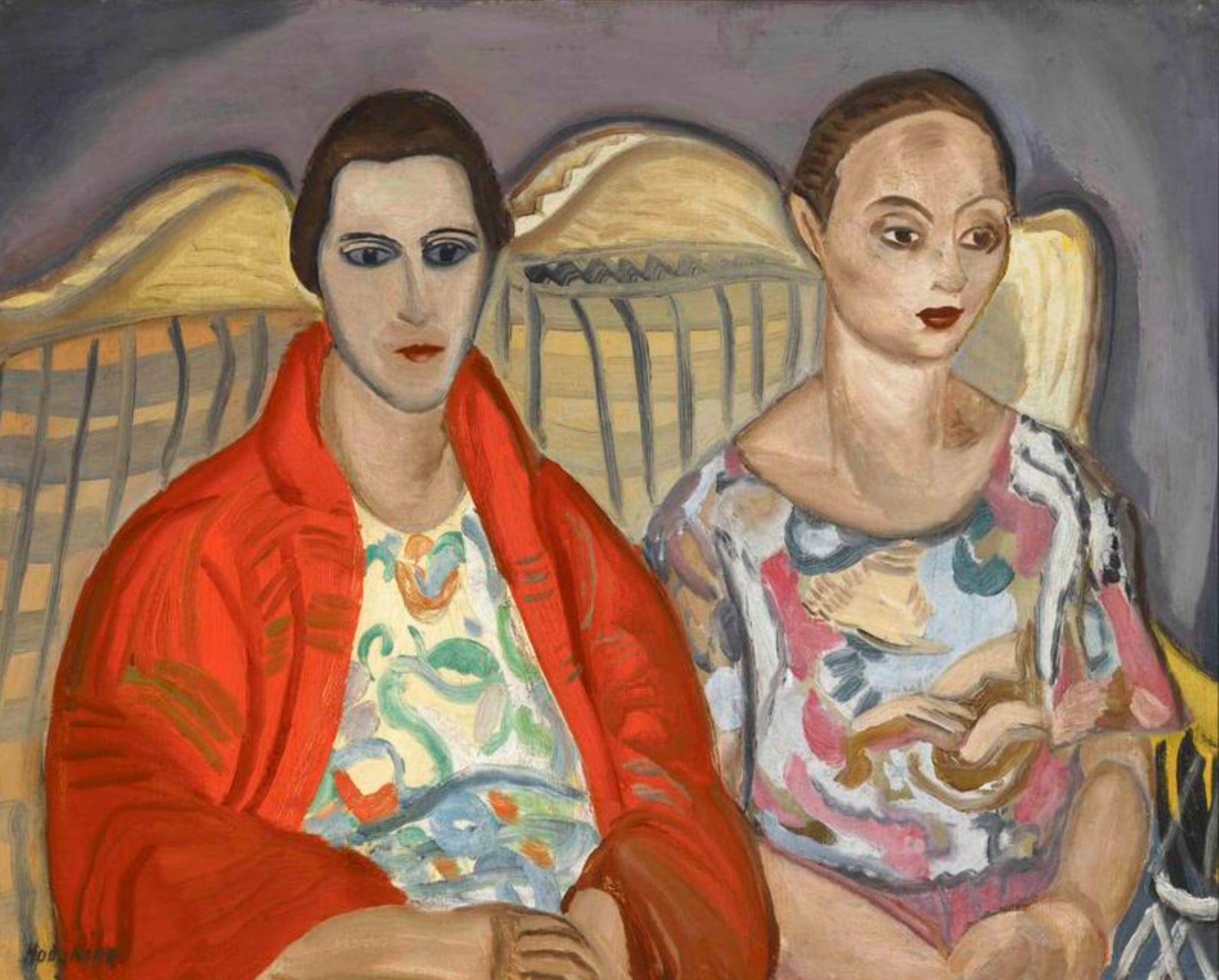
The Underbidder: Friends (Double Portrait) was created around 1925 and measures 61 cm x 75 cm. An important auction benchmark for Frances Hodgkins was set back in 2015 for Monastery Steps achieving $375,200. More recent auction results have seen top tier works sell in the range of $250,000 - $320,000.
The most notable sale is probably Still Life (c. 1930), that carried an estimate between $450,000 - $650,000 at International Art Centre in 2023. I believe this was passed in at auction and the final sale price was not disclosed, which usually implies it was below the low estimate. I think this portrait is far more attractive than her still life works and I’m confident that collectors with deep pockets would agree.
The Underbidder estimate: $420,000 - $500,000
ChatGPT: I would estimate Frances Hodgkins’s Friends (Double Portrait) at $450,000–550,000 at hammer, reflecting its quality and established importance within her oeuvre. Painted between 1922 and 1925, it combines distinctive elongated figures, patterned clothing and carefully balanced colour. Its subjects, Hannah Ritchie and Jane Saunders, were important friends and supporters, giving the portrait a direct connection to the relationships that sustained Hodgkins’s career.
The strongest auction comparison is Portrait of Arthur Lett Haines, which achieved $250,000 hammer in 2021. Friends is substantially larger and, in my assessment, has greater art-historical standing and a more compelling composition. Monastery Steps, which achieved $320,000 hammer in 2015, provides another reference for an accomplished Hodgkins oil of comparable scale. These results establish a foundation, although the proposed estimate requires a significant premium above them.
That premium rests on the painting’s recognised significance, distinguished Charles Brasch provenance and long association with the Hocken Collection. Together, these qualities support a central expectation of approximately $500,000, assuming good condition and competitive bidding. The estimate reflects the opportunity to acquire a major, established Hodgkins portrait whose standing exceeds that of much of her usual auction material.
ChatGPT Estimate: $450,000 – $550,000
Rita Angus, Fungi
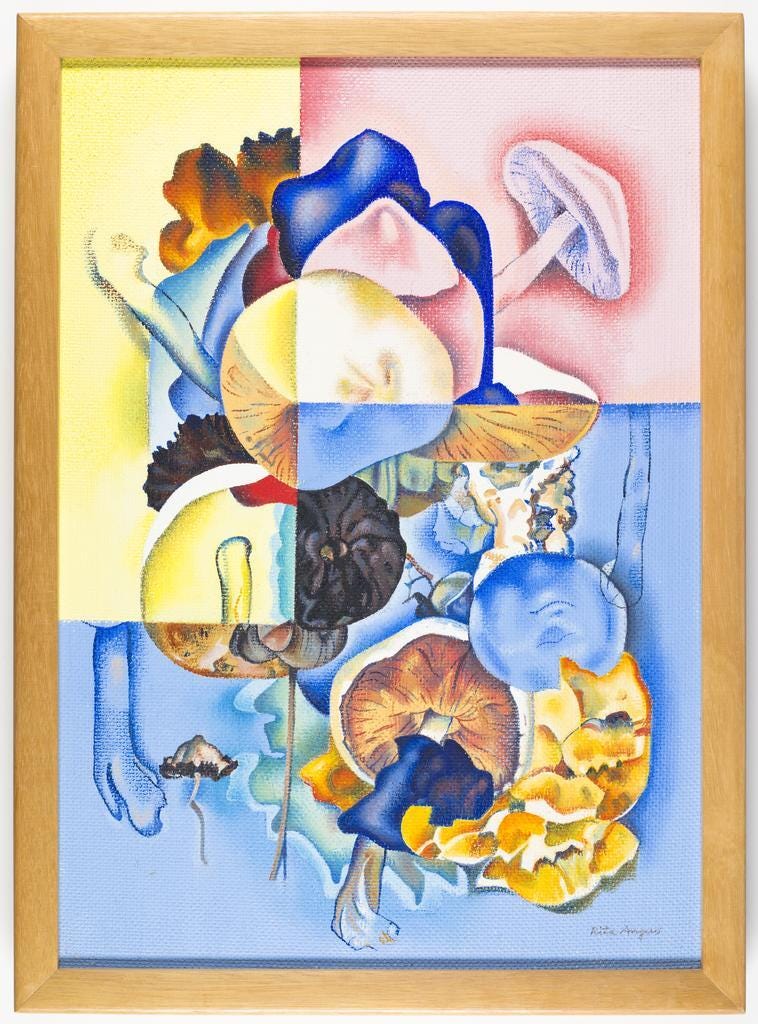
The Underbidder: The most relevant auction result is Landscape with Arum Lily (measuring 52cm x 42 cm), which is in a similar style and from around the same time in Angus’ practice. This work sold for $201,810 back in 2016. However, Fungi is smaller at 45 cm x 32 cm. Angus’ works have continued to appreciate so I would expect a sale price now would be notably higher than 10 years ago. There are also very few oil works that come to auction now.
Looking at more recent sales, Before the Demolition sold for $621,435 last year, and Moonlight, Thorndon sold for $341,180 earlier this year. I expect Fungi could achieve close to that price including buyers premium.
The Underbidder estimate: $225,000 - $300,000
ChatGPT: I would estimate Rita Angus’s Fungi at NZ$200,000–300,000, reflecting its quality and its significance within her exploration of abstraction. Its vivid colour, intricate natural forms and unusual composition give it a distinctive visual identity. Te Papa explicitly discusses it alongside Landscape with Arum Lily as an example of Angus balancing representation and abstraction, supporting its standing as an ambitious work within her oeuvre.
The strongest auction comparison is Landscape with Arum Lily (1953), which achieved $168,000 at hammer in 2016. Although larger than Fungi, it shares the same experimental approach to assembling natural forms. More recently, Moonlight, Thorndon achieved $280,000 at hammer in March 2026, providing a contemporary reference for a substantial Angus oil of reasonably comparable scale. Together, these results support the proposed range, with approximately $250,000 as a reasonable central expectation.
There are also reasons for restraint. Barn Construction, Northern Hawke’s Bay made $100,000 at hammer in August 2026, demonstrating the variability of demand, while the $510,000 achieved by Before the Demolition relates to a considerably larger painting with a strong exhibition history. At 445 × 315 mm, Fungi is relatively small. Its artistic distinction warrants a premium over more modest oils, but its scale and unusual subject make a substantially higher estimate harder to defend. The $200,000–300,000 range balances those strengths and limitations, assuming good condition.
ChatGPT estimate: $200,000 – $300,000
How well did ChatGPT do?
I’m surprised by how closely many of our estimates aligned and how plausible ChatGPT’s reasoning often was. Six of the ten estimate ranges overlap, with a seventh meeting between our respective upper and lower estimates.
There are disagreements. And the reasoning behind these differing estimates is revealing. In those instances we’ve often weighted factors in different ways. Neither is necessarily wrong. In fact, it demonstrates the challenges and subjectivity of valuing an artwork.
With McCahon’s Gate III (I AM), there’s a significant difference in our estimates. This is arguably the most important work in New Zealand and therefore justifies a price around $8,000,000 in my opinion, but I am much less certain there would be a buyer willing and able to pay that amount. ChatGPT’s lower estimate gives more weight to realised prices in New Zealand and Australia.
For Walters’ Kahukura, I put greater weight on the softer 2025 result and remain cautious about using prices from the pandemic boom as current benchmarks. ChatGPT gave more weight to the painting’s early date and individual importance. I can understand that assessment, even though I would stick with my estimate.
Binney’s Arts-Commerce Kaka produced the largest disagreement. My estimate is more than double that of ChatGPT’s. There has only been one Binney that has sold at auction for more than $1 million, but I remain convinced that the scale, quality and history could achieve a record price. I generally avoided challenging ChatGPT’s initial estimates because I wanted an independent comparison. But I made an exception here and shared my estimate and explained my reasoning. This is ChatGPT’s response.
I would revise my estimate for Don Binney’s Arts-Commerce Kākā to NZ$900,000–1,000,000 hammer, recognising that my earlier assessment underweighted its monumental scale, University commission and exhibition history. With approximately 2.66 times the painted area of Swoop of the Kōtare, which achieved $700,000 hammer, it has a persuasive claim to sell above that benchmark; Last Flight of the Kōkako’s 2017 sale should carry less weight in establishing today’s price.
Your $1.25–1.5 million range is plausible for an exceptional result, although it would exceed Binney’s verified $920,000 hammer record by 36–63%. I would therefore treat that range as credible upside, while setting a more conservative auction estimate around the existing record.
Ultimately, these are hypothetical sales. And auction estimates are fundamentally subjective judgments taking into account collector preferences, trends, and current economic climate. So there’s no definitive answer on what a correct estimate is for these works. And perhaps most importantly, the outcome would still depend on who turned up and how strongly they wanted a particular work.
Would a university actually sell any of these works? It’s unlikely and would be highly controversial. But most museums deal with deaccession issues at some point and need to make judgments on what to retain and how to grow their collections. There is also something of a precedent with VUWSA (the student union) selling its Don Binney of Mana Island in 2021 for $717,000 (including buyer’s premium).
I would use AI again to value an artwork. It’s useful in finding comparable sales, organising research and challenging my assumptions. But I would also check its sources and figures carefully as well as carefully consider the reasoning and weighting of factors. And I will at some point test this on less significant works to see how it handles artists with fewer auction results and less published commentary to see how it holds up to those works.
