
A solo exhibition at a major public gallery is a significant milestone for an artist. When several institutions make that commitment over a number of years, it also becomes a useful signal for collectors. I went through the exhibition archives of nine leading New Zealand galleries and museums,1 covering the period from 2000 to the present, to find the artists most frequently exhibited.2
I’ve focused on solo exhibitions and installations, as well as small group shows limited to two or three artists.3 Familiar names such as Frances Hodgkins, Colin McCahon and Ralph Hotere appear regularly. But I wanted to look beyond the established names and focus on artists born from 1970 onwards.
The result is this list of 12 artists who have received repeated institutional attention. That doesn’t automatically make them artists to buy. But institutional recognition is an important part of an artist’s career, and because of that recognition, these are names I think collectors should at least have on their radar.
Some, including Reuben Paterson and Francis Upritchard, will already be familiar to many collectors. Others are less familiar, and not all make work that fits easily into a living room. Video and large scale installations remain more difficult propositions for most private collectors than paintings or sculptures, which is a useful reminder that institutional recognition does not always translate into collector interest.
The Underbidder is an independent newsletter providing art market and collecting insights across Australia and New Zealand. Click the button below to become a free subscriber and receive weekly updates including my regular Collectors Guide series.
Steve Carr (b. 1976)
Fireworks, balloons and tyres are among Steve Carr’s raw materials. He uses film, photography and sculpture to turn familiar objects into something unexpected, often with considerable humour. In Chasing the Light, shown in Christchurch and Wellington, six video projections placed viewers inside a fireworks display, but without the accompanying noise. His bronze tyre sculptures, In Bloom, apply a similar transformation to an object more commonly found in the garage.
Exhibitions:
In Bloom, Dunedin Public Art Gallery (2021), Christchurch Art Gallery (2021)
Chasing the Light, Christchurch Art Gallery (2018–2019), City Gallery Wellington (2019–2020)
Stretching Time, Dunedin Public Art Gallery (2014)
Majo, Christchurch Art Gallery (2013)
Annabel, Dunedin Public Art Gallery (2008)
Goes Nowhere Like a Rainbow, Dunedin Public Art Gallery (2007–2008)
Table Cloth Pull and Splash, Christchurch Art Gallery (2007)
Air Guitar, Dunedin Public Art Gallery (2002)
Zenstix 2000, Dunedin Public Art Gallery (2000)
Glen Hayward (b. 1974)
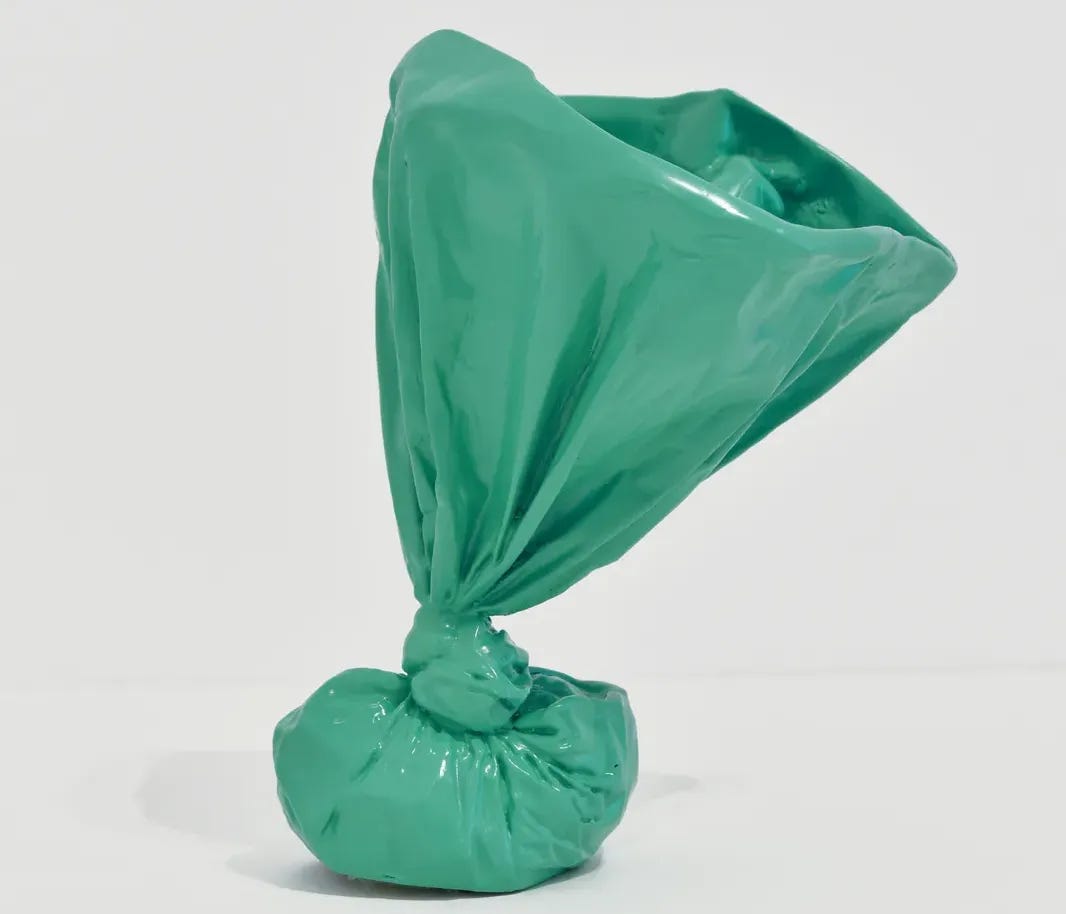
Glen Hayward takes ordinary objects and recreates them in wood. Light switches, nails, cardboard boxes, an office cubicle and even a Toyota Corolla have all been painstakingly carved and painted to resemble the real thing. At first glance, many of the works can look like everyday objects that have simply been placed in the gallery. Look closer and you realise they have been made entirely by hand. The humour and craftsmanship also make his smaller works some of the more immediately collectable sculptures on this list.
Exhibitions:
Wish You Were Here, City Gallery Wellington (2022)
Glen Hayward: dendrochronology, Dunedin Public Art Gallery (2017–2018)
Super Ordinary, Sarjeant Gallery (2016)
4 Plinths: Rita Angus used to grow her own vegetables, Te Papa (2014–2016)
I Don’t Want You to Worry About Me, I Have Met Some Beautiful People, City Gallery Wellington (2013)
Joanna Langford (b. 1978)
Joanna Langford uses everyday recycled or reused materials such as plastic bags and kebab sticks. The results often look like architectural models, but much stranger and less orderly. Down from the Nightlands filled the Sarjeant Gallery’s dome with towers and staircases rising into the space, while The Landless created another sprawling miniature city in Dunedin. Part of the appeal is the contrast between the cheap, makeshift materials and the amount of detail in the finished work.
Exhibitions:
4 Plinths: Out of the Dusk, Te Papa (2012–2014)
Up from the plainlands, Christchurch Art Gallery (2009–2011)
The Landless, Dunedin Public Art Gallery (2009)
The Beautiful and the Damned, City Gallery Wellington (2008)
Twilight Falls, Govett-Brewster Art Gallery (2008)
Down from the Nightlands, Sarjeant Gallery (2007–2008)
Jae Hoon Lee (b. 1973)
Jae Hoon Lee’s landscapes can initially pass for exceptionally striking photographs. Look closer and the geography becomes less reliable. He combines images taken at different times and places to create scenes that feel both convincing and impossible. His Dunedin exhibition Stranger in Strange Land brought together photography, video and installation. For collectors drawn to landscape, his photographic works offer a contemporary alternative to the familiar painted view.
Exhibitions:
Leaf, Dunedin Public Art Gallery (2023)
Bridge of Now and Here, Sarjeant Gallery (2021–2022)
Salvation (Keyboard), Dunedin Public Art Gallery (2021)
Stranger in Strange Land, Dunedin Public Art Gallery (2015–2016)
Annapurna, Christchurch Art Gallery (2010–2012)
Salvation, 2006, Christchurch Art Gallery (2009)
Yona Lee (b. 1986)
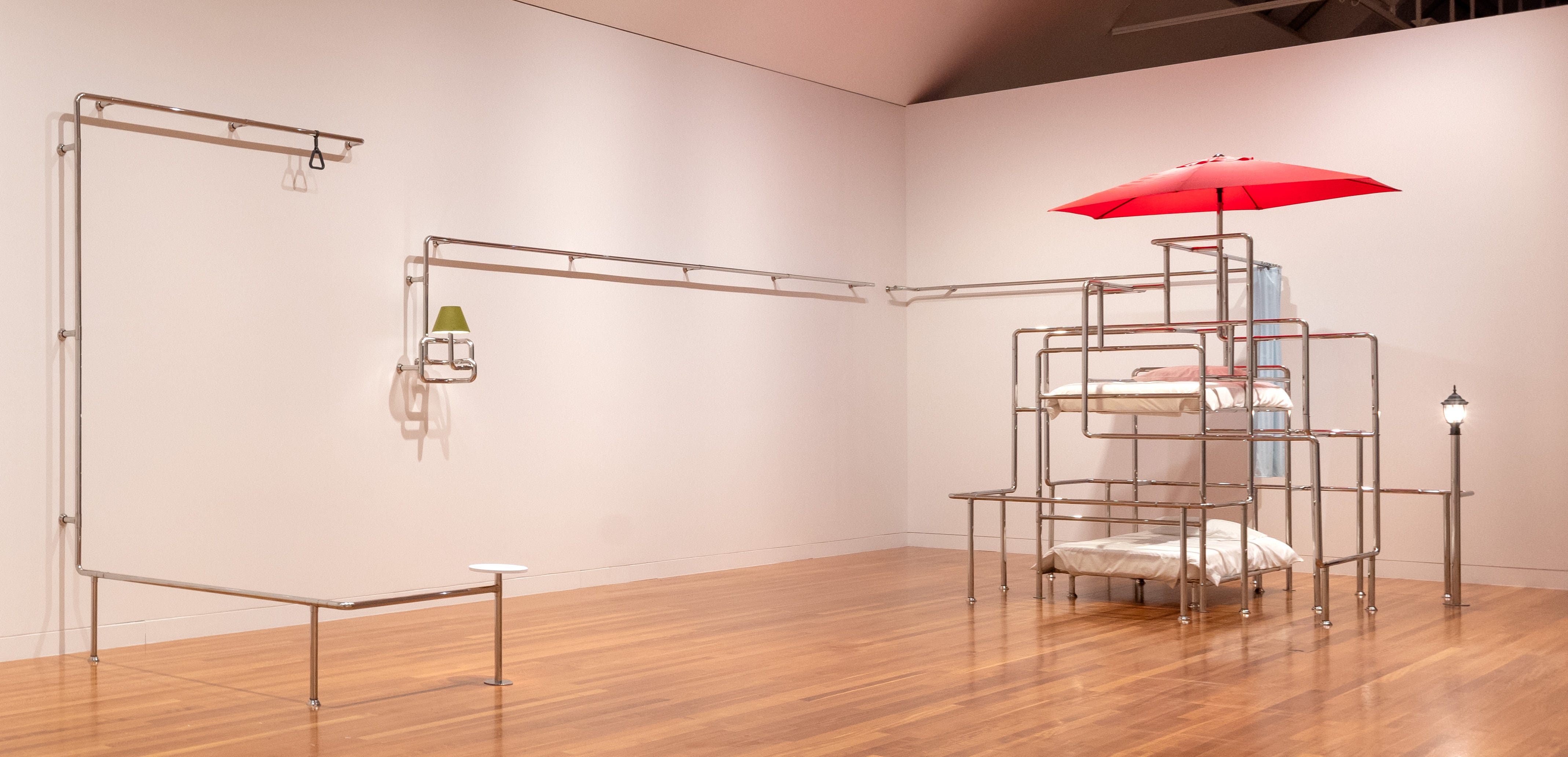
Yona Lee turns stainless-steel tubing into sprawling sculptures that wind through galleries, incorporating lamps, beds and other everyday objects. The same type of tubing is normally used for handrails and on public transport, but Lee uses it to build structures that run through entire rooms.. In Transit at City Gallery Wellington and An Arrangement for 5 Rooms at Auckland Art Gallery show how completely her installations can take over a space. In both exhibitions, the sculptures spread through multiple rooms and became part of the architecture itself.
Exhibitions:
Fountain in Transit, Christchurch Art Gallery (2024–ongoing)
An Arrangement for 5 Rooms, Auckland Art Gallery (2022)
Propositions, Govett-Brewster Art Gallery (2021)
Succession, Dunedin Public Art Gallery (2020)
In Transit, City Gallery Wellington (2018–2019)
Triptych, Dunedin Public Art Gallery (2015–2016)
Constrained Organism, Govett-Brewster Art Gallery (2011)
Dane Mitchell (b. 1976)
Dane Mitchell often works with things that are difficult to see or hold: scent, weather, sound and speech. In Iris, Iris, Iris, shown at Auckland Art Gallery and Te Papa, perfume, incense and photographs connected the iris flower with the iris of the eye. Some of his projects can sound quite abstract when described, but in the gallery they often become something visitors can actually smell, hear or physically experience..
Exhibitions:
Iris, Iris, Iris, Auckland Art Gallery (2018–2019), Te Papa (2022–2023)
Post Hoc, Christchurch Art Gallery (2020)
Radiant Matter Part 1, Govett-Brewster Art Gallery (2011)
Radiant Matter Part II, Dunedin Public Art Gallery (2011)
Simultaneously Modern: Three Art Installations from the Contemporary New Zealand Collections, Auckland Art Gallery (2011)
Shannon Novak (b. 1979)
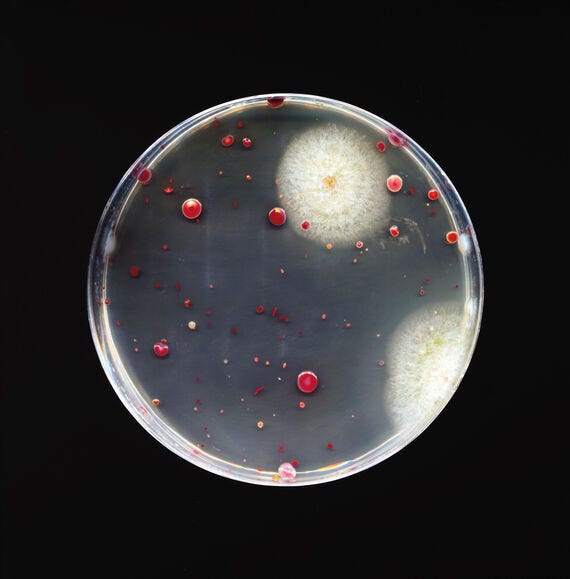
Shannon Novak works with bright colours and geometric shapes, often extending his work across walls, windows and other parts of a building. He has also used digital and augmented reality to take the work beyond the gallery itself. His work is influenced by synaesthesia, which means he experiences connections between things such as sound and colour, while more recent projects have also dealt with identity and queer visibility. The Expanded Gallery in Dunedin was one of his more ambitious projects, with works appearing both inside the gallery and at locations around the city.
Exhibitions:
Parthenogenesis, Govett-Brewster Art Gallery (2023)
The Unfurling (with Pasha Clothier), Govett-Brewster Art Gallery (2022–present)
Symplegma, Sarjeant Gallery (2021)
Arrhythmia, Dunedin Public Art Gallery (2019–2021)
Sub Rosa, Govett-Brewster Art Gallery (2019)
The Expanded Gallery, Dunedin Public Art Gallery (2017–2019)
Leitmotif: Abstract Portraits by Shannon Novak, New Zealand Portrait Gallery (2016)
Reuben Paterson (b. 1973)
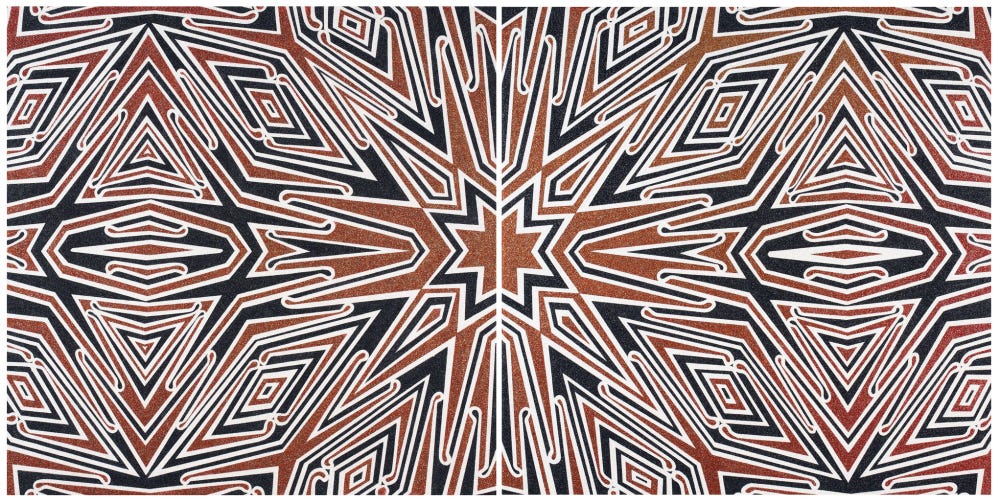
Reuben Paterson has built a substantial career around the use of glitter. His paintings and sculptures draw on kōwhaiwhai, nature and personal history, with surfaces that change as they catch the light. His golden tree, The Golden Bearing, accounts for several appearances, but the broader institutional record is substantial too. City Gallery Wellington’s 2023 survey, The Only Dream Left, covered 25 years of his practice. Paterson is also already well established among collectors his works frequently appearing on both the primary and secondary market.
Exhibitions:
The Only Dream Left, City Gallery Wellington (2023)
Guide Kaiārahi, Auckland Art Gallery (2021–ongoing)
The Golden Bearing, Christchurch Art Gallery (2021–2022) Govett-Brewster Art Gallery (2014, 2017–2018, and 2019)
Black Matter, The Dowse Art Museum (2020–2021)
The End, Christchurch Art Gallery (2016–ongoing)
Te Pūtahitanga ō Rehua, Dunedin Public Art Gallery (2011), Christchurch Art Gallery (2013)
Gazillion Swirl!, Auckland Art Gallery (2011–2012)
When the Sun Rises and the Shadows Flee, Dunedin Public Art Gallery (2007)
He Aha te Mea Nui? What is the Greatest Thing?, Dunedin Public Art Gallery (2006)
When Paradise Is Not Enough, Dunedin Public Art Gallery (2003)
Shannon Te Ao (b. 1978)
Shannon Te Ao was the 2016 Walters Prize winner, New Zealand’s leading contemporary art award. His films bring together landscape, movement, language and sound, often drawing on Māori histories and experience.
In Ia rā, ia rā (rere runga, rere raro), a fantail becomes the central subject of a three-screen installation, carrying associations with life and death. Video may be a harder proposition for conventional collectors, but Te Ao’s repeated institutional recognition makes him difficult to ignore.
Exhibitions:
Ia rā, ia rā (rere runga, rere raro), The Dowse Art Museum (2024 and 2025)
what was or could be today (again), Dunedin Public Art Gallery (2021)
my life as a tunnel, The Dowse Art Museum (2018)
Tēnei Ao Kawa Nei, Christchurch Art Gallery (2017)
Untitled (McCahon House Studies), City Gallery Wellington (2017)
Yvonne Todd (b. 1973)
Yvonne Todd uses studio photography, think corporate headshots, glamour portraits and bridal photographs, but makes the results subtly strange and creepy. At first they can look like fairly ordinary studio portraits. Look longer and the wigs, costumes, makeup and awkward expressions start to make the subjects seem increasingly peculiar. Her 2014–15 survey Creamy Psychology took over the whole of City Gallery Wellington, while the recent Brides at The Dowse shows she is still working with many of the same ideas. For collectors, Todd is also one of the more established artists on this list, with photographs that are easy to display, even when their subjects are rather less comfortable to live with.
Exhibitions:
Brides, The Dowse Art Museum (2024)
Creamy Psychology, City Gallery Wellington (2014–2015)
The Wall of Man, Christchurch Art Gallery (2013)
Wall of Seahorsel, Dunedin Public Art Gallery (2012–2013)
Pervasively Yours, Sarjeant Gallery (2009)
Francis Upritchard (b. 1976)
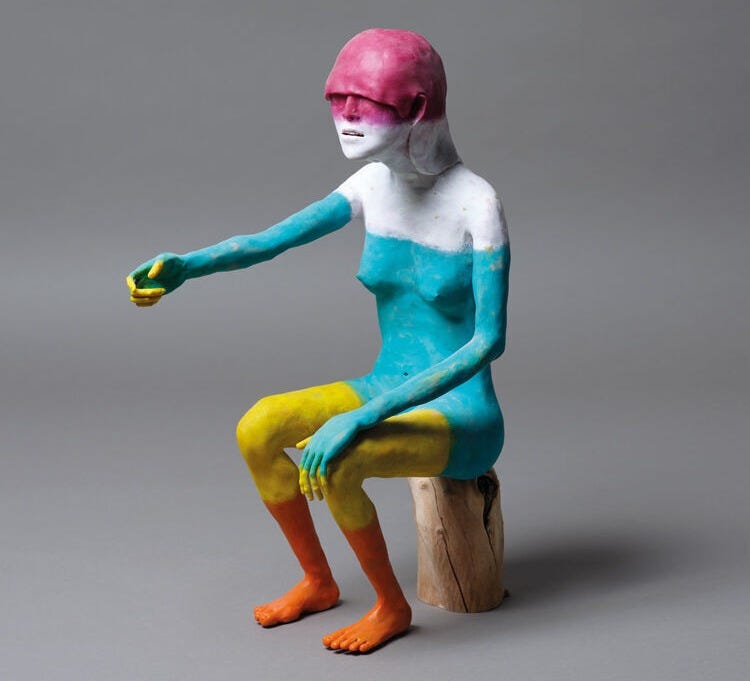
Francis Upritchard makes colourful human figures with exaggerated features, awkward poses and elaborate clothing. They can be funny, strange and sometimes slightly unsettling. Her survey Jealous Saboteurs travelled through Wellington, Christchurch and Dunedin, bringing together figures, sloths and curious objects displayed on specially made furniture. Already a Walters Prize winner and New Zealand’s representative at the 2009 Venice Biennale, she is one of the more firmly established artists on this list.
Exhibitions:
Paper, Creature, Stone, Christchurch Art Gallery (2022)
Jealous Saboteurs, City Gallery Wellington (2016), Christchurch Art Gallery (2017), Dunedin Public Art Gallery (2017)
Believer, Christchurch Art Gallery (2013)
Rainwob I, Govett-Brewster Art Gallery (2008)
Boxing Arms, Dunedin Public Art Gallery (2001)
Seung Yul Oh (b. 1981)
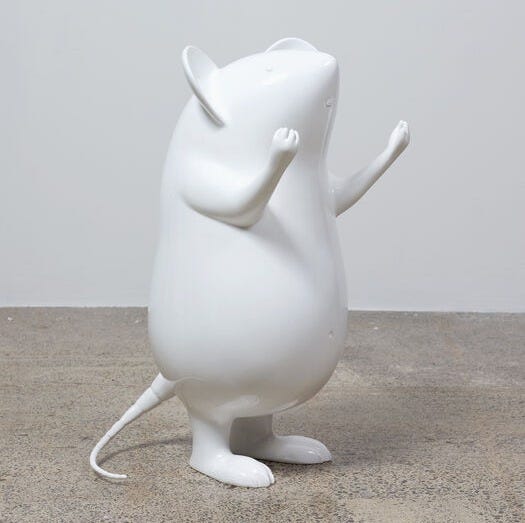
Seung Yul Oh is probably best known for his playful sculptures, but he also works across painting, installation, video and performance. MOAMOA, a survey presented in Dunedin and Wellington, covered a decade of sculpture, painting, installation, video and performance. Collectors attracted by the humour and unexpected forms of his larger works should also investigate his paintings and smaller sculptures, which offer a more practical way into his work.
Exhibitions:
SOOM, Auckland Art Gallery (2014–2015)
MOAMOA / Moamoa, a Decade, Dunedin Public Art Gallery (2013–2014), City Gallery Wellington (2014)
Huggong, Christchurch Art Gallery (2013)
Mong Long Mong, 2007, DVD, Christchurch Art Gallery (2009)
What I find most interesting about this exercise is the gap between institutional recognition and the conventional collecting market.
Some of these artists sit comfortably in both worlds. Reuben Paterson, Francis Upritchard, and Yvonne Todd have substantial institutional records but also make works that collectors can readily own and display. Others, particularly those working predominantly in video or installation, have built equally impressive institutional careers without developing the same visibility among private collectors.
That doesn’t mean museums always know best. But repeated exhibitions across several major institutions are one useful signal among many. And if an artist keeps appearing in public galleries but rarely in private collections, it may be worth asking why.
Other artists worth exploring who just missed this list include Peter Trevelyan, Saskia Leek, Tiffany Singh, Alicia Frankovich, Fiona Connor, Jeena Shin, Joyce Campbell, Martin Basher, Richard Stratton, Sean Kerr, Simon Denny, Sriwhana Spong, and Wayne Youle.

Auckland Art Gallery; Christchurch Art Gallery; City Gallery Wellington; Dunedin Public Art Gallery; Govett-Brewster Art Gallery / Len Lye Centre; Te Papa; New Zealand Portrait Gallery; Sarjeant Gallery; The Dowse Art Museum
There’s always the chance I’ve overlooked an exhibition, but the list remains representative of the more institutionally recognised artists.
Reuben Paterson’s transparent acrylic waka, Guide Kaiārahi, currently outside Auckland Art Gallery is an example of what I would consider an installation, but is included amongst the list of exhibitions at the gallery. It was easier to include both installations and exhibitions rather than decide an arbitrary methodology for what to include or exclude, afterall, in both cases the gallery is committing to showcasing that artist.