
Last week in Part One, we looked at the overall market trends for Colin McCahon. This week, we look at specific works that have been resold in the last 15 years. In short, even with a blue-chip name like McCahon, there is no guarantee that prices will go up, and you certainly shouldn’t be buying a McCahon as a pure financial investment (at least not if you want to sell in the next ~10 years).
Also, I promised to share my McCahon picks… read on to the end of the newsletter to see what I would buy in prints, works on paper, and paintings.
McCahon as a financial investment
I’ve traced individual paintings and works on paper that have been bought and sold multiple times over the last 15 years. This enables us to see how prices have gone up or down. For each individual work, I’ve included how much it’s increased in value each year (the compound annual growth rate or CAGR), though I haven’t taken out seller fees or other costs that the auction house would have charged. The works are ordered from best returns to worst.
For comparison, the NZX50 has delivered on average about 8.5% growth each year since January 2015. So that’s the benchmark to beat if you’re looking at this for pure financial gain - which I hope you’re not!
I’ve done a similar analysis for McCahon prints, and, while overall prices can be volatile, there are far more data points to give us a good perspective on how these prices are trending and I’ve stated what I think is a reasonable price is to acquire these works.
Individual works (Paintings and Prints)
Landscape Theme and Variations (H). This significant work sold for $150,000 in 2016 and was then resold in 2021 for $310,700 (18.3% CAGR). That’s an impressive return after 5 years and clearly beats the NZX50.
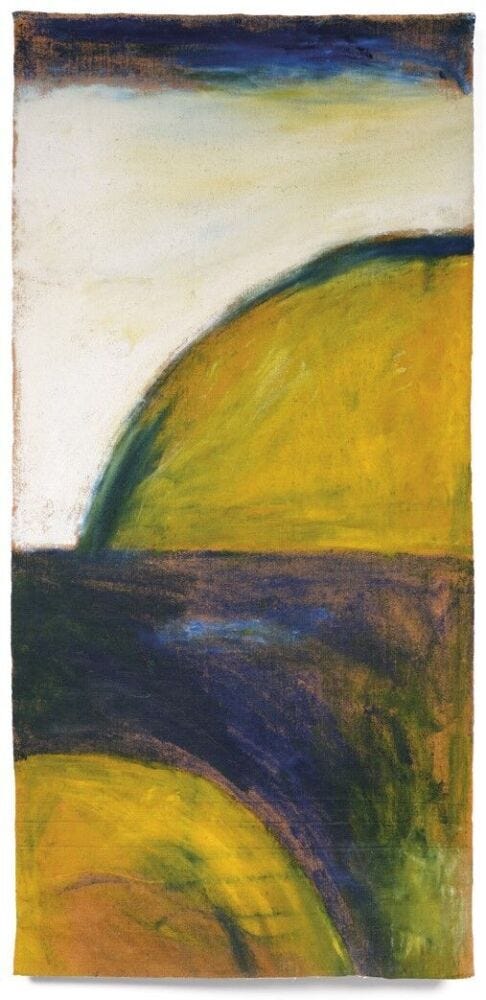
Near Craigieburn no. 4. Sold for ~$35,000 in 2016, then sold again in 2022 for $74,090 (CAGR 13.6%). Another good example of beating the market and doubling in value.
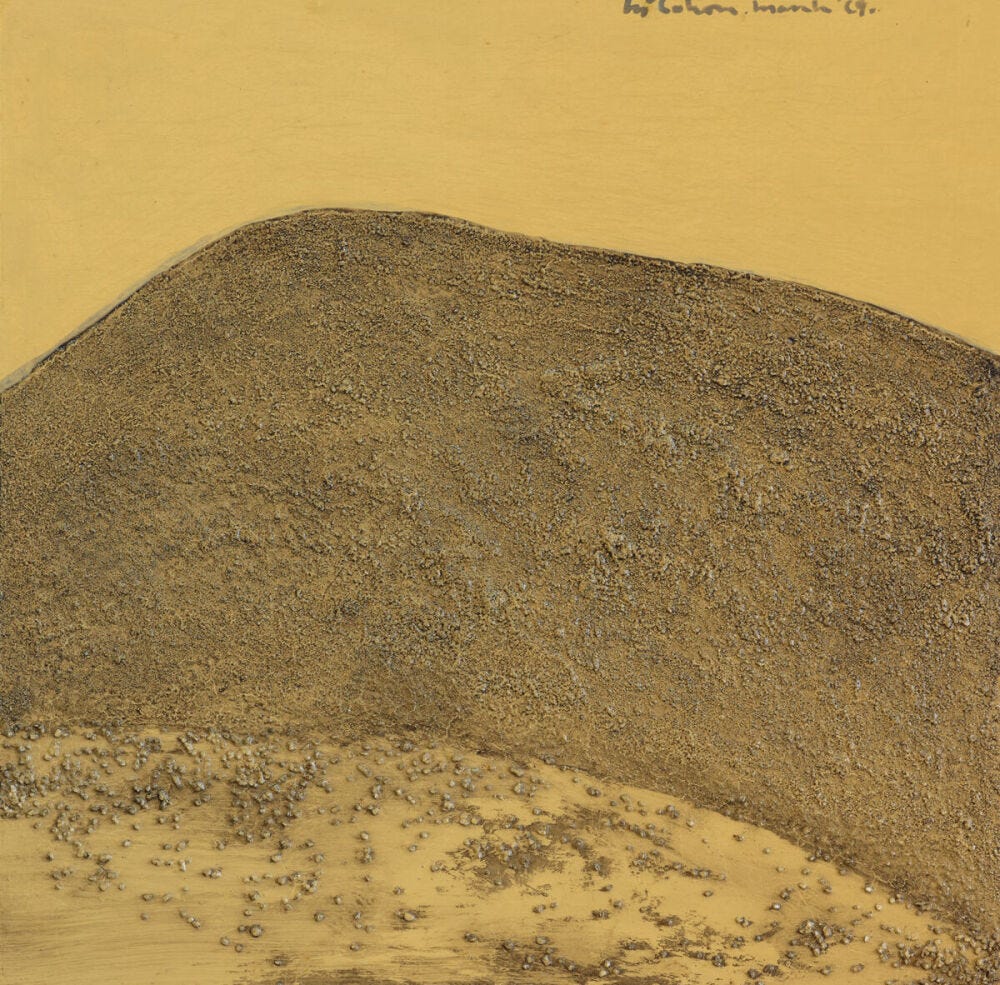
Muriwai. This work on paper sold for $54,970 in 2016 and then sold for $79,282 in 2019 (CAGR 12.3%)
Waterfall. First sold in in 2012 for $43,462. Then sold again in 2019 for $82,886 (CAGR 9.4%)
Canterbury Plains. Two different works, but both of the Canterbury Plains and both crayon on paper. The first work sold for $7250 in 2013 and then resold for $8,000 in 2016 (CAGR 4.0%). The second work sold for $15,015 in 2021, and then $19,120 in 2024 (CAGR 10.2%).
Truth from the King Country: Load Bearing Structures No. I. Sold for $57,187 in 2011, five years later sold for $67,418 in 2016. (CAGR 3.9%)
French Bay. This beautiful oil on board work sold for $128,975 in 2015, then sold again in 2022 for $125,000 (or about $150,000 incl. premium) (CAGR 2.1%)
Northland: This work on paper sold in 2016 for $39,865 then sold in two years later in 2018 for $38,440 (-1.5%)
Homage to Ingres. This work on paper appeared at auction in 2014 selling for $87,937, and then reappeared in 2018 selling for $72,075 (CAGR -4.6%).
Truth from the King Country: Load Bearing Structures No. I (Third Series). This small work just larger than an A4, sold in 2019 for $98,502 but then sold in 2024 for only $75,000 (CAGR -6.1%). My guess is that someone needed to sell as this sold below the low estimate. FWIW, there were two other McCahon’s that also didn’t sell in the same auction with even higher estimates.
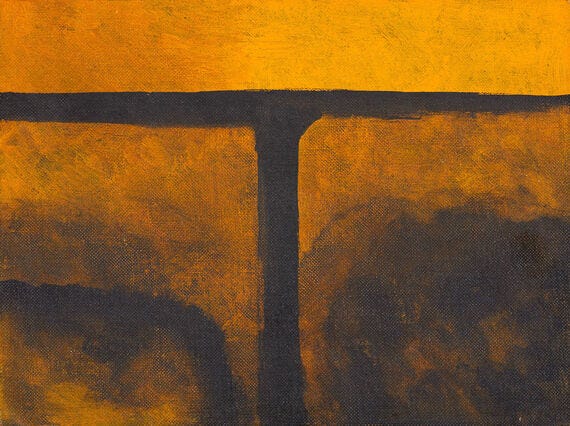
As you can see, there is a wide range in returns from -6.1% all the way up to 18.3%. Even some of those ‘positive’ returns will be negative once the seller’s fees are removed. And remember, you could have earned 8.5% simply by holding shares. Put another way, a McCahon is not a great pure financial investment.
The market for McCahon prints
The market for McCahon prints is even more interesting as there are many more data points to understand the performance of these works.
Strong Performers
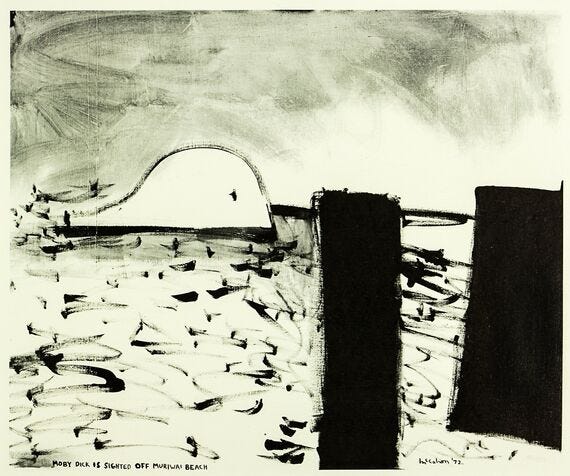
Moby Dick is Sighted off Muriwai Beach. A consistent climber that’s now settling into a mid-teen price range. This limited edition of 200 has done well. It saw steady gains in the 2010s, first selling for $3,973 in 2010, $4,690 in 2014, then $6,306 in 2016. It then jumped in price with it hitting a peak in 2020 for $21,021 followed by two selling in 2023 for $12,613 and $17,363. A clear increase in value. I think $15k would be a reasonable price to pay based mainly on the 2023 prices.
North Otago Landscape: This print from the Barry Lett multiples shows strong long-term growth, but big price variation year-to-year. Between 2007 and 2018, these generally sold for between $2,500 and $3,500, with a couple of outliers: $5,497 in 2017, and $4,106 back in 2007. But then in 2019, these really started appreciating in value. In every year between 2020 and 2023 there has been one selling for above $8,000, though at the same time, there have been ones selling under $6,000, and as low as $4,000.
So if you’re in the market for one of these prints, I would hold out for one selling under $7,000. Using 2013 and 2023 prices as a guide, the prints have returned a CAGR of 13.0%, although most of that growth has been in the latter half of that period.
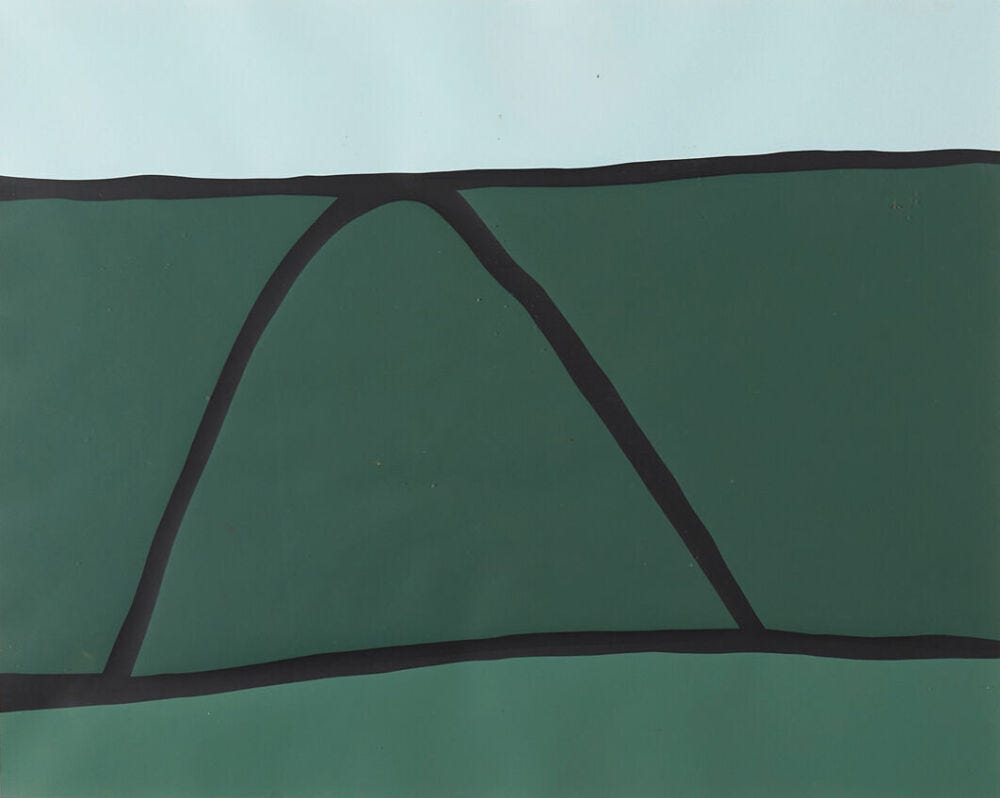
And let’s just briefly touch on someone buying the print for $31,070 in 2022 from the BNZ Collection auction. I would love to know how that came about. My initial assumption is they thought this was a unique work. But that would require another person to assume the same and bid each other up. Alternatively, I would like to think it’s someone who stared at this work for many years at BNZ and has an emotional connection to it. I’m sure we’ll never really know.
Volatile or Declining
15 Drawings: A wide trading range, with recent prices well below 2021–22 highs. This is a book of 23 lithographic leaves published by Hocken Library in 1976. Looking at the results in the 2020s alone, the price has ranged between $4,685 to $29,571. $29,571 was achieved in 2022 and $25,963 in 2021 (the next highest price). The set also achieved $11,950 back in 2019 and the highest since those record prices in 2021/2022 was for $12,794 earlier in 2025 — not a significant gain in those 6 years. I think it’s a great set of works, but I would be looking to get this for under $10k.
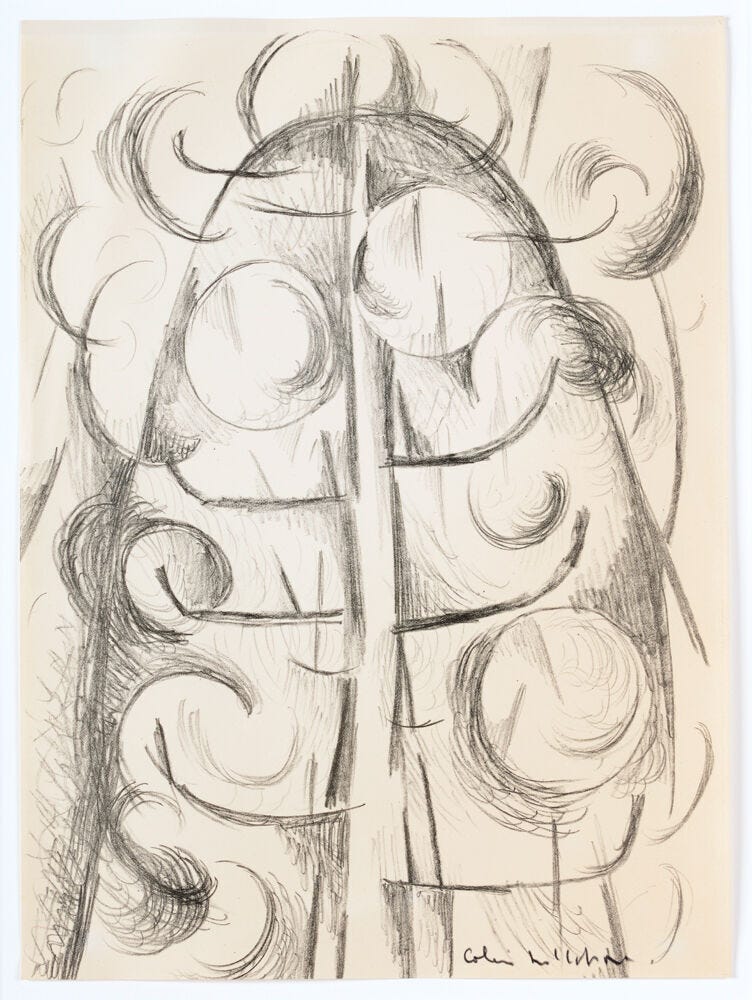
Kauri Tree: A volatile performer that would be a good purchase under $10k, but prices swing sharply. There were two editions of this print: an edition of 55 in 1954 and a subsequent edition of 50 in 1956. I’ve combined the results together as they appear very similar. Two sold in 2014 ($3,049 and $3,517), it then peaked in 2016 ($14,715) before dropping below $10k with further sales in 2017 ($8,365), and two in 2019 ($6,006 and $7,768). But it bounced back in 2022 with one selling in the BNZ Art Collection auction for $16,133. This is also one of my favourite McCahon prints, but I would be cautious about paying more than $10k because of its volatility.
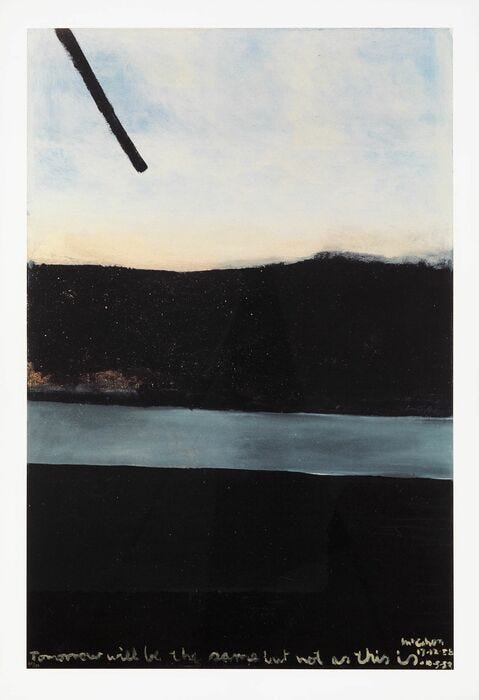
Tomorrow will be the same but not as this is: Prices have softened sharply after a brief 2022 spike. This is a print edition of 100 released in 2019. Most of the time, this print has sold for around $17k–$19k. But in 2022 there were two outliers where it sold for $22,823 and $28,968, completely bucking the average. But then earlier this year, one sold for $12,185, almost setting a new low. This could set a new trend for it moving lower than the $18k average we’ve seen over the last 5 years.
Van Gogh Poems by John Caselberg: One of the most volatile McCahon prints with big highs and lows. Someone paid $17,109 for these poems back in 2008. There have been six sales subsequently, and only one, in the lofty days of 2022, was able to top this. Most sales have been under $10k. The most recent sale was for $15,840, so maybe there’s potential, but it’s too volatile for my liking. I would take the 15 Drawings over this.
What would I buy?
Prints: Prices have eased from pandemic highs and supply is strong. I’d look for Moby Dick is Sighted off Muriwai Beach (~$15k) the Barry Lett multiple North Otago Landscape ($5k–$10k) or one of the Kauri prints but only at the right price (<$10k)
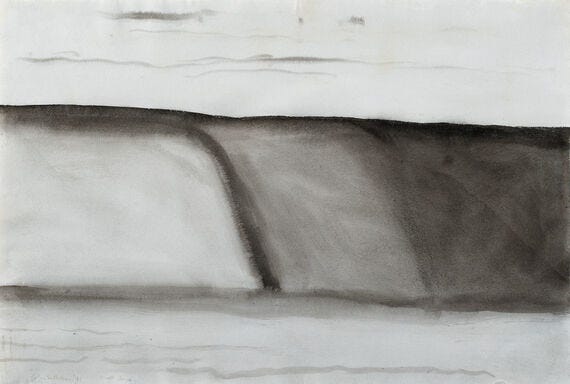
Works on Paper: If considering works on paper, I would want to be spending somewhere in the $60 - $80k range for one of his ink on paper works of the North Otago or Northland landscapes. These have gone as high at $150k, but I think with the right timing it’s reasonable to get one under $80k. Or one of McCahon’s 1969 ‘Scroll’ works like Agnus Dei. This was a period when he was doing his best work, including The Canoe Tainui and Practical Religion.
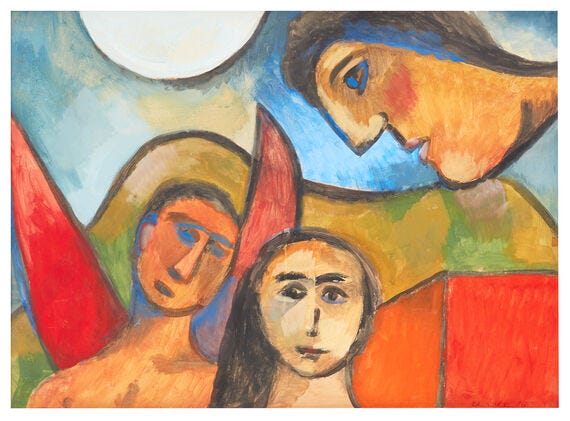
Paintings: Unless you’ve got $200k+, I would steer away from the paintings, you’ll only get something mediocre or tiny. And even above that price, your options are limited by what’s coming to auction now. But if I could pick from any that have come up at auction, I would lean towards his religious works from the late 1940s and 1950s, like this work of the Annunciation.
Closing Takeaways
McCahon’s market is not a straight line upward. In fact, if you’re in it just for the financial gains, you should probably stay well away.
Top-end works with rarity, scale, and strong provenance can deliver exceptional returns. But with works now fetching millions, perhaps it’s already too late to enter.
Mid-tier and less distinctive works may stagnate or fall, even in a hot market.
Prints offer good entry points, but potential volatility means patience matters and a buyer needs to do their research (or subscribe to this newsletter ).
If you’re buying a McCahon, know the work’s history, its past sale prices, and where it sits in the hierarchy of his output. And buy it because you love his work.