
One of the problems with getting interested in New Zealand art is that many of the artists you encounter first are already expensive.
Major works by artists such as Bill Hammond, Ralph Hotere, Gordon Walters and Grahame Sydney can sell for hundreds of thousands of dollars. For most people, they are no longer realistic artists to collect. But that doesn’t mean you need to give up on the things you liked about their work in the first place. There are plenty of living New Zealand artists working with similar subjects, styles or ideas.
Below are my suggestions of artists to check out if you like one of these already established artists. The connections are sometimes quite loose, linked mostly by theme and subject matter, but sometimes format or colour pallete. All of the contemporary artists on this list were born after 1960, around half are under 50, and a couple are still only in their early 30s.
I’m not suggesting that any of these artists is the “next” Bill Hammond or Gordon Walters. Nor are they necessarily directly influenced by the artist I’ve paired them with. This is simply a starting point to discover contemporary artists you might want to consider adding to a collection.
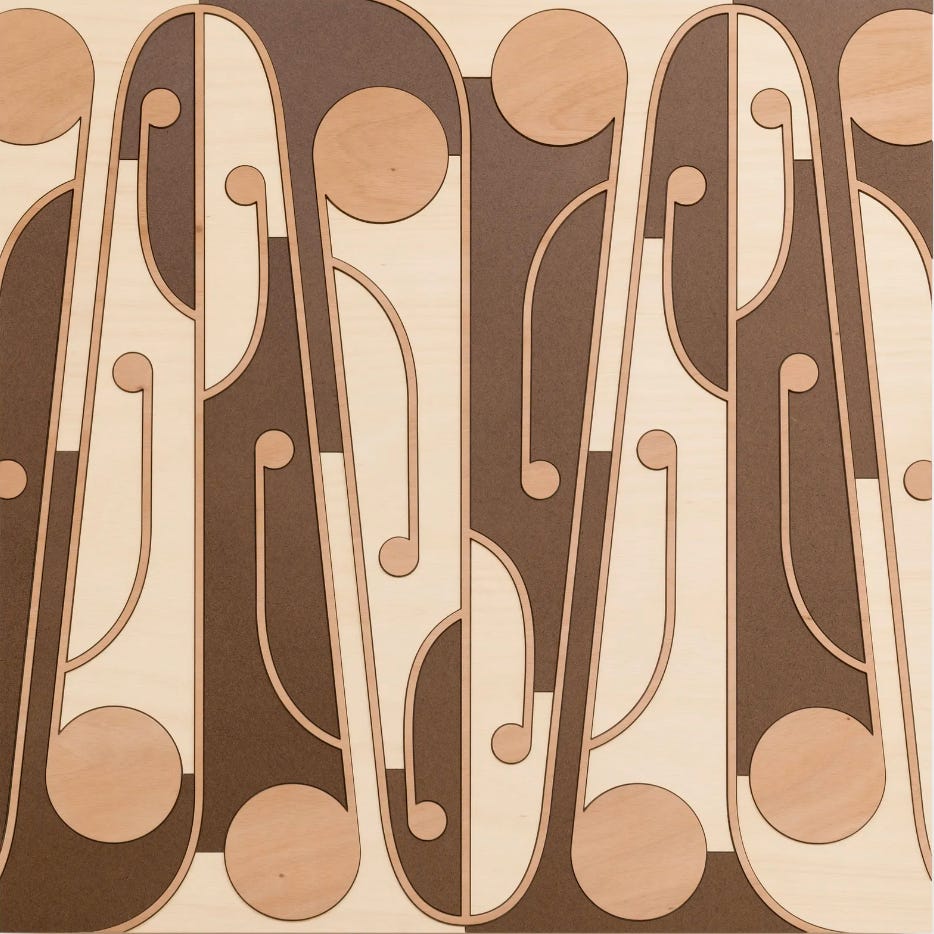
Gordon Walters → Ngataiharuru Taepa
For someone interested in Gordon Walters’ koru paintings, Ngataiharuru Taepa is an obvious contemporary artist to look at.
Both use repeated geometric forms associated with Māori art. Walters reduced the koru into a highly controlled pattern of black and white, or other contrasting colours. Taepa has spent much of his career exploring kōwhaiwhai and its component forms, often producing similarly clean and geometric paintings and objects.
One important difference is that Walters was a Pākehā modernist adapting Māori forms, while Taepa is a Māori artist working with kōwhaiwhai as part of his own cultural practice. So while there are clear visual similarities, the work comes from quite different cultural starting points.
Gallery: Page Galleries, Wellington
Robin White → Ayesha Green
Robin White’s early portraits and landscapes are known for flat blocks of colour, simplified shapes and clear outlines. She often places ordinary New Zealanders in ordinary New Zealand settings.
Ayesha Green uses a similar kind of simplification, with flat backgrounds, limited shading and large areas of solid colour. She uses that style to explore Māori identity, history and representation.
Both explore people and place in different ways, while showing how much can be done with relatively simple-looking paintings.
Gallery: Season, Auckland
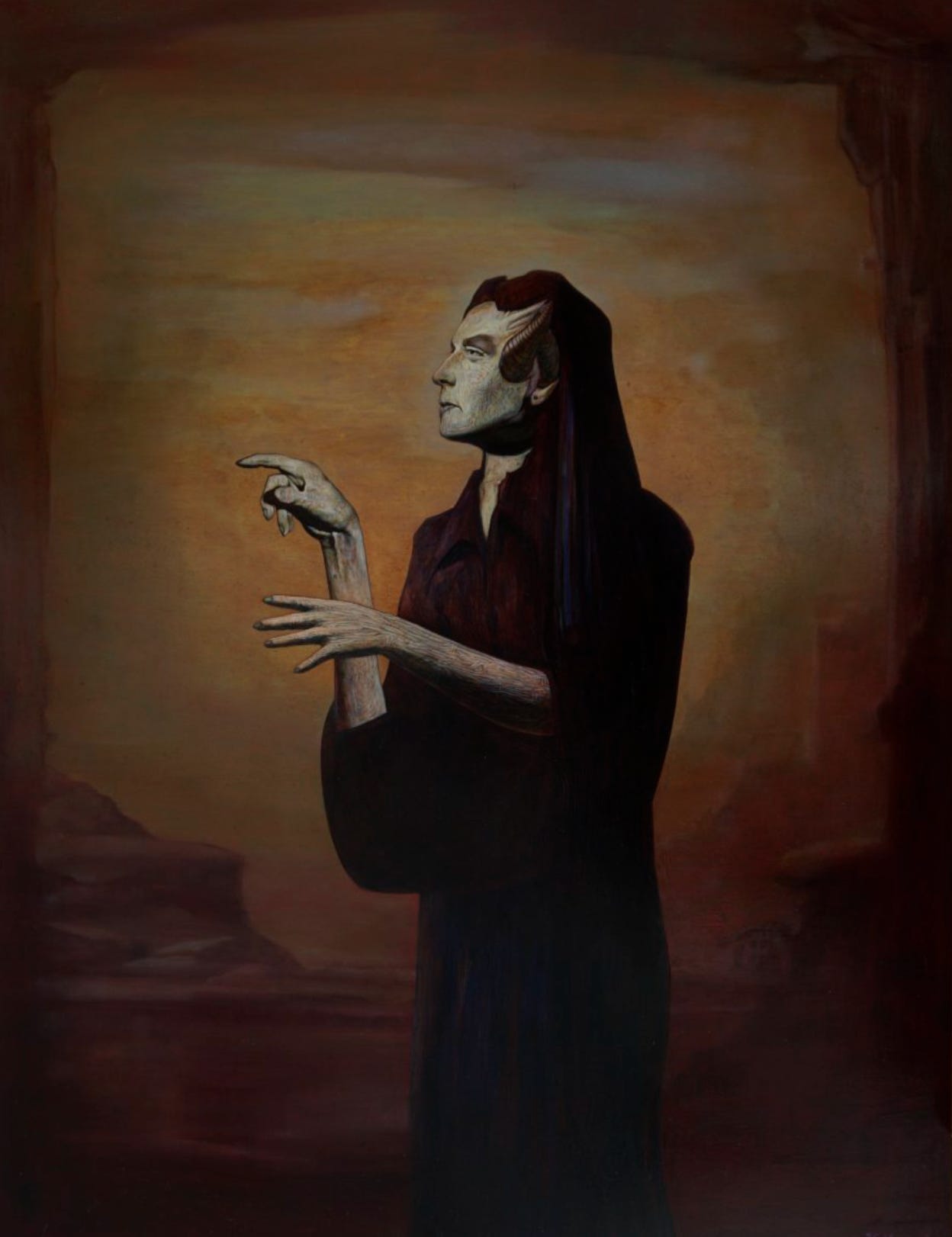
Tony Fomison → Jason Greig
There is a strong connection between Tony Fomison and Jason Greig in the dark, psychologically charged atmosphere of their works. Both often place solitary figures or faces against deep, shadowy backgrounds, giving their paintings a strong feeling of ritual, symbolism, and religion.
Fomison drew heavily on religious painting, European art history and mythology. Greig works in similar territory, drawing on religious imagery with Christchurch Art Gallery describing his work as bringing together “Gothic shadows, werewolves and Old Masters”.
If it is the brooding figures, dark palette and slightly unsettling quality of Fomison that appeals, Greig is a particularly convincing contemporary comparison.
Gallery: Chambers Art Gallery, Christchurch
Michael Smither → Claudia Kogachi
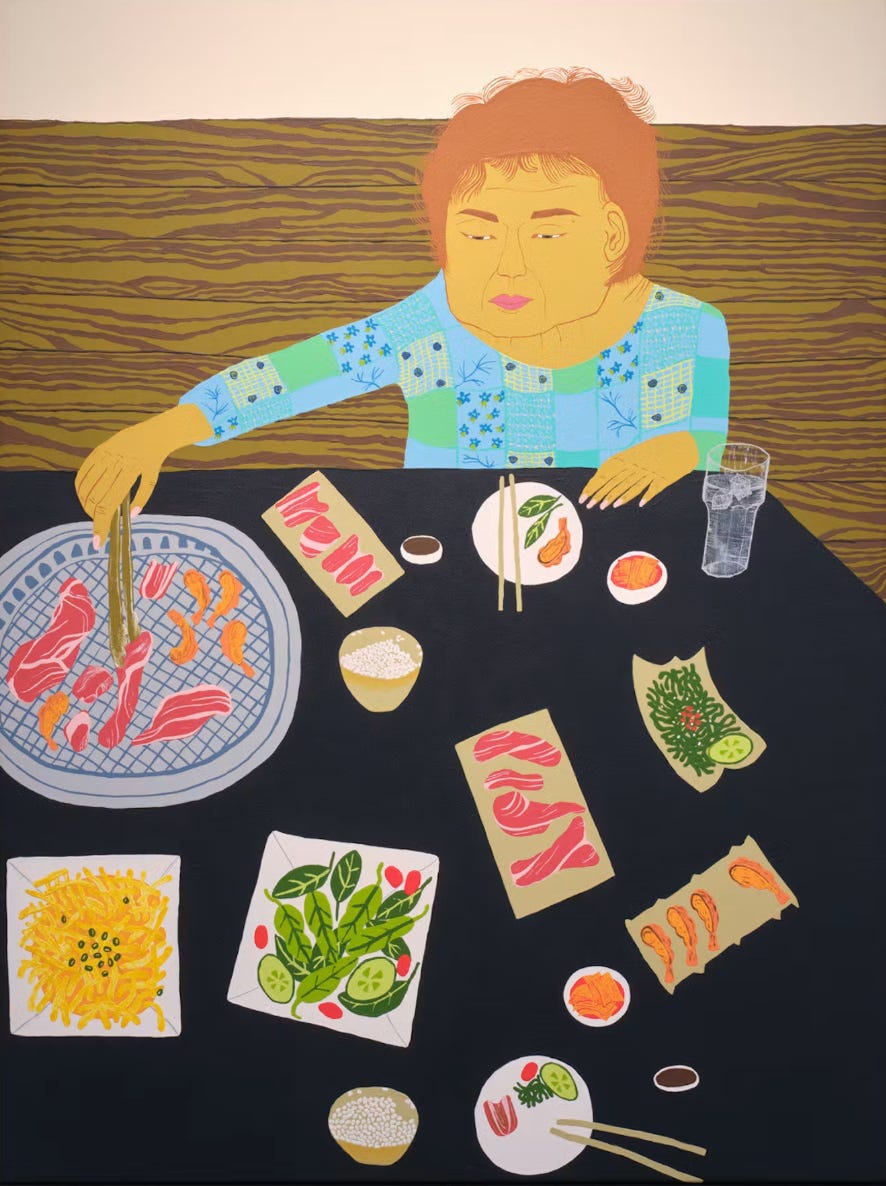
The connection between Michael Smither and Claudia Kogachi is family.
Some of Smither’s best-known paintings came directly out of domestic life: children eating, bathing, playing and fighting. He took fairly ordinary family scenes and made them the subject of serious paintings.
Kogachi does something similar with her own family and relationships. Earlier works often showed Kogachi and her mother competing against each other in boxing, table tennis and other activities. More recent paintings have included partners, friends and imagined scenes.
If what you like about Smither is the idea of painting everyday relationships and family tensions, Kogachi is a strong contemporary comparison.
Gallery: Gow Langsford, Auckland and Jhana Millers Gallery, Wellington
Michael Parekōwhai → Kereama Taepa
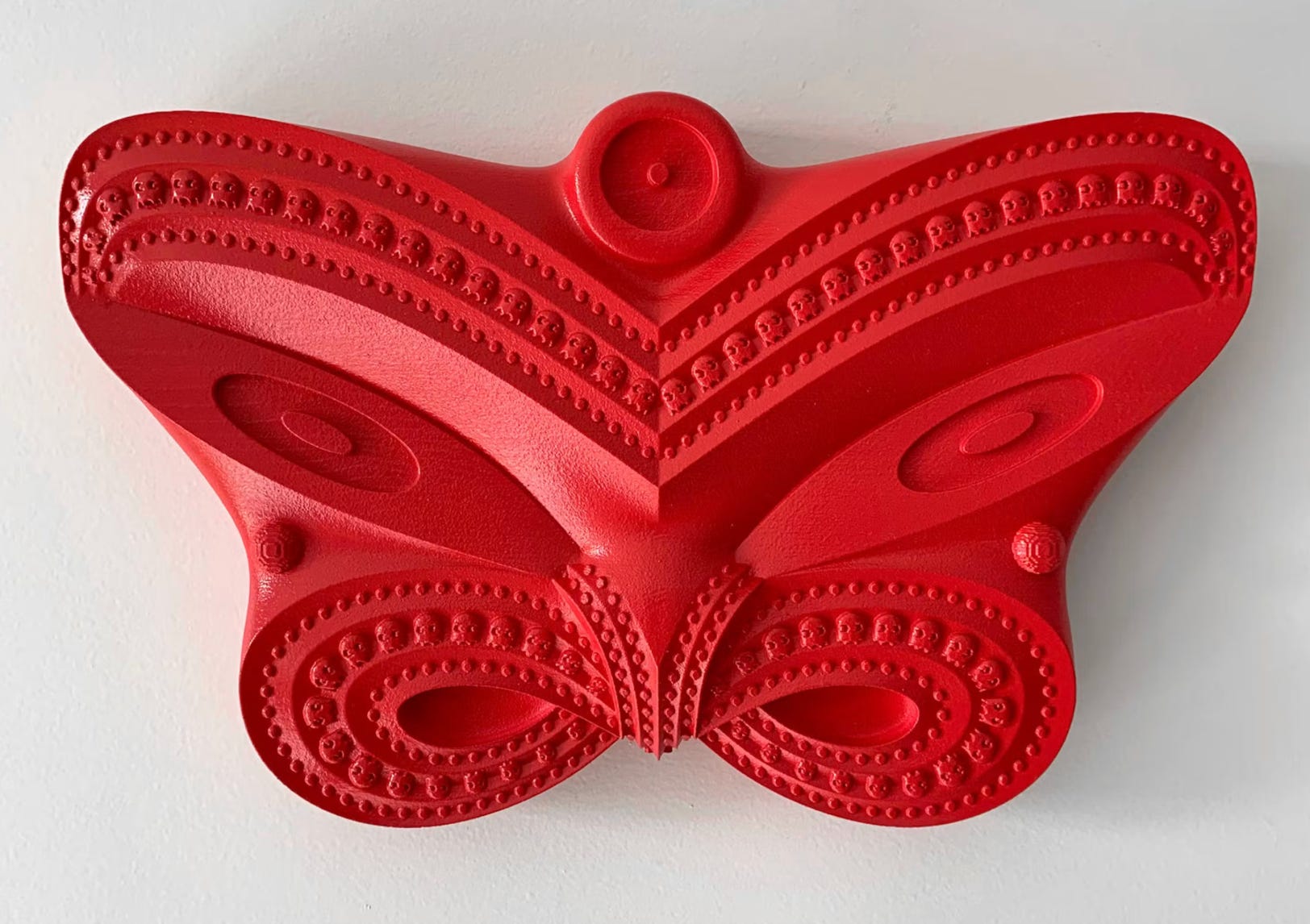
Michael Parekōwhai and Kereama Taepa both mix Māori art with contemporary popular culture, often working in three dimensions.
Parekōwhai has used everything from pianos and guitars to hobby kit sets and security guards. His work can initially be funny or familiar before you realise there is more going on around Māori identity, history and representation.
Taepa takes traditional Māori forms and combines them with newer technology and references to the culture he grew up with. Pac-Man, Mario and Space Invaders have appeared alongside forms drawn from whakairo and kōwhaiwhai, while he works with 3D printing, augmented reality and digital modelling.
Both bring together Māori visual culture into new forms, whether that’s incorporating it into light boxes and musical instruments or combining it with retro-video video game characters and augmented reality.
Gallery: Jhana Millers Gallery, Wellington
Ian Scott → Peata Larkin
Ian Scott is well known for his ‘Lattice’ paintings (as well as his ‘Girlie’ pop-art paintings). He built those lattice works from coloured strips that cross over one another to form a grid. Peata Larkin also builds her paintings around grids, repeated lines and interlocking geometric forms. Her surfaces can resemble weaving or pixelated patterns, drawing on tukutuku as well as digital imagery.
Both artists use simple geometric elements to create much more complex patterns, with colour and repetition doing most of the work. If it is Scott’s Lattice series that appeals, Larkin is a particularly strong contemporary comparison.
Gallery: Two Rooms, Auckland
Gretchen Albrecht → Grace Wright
If what you like about Gretchen Albrecht is large-scale abstract painting and strong colour, Grace Wright makes sense as an alternative.
Albrecht is known for broad areas of colour and large sweeping painted forms, particularly in her oval and hemisphere paintings. Wright’s paintings are busier, with long brushstrokes looping and twisting across the canvas in an almost calligraphic way, although they remain primarily abstract.
Both use large canvases, strong colour and sweeping brushstrokes to give their paintings a real sense of energy. Wright’s work is busier, but the bold colour, gesture and scale offer a similar appeal.
Gallery: Gow Langsford, Auckland
Ann Robinson → Layla Walter
Layla Walter worked as an assistant to Ann Robinson while developing her own career in cast glass. Both use the lost-wax casting process and often make substantial pieces of coloured glass based on natural forms.
There are clear differences in their work, but someone who likes Robinson’s heavy cast-glass vessels, strong colour and use of native plants is likely to find Walter easy to appreciate.
Gallery: Masterworks Gallery, Auckland
Lois White → Kushana Bush
Lois White often arranged groups of people almost like actors on a stage. She used those scenes to comment on religion, gender, politics and social behaviour.
Kushana Bush also creates complicated scenes filled with figures. Her references range from medieval and Renaissance painting to Indian miniatures and Japanese art. The exact story isn’t always clear, but there is usually plenty happening.
Both reward close looking. Their paintings are packed with figures and smaller scenes that gradually reveal more of the story.
Galleries: Brett McDowell Gallery, Dunedin and Ivan Anthony, Auckland
Bill Hammond → Tony de Lautour
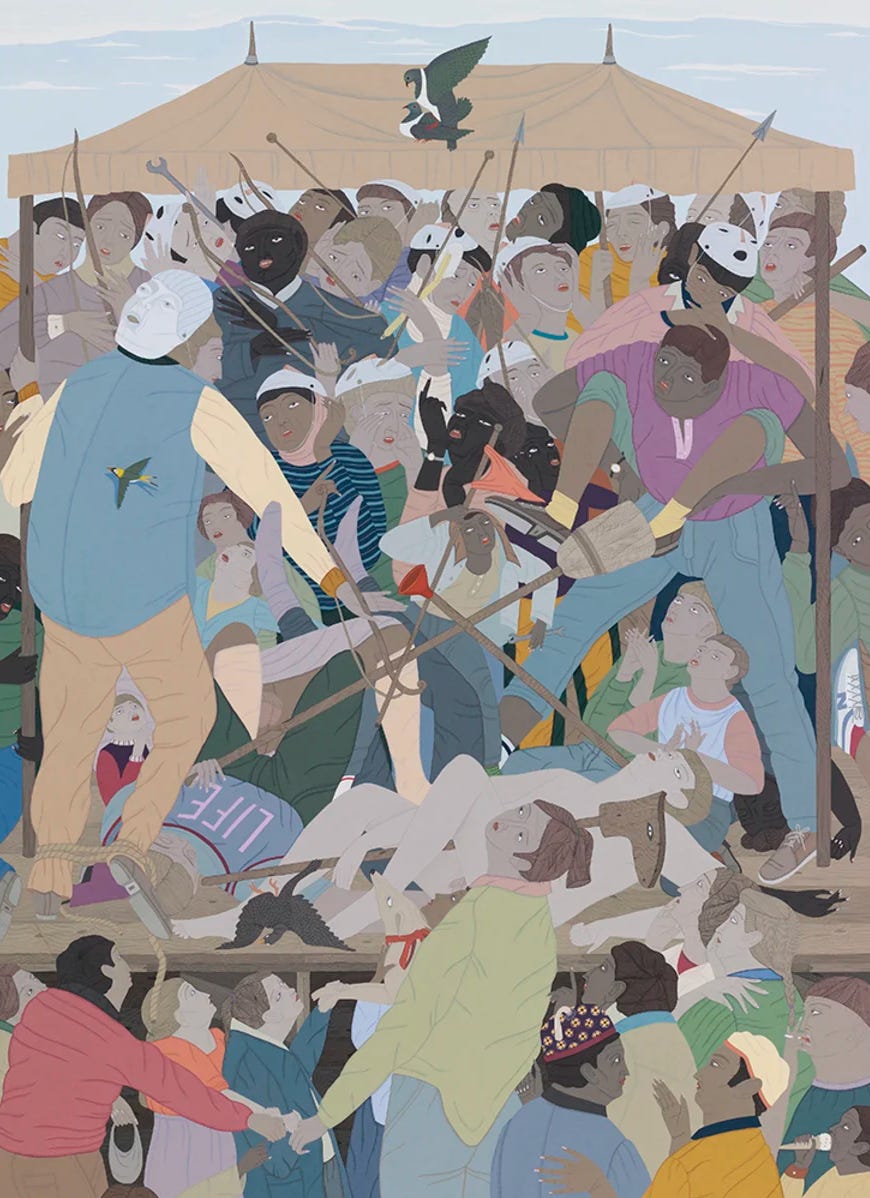
If you like Bill Hammond’s darker and stranger paintings, Tony de Lautour is an interesting alternative to consider.
Both artists came out of Christchurch and made extensive use of New Zealand symbols while giving them a dark, slightly surreal twist. Hammond is best known for the strange worlds populated by his bird-human figures. De Lautour created his own cast of recurring characters, including half-man, half-lion figures often shown smoking or drinking, alongside maps, mazes and other works crowded with symbols. Both built distinctive fictional worlds from familiar New Zealand imagery, mixing humour with something darker and more unsettling.
The comparison works best with de Lautour’s paintings from the 1990s and early 2000s. His more recent work has moved towards cleaner geometric and abstract compositions.
Gallery: Ivan Anthony, Auckland
Frances Hodgkins → Milli Jannides
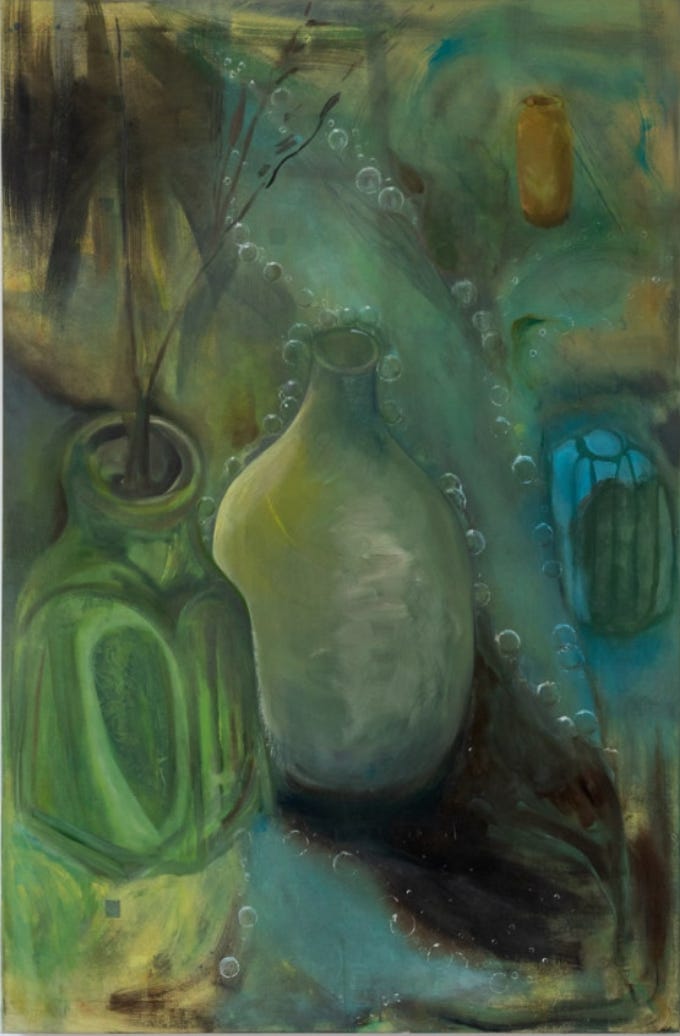
This is perhaps one of the looser comparisons, but I think Milli Jannides is an interesting alternative to Frances Hodgkins.
Hodgkins’ later paintings sit somewhere between representation and abstraction. You can recognise a landscape, building, plant or still life, but she wasn’t particularly interested in making it look realistic. Jannides’ paintings can work in a similar way. Some look like landscapes or interiors; others are much harder to pin down. Coastal Signs describes her work as moving between fiction, memory and imagination.
If you like the way Hodgkins lets recognisable scenes dissolve into abstraction, Jannides offers a similar appeal, often using similarly muted greens, browns and earthy tones.
Gallery: Coastal Signs, Auckland and McLeavey Gallery, Wellington
Milan Mrkusich → Sara Hughes
Milan Mrkusich spent much of his career stripping painting back to colour, shapes, lines and their position on the canvas. There generally isn’t a person, landscape or object that you’re supposed to recognise.
Sara Hughes works from the same basic starting point. Geometry and colour are central to her paintings, although she uses them in a much brighter and busier way. Her work has also drawn on maps, data and digital systems and has expanded into large public installations.
Hughes takes that same interest in colour and geometry in a more energetic, contemporary direction.
Gallery: Gow Langsford, Auckland
Brent Wong → Justin Summerton
If you like Brent Wong’s slightly surrealist landscapes, Justin Summerton is probably the artist most likely to deliver your Dali-esque desires.
Wong paints landscapes that seem realistic until you look more closely. Buildings sit in unlikely places while the skies often have surreal concrete like constructions floating across them. Summerton works in similar territory. He uses recognisable New Zealand features—mountains, beaches, volcanic cones, clouds—but rearranges them to create landscapes that aren’t quite real.
Wong’s paintings tend to be quieter and more precise. Summerton’s are usually more heavily painted. But both offer recognisable New Zealand scenery with something slightly odd going on.
Grahame Sydney → Elliot Love
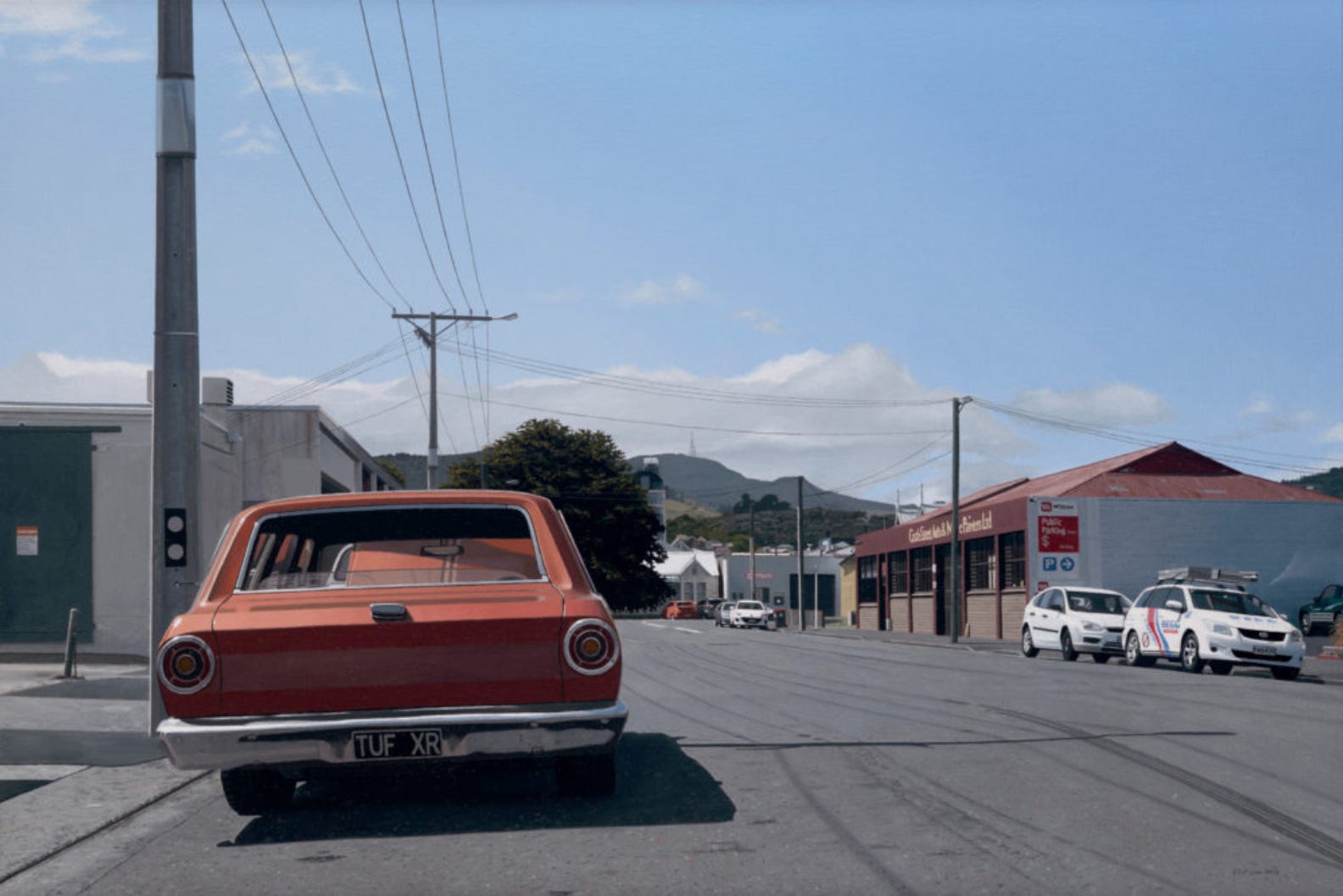
For collectors who like Grahame Sydney’s realist paintings, I would look at the works of Elliot Love.
Sydney is best known for his highly detailed paintings of Central Otago, where empty roads, farm buildings and wide landscapes are often as important as the scenery itself. Love brings a similar level of realism to suburban New Zealand, painting quiet streets, older cars and ordinary houses, often with no people in sight.
Both pay close attention to changing light, long shadows and the stillness of an empty scene. There is also a direct connection between them with Love describing Sydney as a “good friend and generous mentor”, as well as a major inspiration.
Gallery: Parnell Gallery, Auckland
Ralph Hotere → Israel Tangaroa Birch
If you are drawn to the black paintings of Ralph Hotere, have a look at Israel Tangaroa Birch.
Birch often works with highly polished sheets of stainless steel, which he carves and lacquers. Many of the works are predominantly black, but their appearance changes dramatically depending on the light and where you are standing.
The most obvious connection is with Hotere’s restrained black paintings. But Hotere also worked with materials such as corrugated iron and glass, creating surfaces that shift with changing light. Both artists use black, reflection and the material itself to make works that can look quite different as you move around them.
Gallery: Föenander Galleries, Auckland
These comparisons aren’t meant as predictions. There is no reason to assume Peata Larkin will eventually trade at Ian Scott prices, or that buying Jason Greig is somehow a substitute for owning a Fomison.
The more useful question to ask is: “what do I actually like about that established artist?”
If it is Gordon Walters’ precise geometric patterns, look at Ngataiharuru Taepa. If it is the strange landscapes of Brent Wong, try Justin Summerton. And if it is the grids of Ian Scott’s Lattice paintings, Peata Larkin is a logical next stop.
I hope this has also exposed you to some New Zealand artists you didn’t know about.