
I’ve been experimenting with the intersection of AI and art. This is the first of several projects I’ll be sharing on a semi-regular basis.
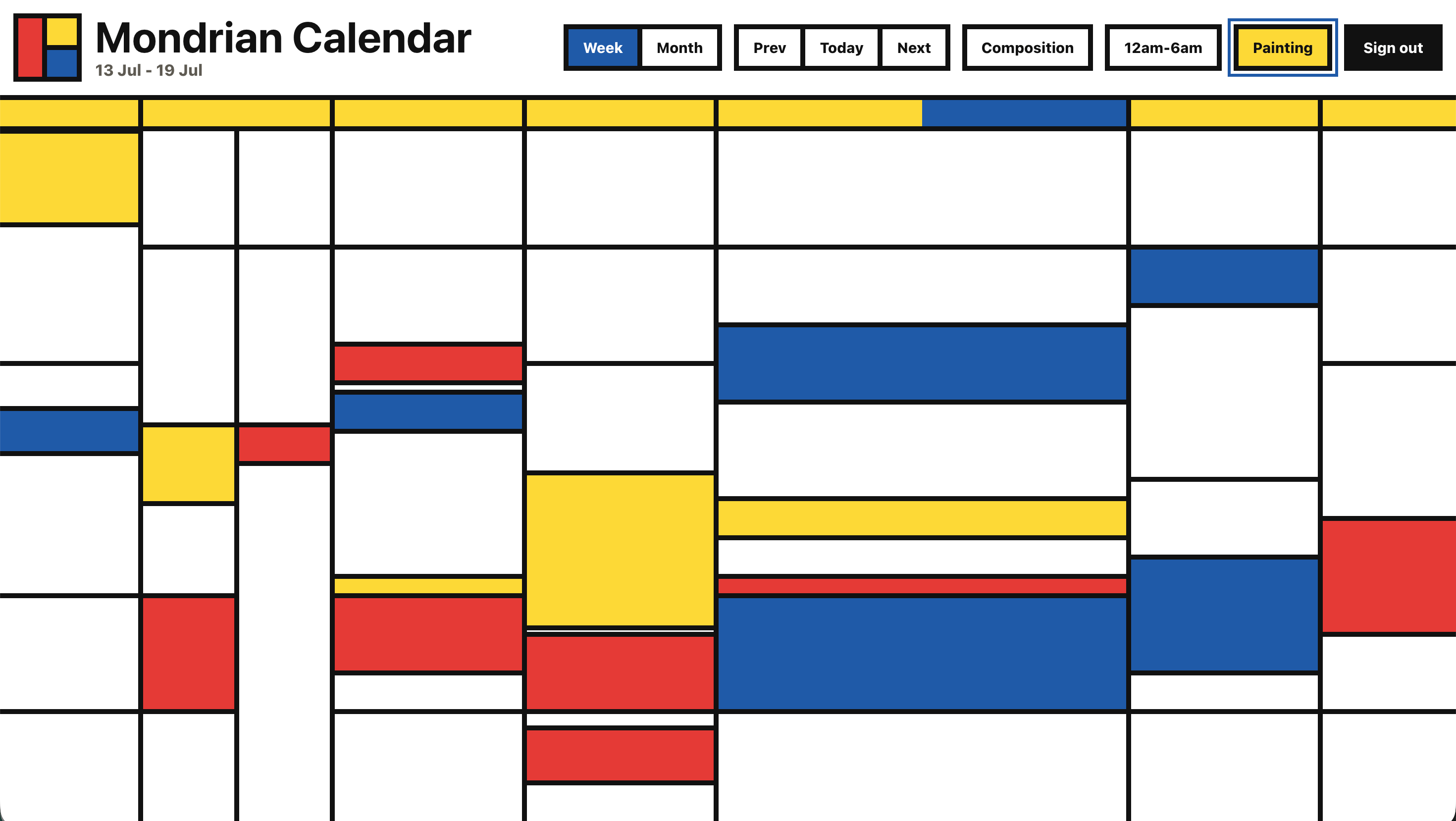
With the help of ChatGPT, I’ve built an app that transforms your Google Calendar into a Mondrian-inspired masterpiece. An organised modernist composition of bold lines, bright moments and perfect balance. Just the way your life should be run.
Visit www.mondriancalendar.com and log in with your Google account.
What it does
Mondrian Calendar uses the Google Calendar API to display your calendar in a new visual form. It can view your events, but it cannot create, edit or delete them. Any changes still need to be made through your usual calendar app.
The calendar has two distinctive features:
Composition and Boogie Woogie. Use the ‘Composition’ / ‘Boogie Woogie’ button to switch between two visual styles inspired by different periods of Mondrian’s work. There is more background on each style below.
Painting mode. Select ‘Painting’ to remove all text and transform your schedule into something even closer to a true Mondrian painting. You can still click any coloured block to see the event details.
As with Google Calendar, you can switch between weekly and monthly views, although the weekly view provides the best visual experience. The calendar hides the hours between midnight and 6am by default, but you can reveal them using the ‘12am–6am’ button.
Piet Mondrian
Many readers will recognise Mondrian’s grids of black lines and primary colours. The app draws on two distinct phases of his career.
Composition
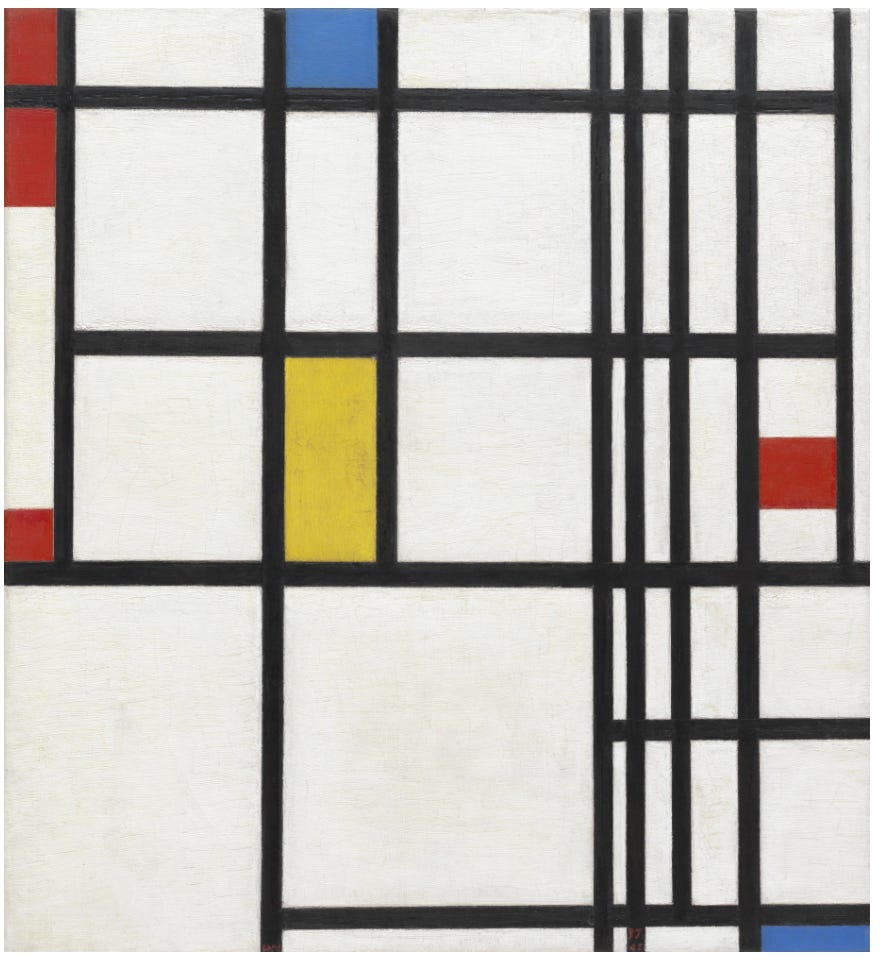
Mondrian arrived at his best-known style in the early 1920s, after gradually simplifying the trees, buildings and landscapes he had painted earlier in his career.
Influenced by Cubism and the Dutch De Stijl movement, he began working with a restricted set of elements: horizontal and vertical lines, white backgrounds and blocks of red, yellow and blue.
The paintings may look simple, but they were carefully constructed. Mondrian repeatedly adjusted the width of the lines and the size and position of each coloured area until he was satisfied with the balance of the composition.
Boogie Woogie
Mondrian moved to New York in 1940, and the city prompted a noticeable change in his work.
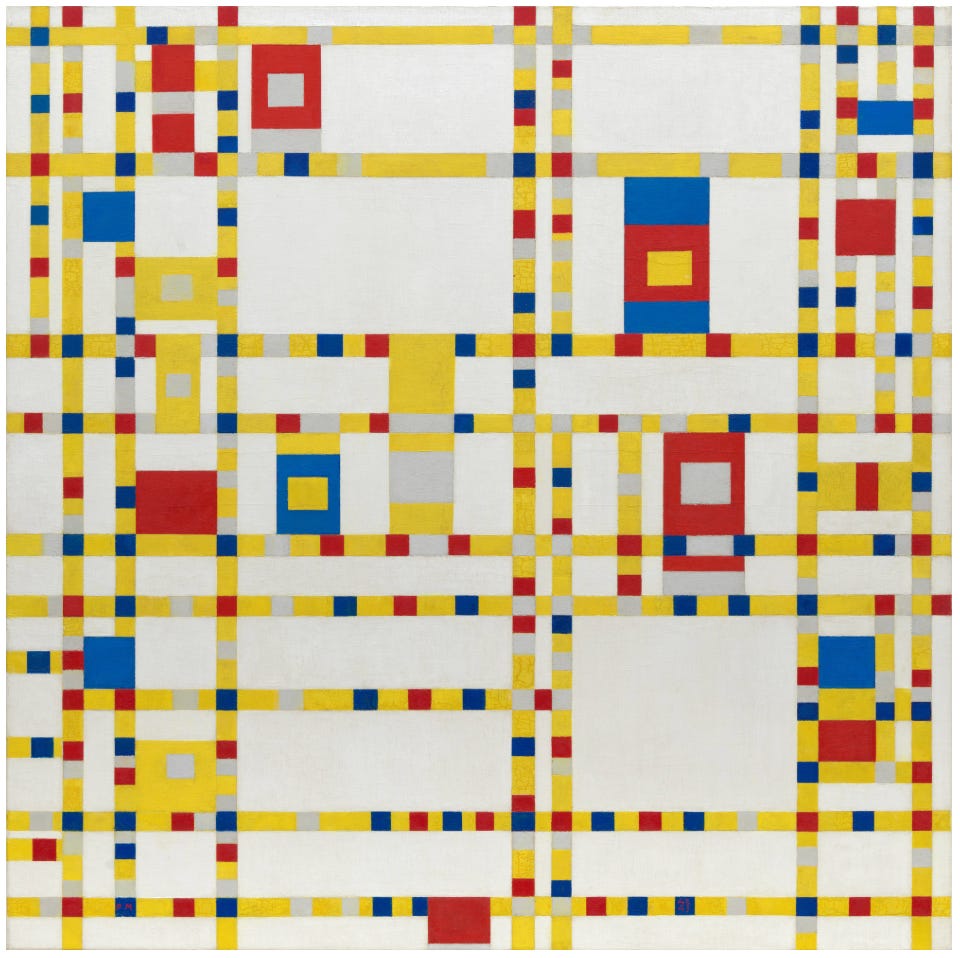
In paintings such as Broadway Boogie Woogie, completed in 1942–43, the solid black lines of his earlier work were replaced by broken bands of colour. The result was brighter, denser and more animated.
The title referred to the boogie-woogie jazz that Mondrian enjoyed, while the intersecting lines also recalled Manhattan’s street grid and traffic. It was a more energetic version of the same basic visual system he had developed over the previous two decades.
Have a play with it and let me know what works, what doesn’t, and what I should build next.
James, this is what I’m the internet is all about. So silly, so cool.