
Te Papa has been front-page news over the last week, with both The Listener and The Post publishing stories about New Zealand’s most important cultural institution. The Post focused on funding pressures, while The Listener ran an exposé on something many visitors already suspect: a huge amount of great art is sitting unseen in storage.
The criticisms raised by The Listener feel fair to me. A national museum like Te Papa should be showing the 20 - 30 best New Zealand artworks prominently and permanently. On my last visit, it felt like only a very small slice of the collection was actually on display. The Listener suggests one problem is indecision about what should be shown. If that’s the case, then a clearer curatorial position is needed. What follows is a starting point.
Much of Te Papa’s collection can already be seen online, even if only a fraction has been fully digitised. Working within that constraint, I’ve selected 14 works by 14 different artists that should be on display the next time I visit. Te Papa already owns every one of them. They are not lost, disputed, or unavailable. They are simply waiting to be brought out of storage.
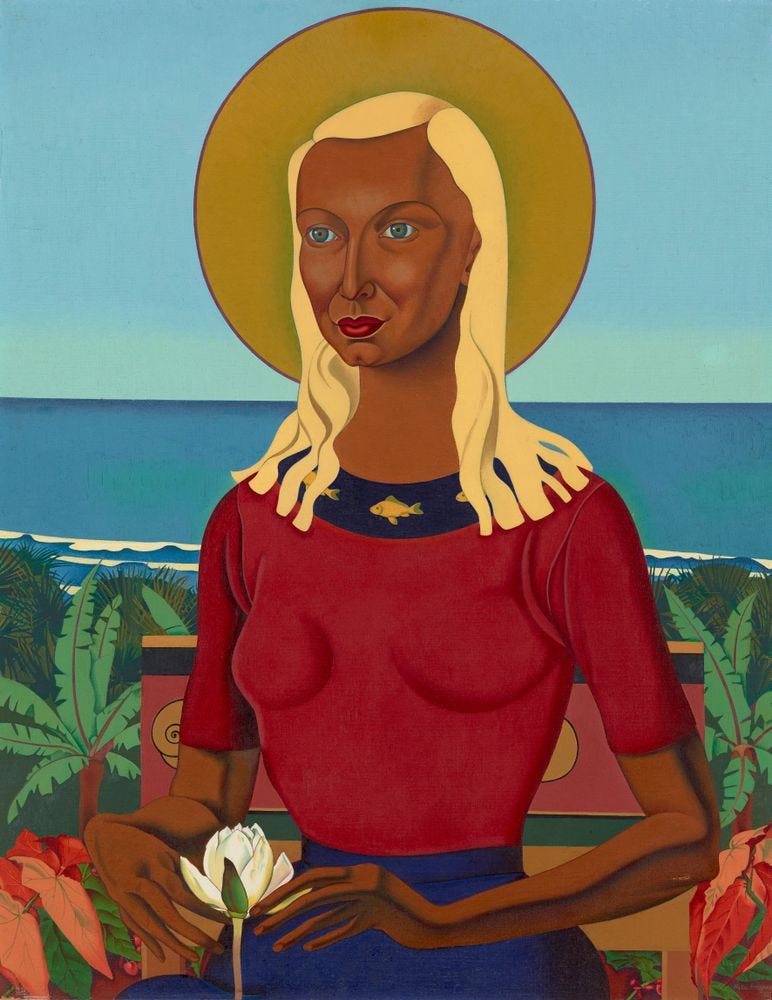
Rita Angus
Rutu is a landmark work in Rita Angus’ career, expressing her hope for a calmer, fairer world by bringing different cultures together in a single imagined figure. If I had my way, it would be on permanent display, afforded something closer to the reverence given to the Mona Lisa at the Louvre.
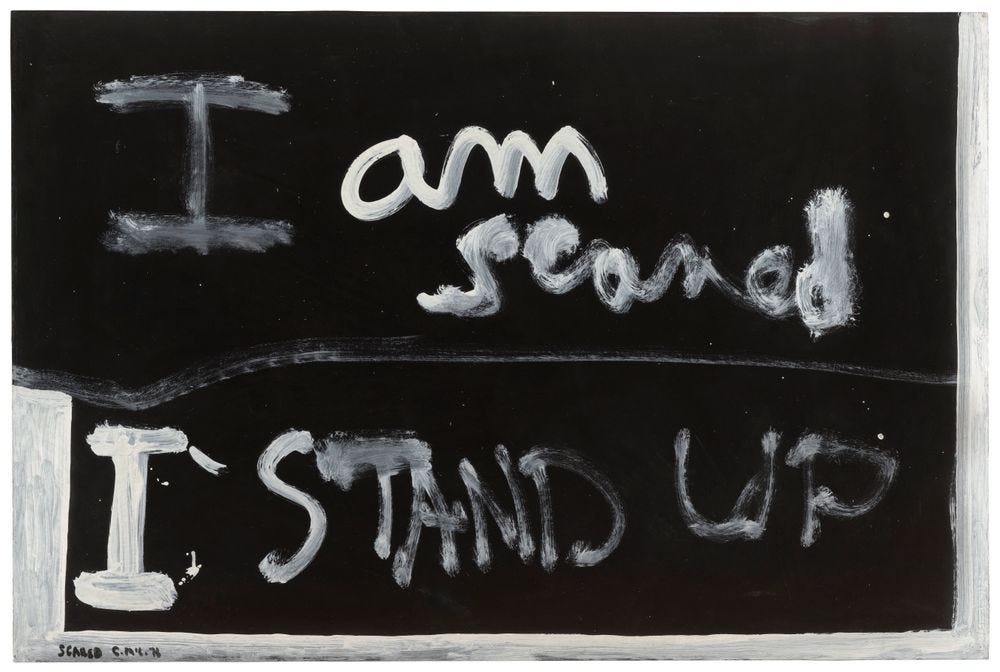
Colin McCahon
Colin McCahon believed art should say something important, even if it made people uncomfortable. In Scared, the stark words “I am scared / I STAND UP” turn private doubt into a call for courage and responsibility. If art history is being dropped from high schools, perhaps the answer is not less exposure to art, but more, starting with a postcard-sized version of this work in the hands of every Year 9 (Form 3) student, supported by the original on permanent display at Te Papa.
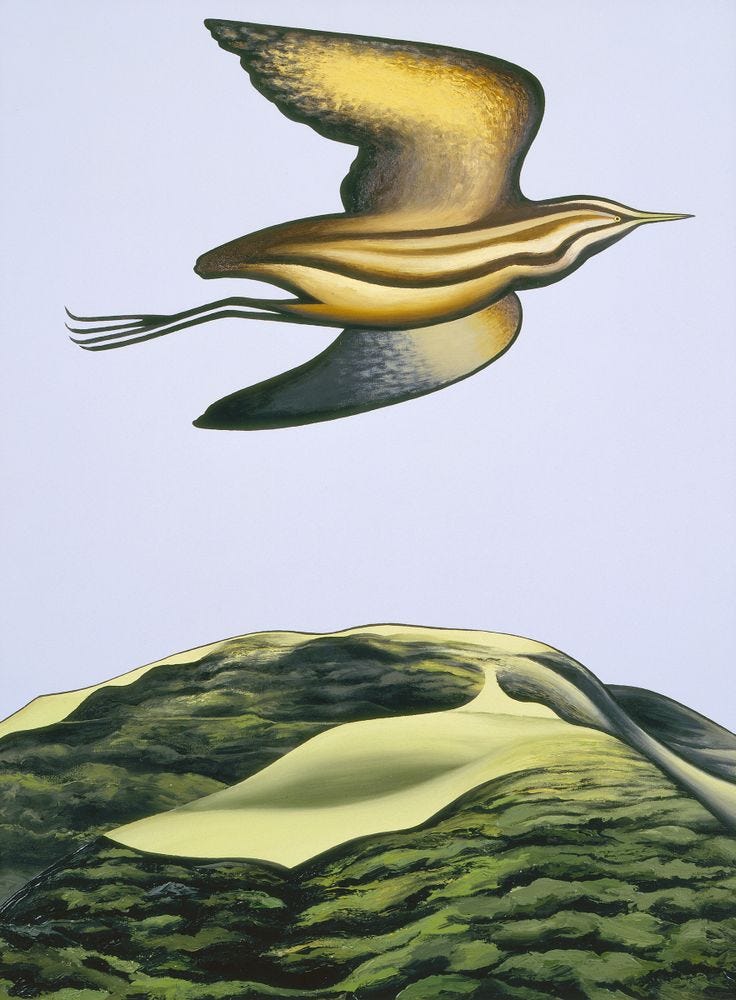
Don Binney
Don Binney is best known for bold paintings of birds and landscapes that helped shape ideas of New Zealand identity in the 1960s and 70s. Puketōtara, twice shy sits at a turning point in his career, using the bird in flight to explore freedom, place, and his uneasy fit with a changing art world.
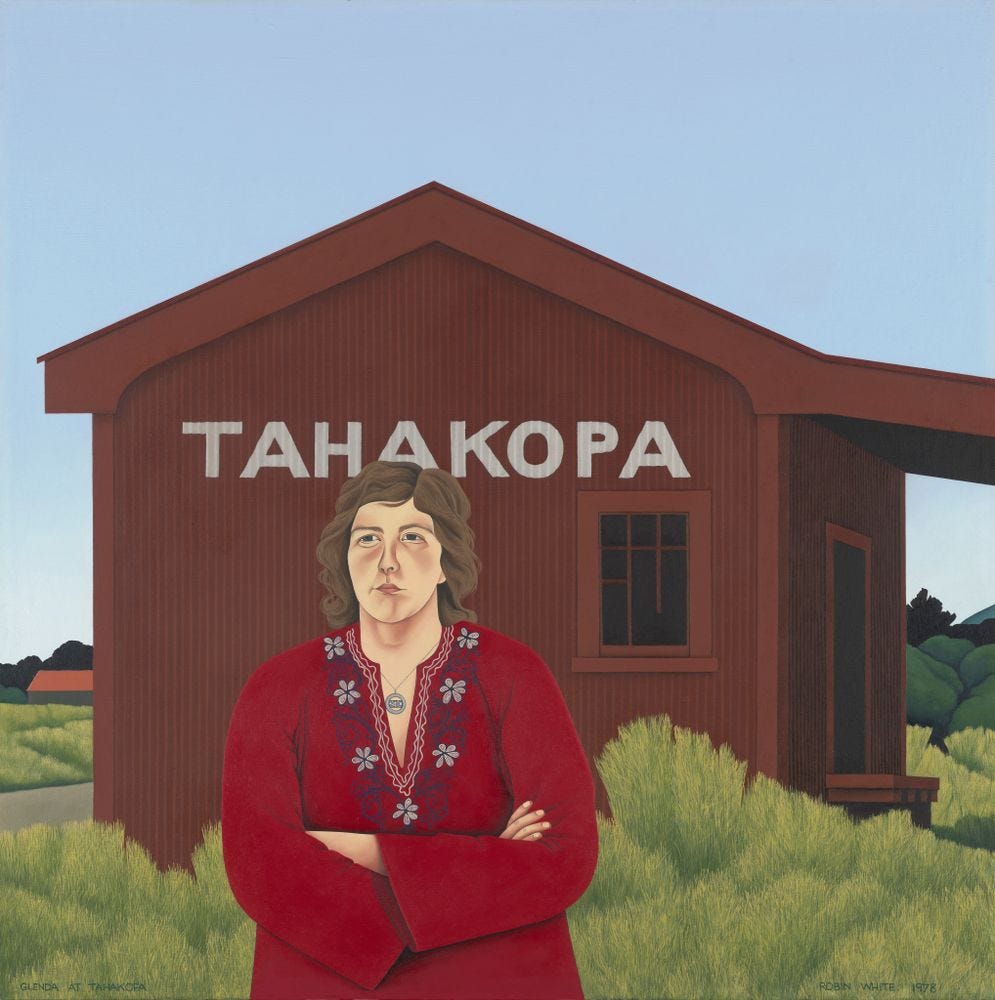
Robin White
In Glenda at Tahakopa, Robin White places her friend in front of a small rural railway station, turning an ordinary building and a familiar face into a clear statement about place, belief, and small-town New Zealand. Te Papa bought this work at auction in 2022 for around $400,000, but I’m not sure it’s ever been on display. I’m supportive of public money buying artwork, but only if it’s publicly displayed.
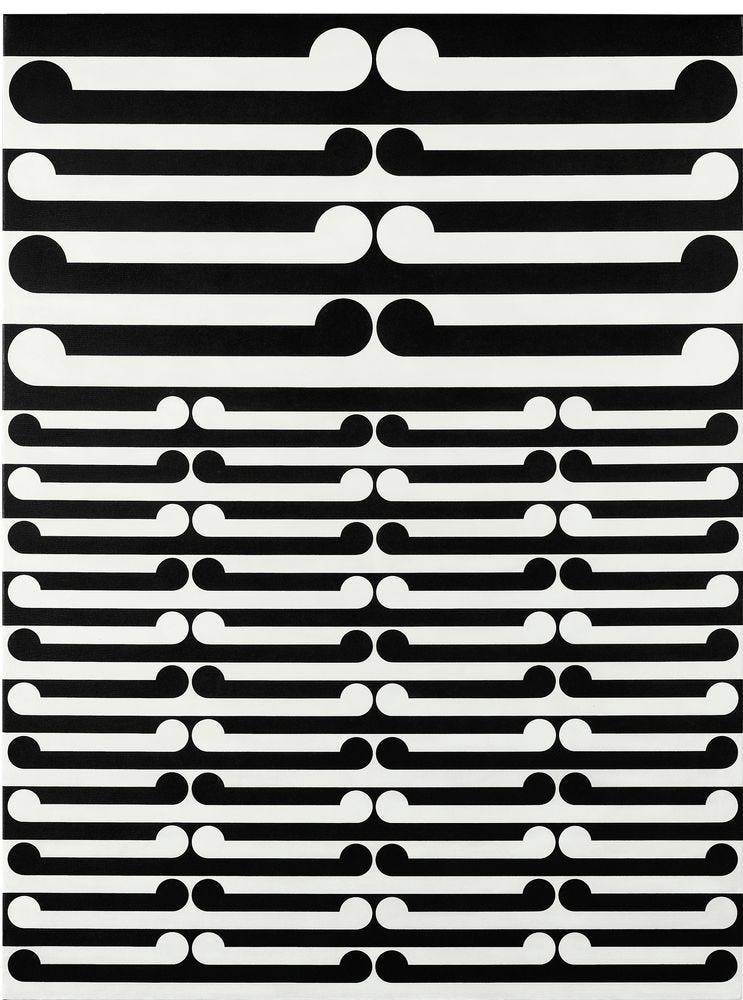
Gordon Walters
Gordon Walters was one of the first New Zealand artists to fully commit to abstraction. In Genealogy III, he turns the koru into a stark black-and-white pattern, showing how Māori forms could be reworked within a modern abstract language. It’s also available as a print that frequently comes up at auction.
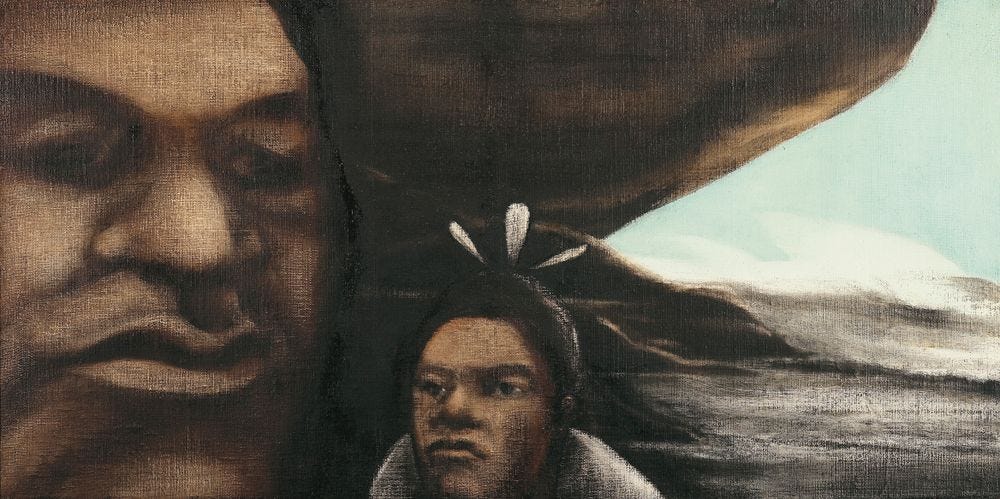
Tony Fomison
Te Puhi o te Tai Haruru (1984-85)
In Te Puhi o te Tai Haruru, Tony Fomison imagines the Taranaki coast as a place watched over by ancestors. The landscape becomes a reminder that memory, knowledge, and responsibility are passed down through generations.
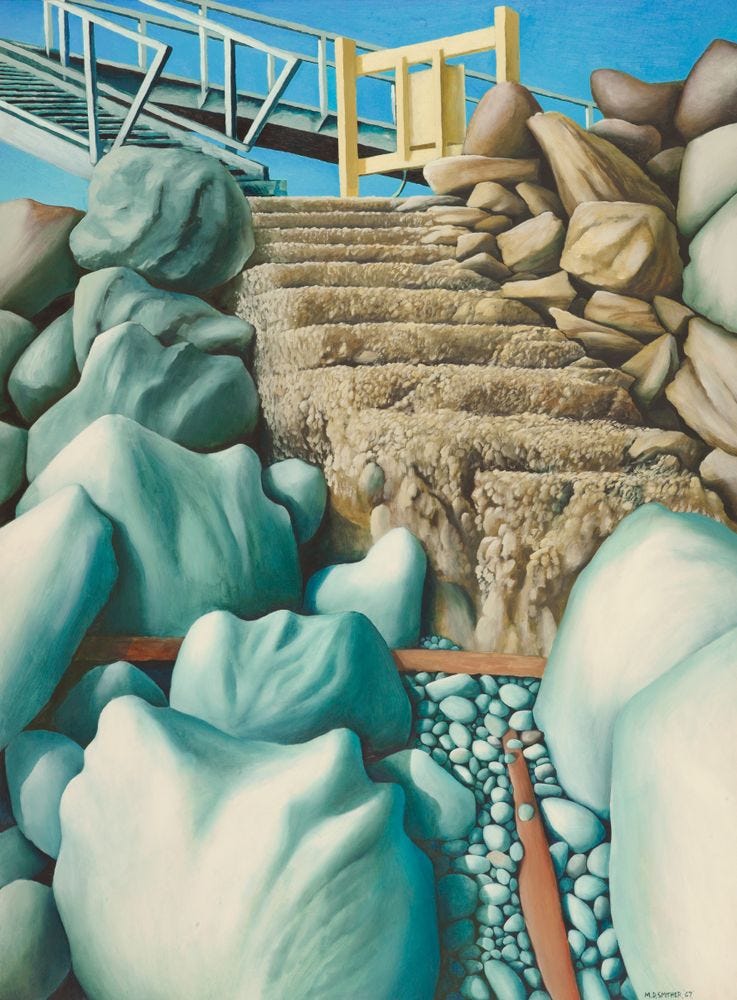
Michael Smither
Railway Station bridge and old step (1967)
I’m a big fan of Michael Smither’s everyday scenes and nearly chose Toys’ Tea Party. Instead, I went with Railway Station bridge and old step because it’s a great example of his distinctive way of painting rocks: solid, carefully observed, and with a real sense of presence.
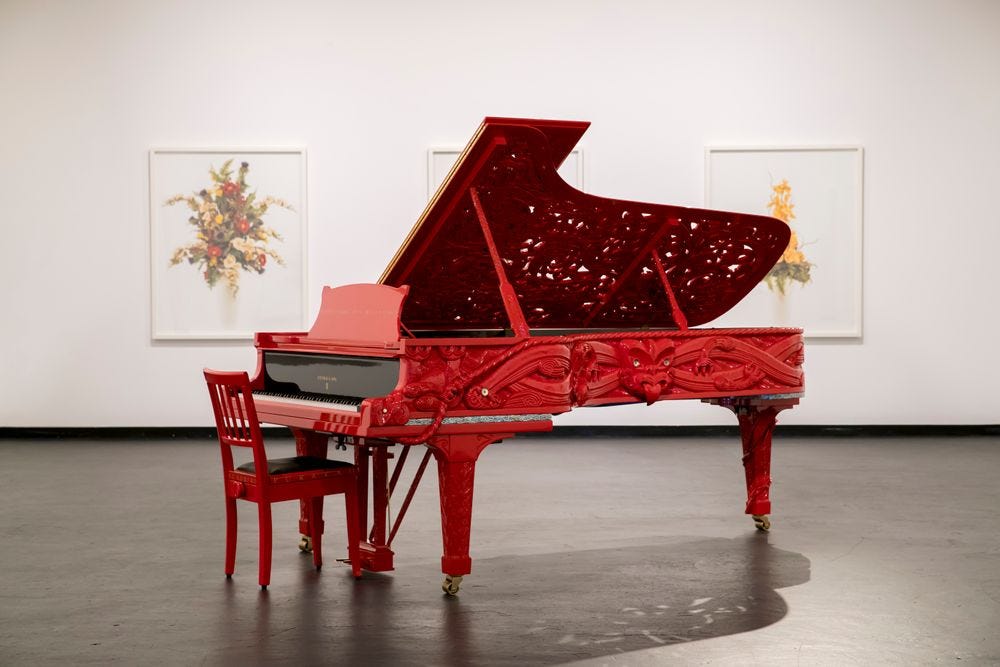
Michael Parekowhai
He Kōrero Pūrākau mo Te Awanui o Te Motu (2011)
One of Michael Parekowhai’s pianos ranks amongst the most expensive works sold at auction in New Zealand, but this one is in public hands. In He Kōrero Pūrākau mo Te Awanui o Te Motu, he turns a grand piano into both sculpture and instrument, flipping the usual story so New Zealand, not Europe, becomes the starting point. It also feels like the perfect excuse to let a talented young New Zealand pianist actually play it.
Gretchen Albrecht
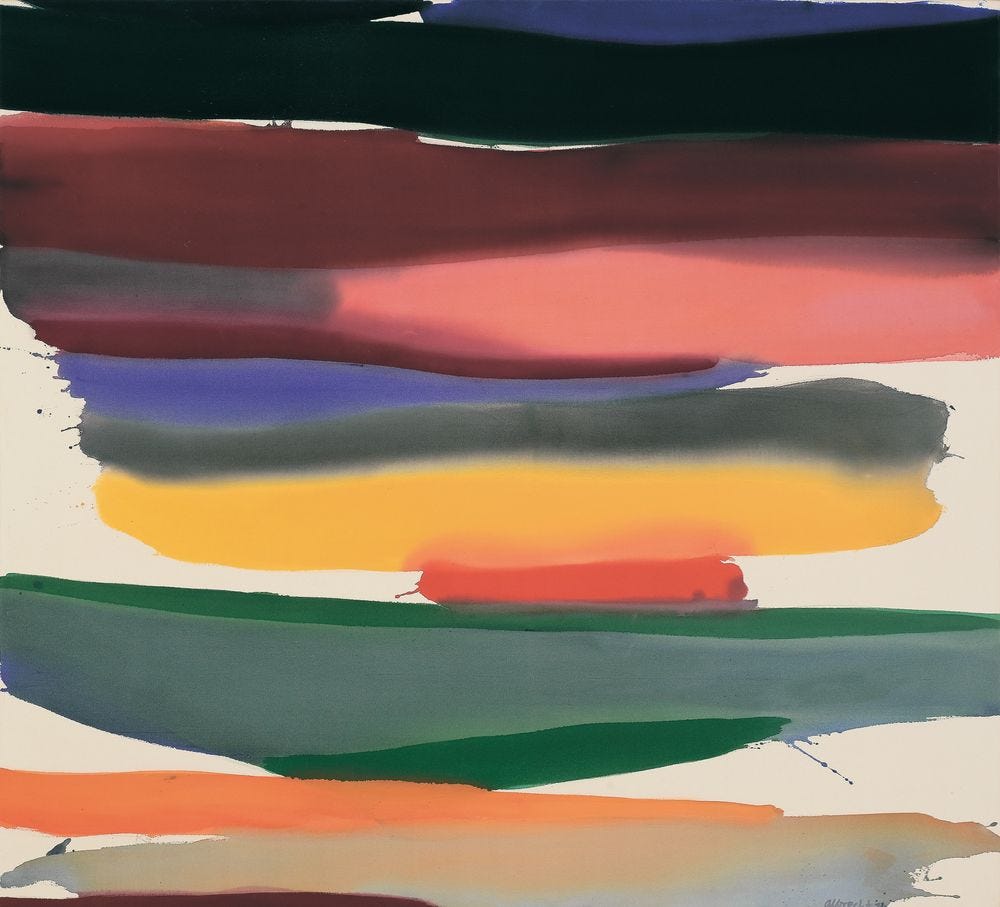
Gretchen Albrecht is best known for her hemisphere paintings, but I’m especially drawn to her mid-1970s rectangular works. In Indian Summer, she pours and stains paint to suggest sky and sea at sunset, turning a familiar New Zealand scene into something calm and immersive.
Louise Henderson
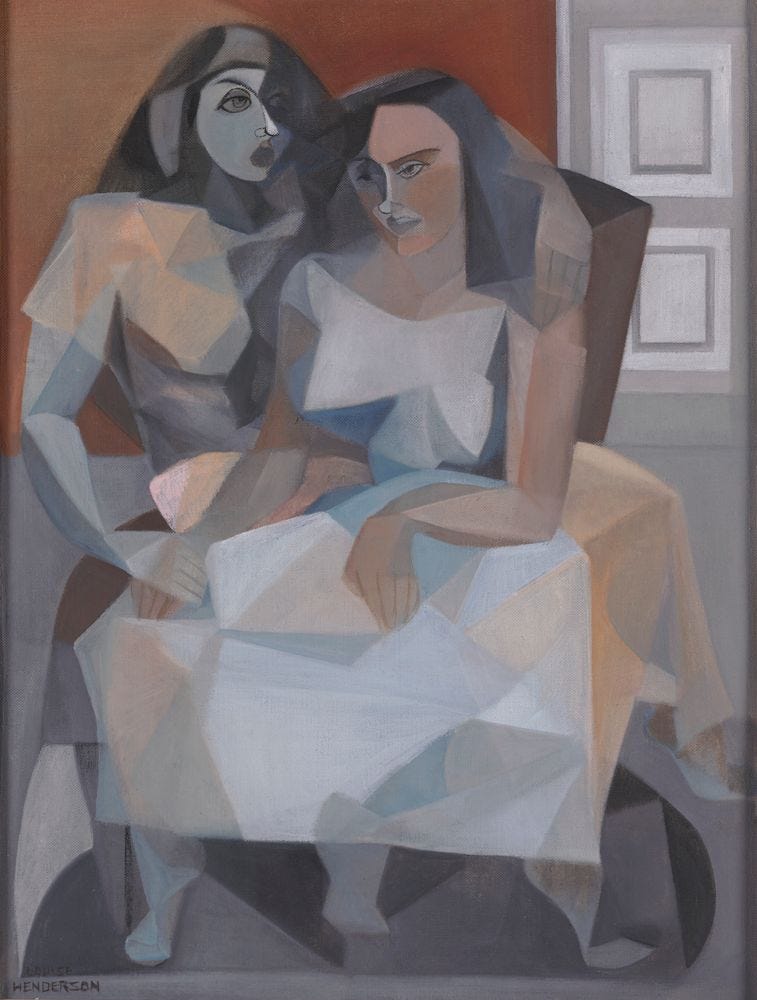
Les deux amies (The two friends) (1953)
Louise Henderson brought European modern ideas back to New Zealand at a time when the local art scene was very conservative. In Les deux amies, she uses cubist forms to show two women as strong, intimate equals, making it a quietly radical image for 1950s New Zealand.
Seraphine Pick
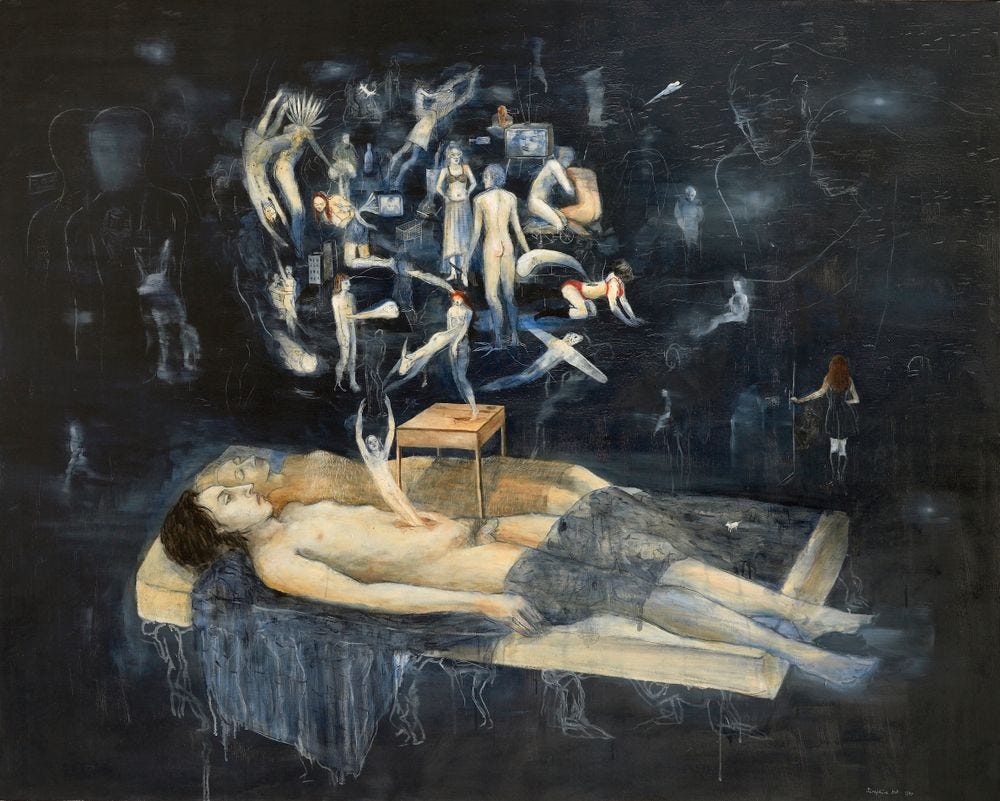
Seraphine Pick is one of New Zealand’s leading contemporary paintings, known for dense, dreamlike paintings that feel overloaded, uneasy, and emotionally charged.
In Love School, she brings together fragments from memory, pop culture, and art history to create a private scene that feels more like a mental state than a narrative.
Philip Clairmont
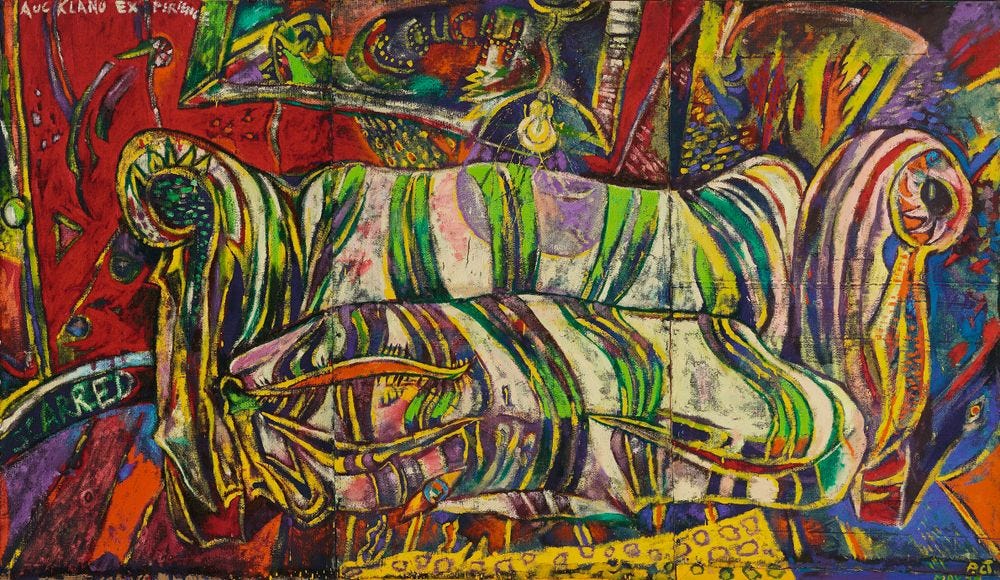
The scarred couch: the Auckland experience (1978)
Philip Clairmont painted ordinary interiors in a raw, confrontational way, using intense colour and distortion. In The Scarred Couch, a damaged sofa fills the canvas, acting as a blunt stand-in for the artist’s frustration and mental state in 1970s Auckland.
Frances Hodgkins
Double Portrait No. 2 (Katharine and Anthony West) (1937)
Frances Hodgkins began with Impressionist painting but gradually moved toward a looser, more abstract style. Painted late in her career, Double Portrait No. 2 keeps the sitters recognisable while focusing less on likeness and more on mood and structure.
![1967-0006-1; Double portrait No. 2 [Katharine and Anthony West]; 1937; Hodgkins, Frances ; without frame; colour corrected](https://substackcdn.com/image/fetch/$s_!sW-Q!,f_auto,q_auto:good,fl_progressive:steep/https%3A%2F%2Fsubstack-post-media.s3.amazonaws.com%2Fpublic%2Fimages%2F4ee11e3b-12ba-468c-829a-202268f13662_1000x838.jpeg "1967-0006-1; Double portrait No. 2 [Katharine and Anthony West]; 1937; Hodgkins, Frances ; without frame; colour corrected")
Bill Hammond
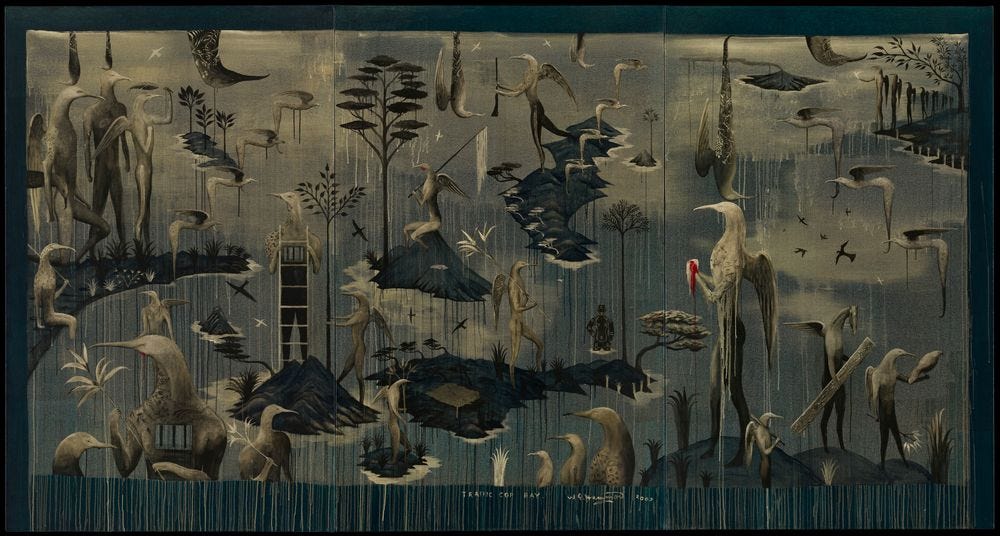
In Traffic Cop Bay, Bill Hammond’s bird-headed figures move through a strange, dreamlike landscape that hints at environmental loss and human impact. To Te Papa’s credit, this work was on display when I visited in 2021. Please keep it there. There’s always something new to notice in this artwork.
There are many more important works hidden away in Te Papa’s storage. I’d encourage anyone to browse the collection online and see what’s waiting in the wings. What would you want to see brought out and put on the walls?