
Australia’s fine art auction market moved decisively forward during the first six months of 2026.1 Sales reached $53.7 million, an increase of 16% from H1 2025. Seven works sold for more than $1 million and the top 10 paintings sold for a collective $17.1m, a 40% increase on H1 2025.
The improvement was broader than a handful of trophy sales. Every price band above $10,000 grew, and the market excluding the ten highest-priced works still increased by 7%.
But the recovery was not evenly distributed. Smith & Singer’s April auction generated $22.4 million, 42% of all H1 sales, and supplied six of the ten highest-priced works. It played an outsized impact on the overall impressive numbers.
The market was therefore stronger, but unusually dependent on one auction house securing an exceptional group of consignments.
H1 2026 by the numbers
$3.68 million
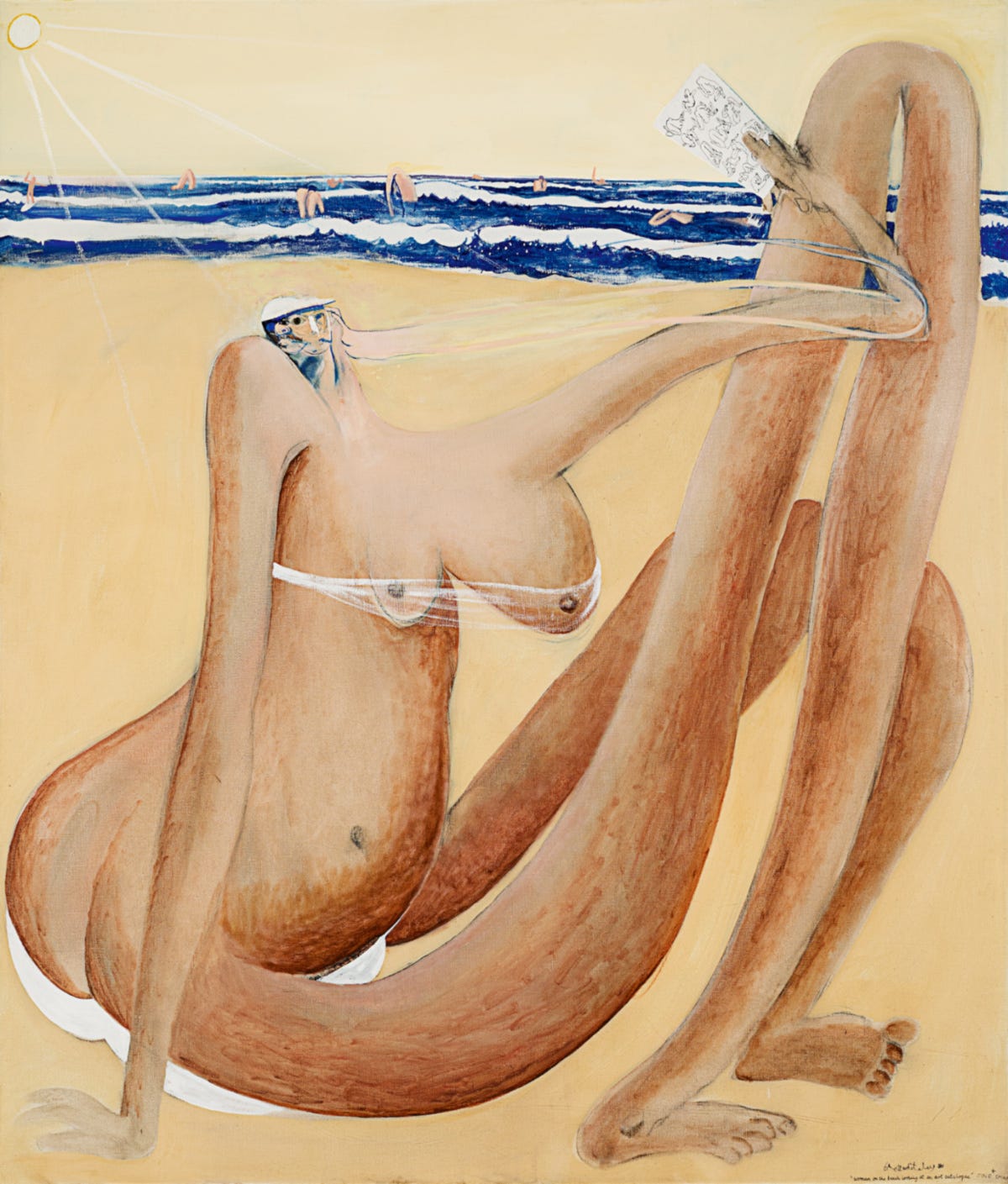
The highest result so far this year: Brett Whiteley’s Woman on the Beach Reading an Art Catalogue, sold by Smith & Singer.
$53.7 million
Total sales across the eight auction houses, 15.8% above H1 2025.
2,129
The number of lots sold, down 10.7% from H1 2025.
76%
The overall sell-through rate, up from 70% in H1 2025.
24%
The share of sold lots above $5,000 that were works by women, virtually unchanged from H1 2025.
48
The number of works that sold for at least $200,000, compared with 46 in H1 2025.
32%
The proportion of sales generated by the ten highest-priced works, up from 26% in H1 2025.
42%
The share of H1 turnover generated by Smith & Singer’s April auction.
A stronger top ten
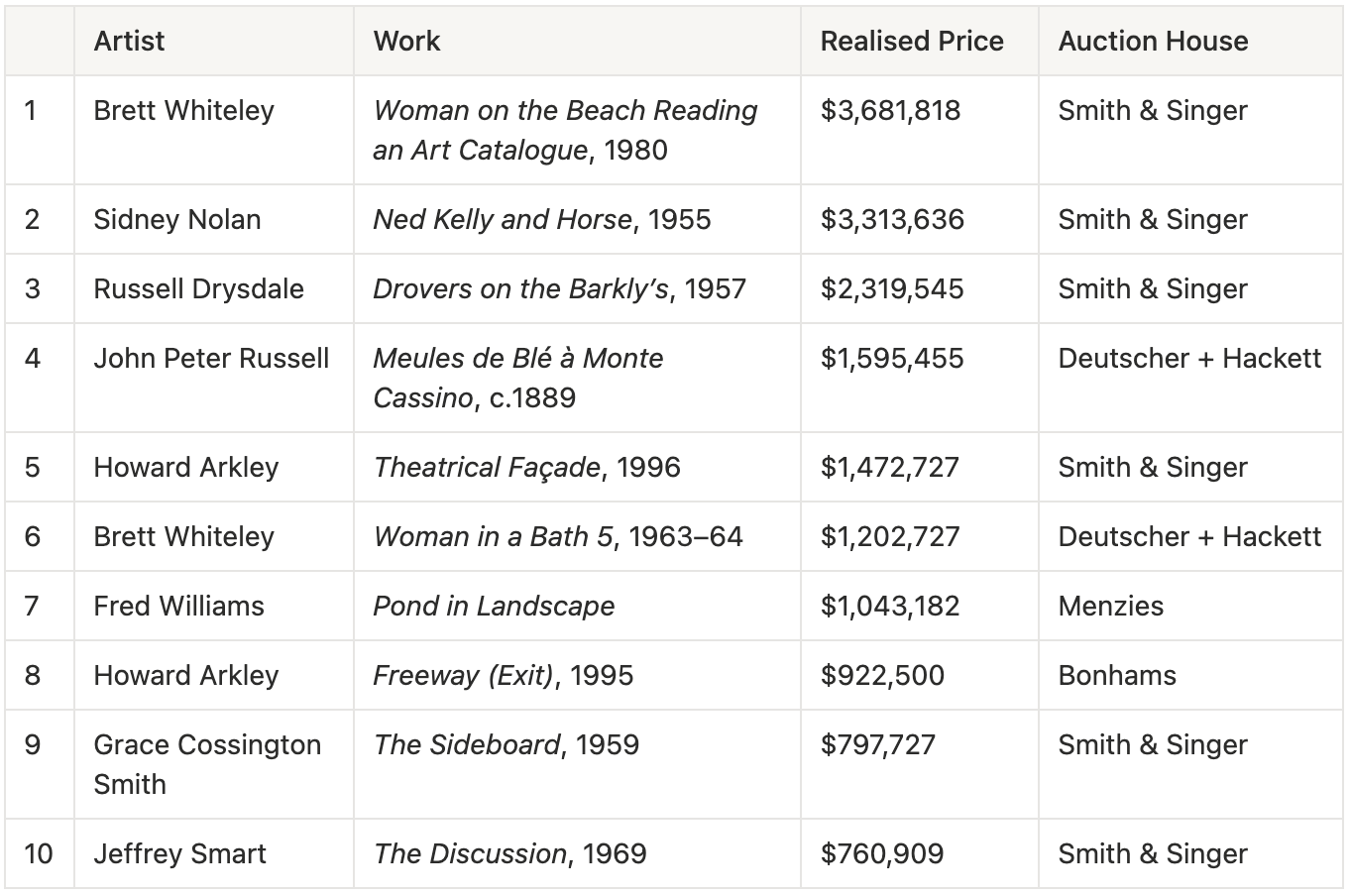
Seven works sold for more than $1 million, only one more than in H1 2025. The larger difference was the value concentrated at the top. The ten highest-priced works generated $17.1 million, up 40% from $12.2 million in H1 2025. Howard Arkley’s Neapolitan Delight, last year’s leading result at $2.45 million, would have ranked third this year. The tenth-highest price increased from $613,636 to $760,909.
Whiteley led with Woman on the Beach Reading an Art Catalogue. It hammered at its $3 million low estimate and realised $3.68 million including buyer’s premium.
The strongest competitive bidding came immediately below it. Nolan’s Ned Kelly and Horse achieved $3.3 million including premium against a $1.2 - $1.8 million estimate. Drysdale’s Drovers on the Barkly’s reached $2.3 million including premium against a $1.0 - $1.5 million estimate.
Together, the three works generated $9.3 million including premium, or more than 17% of the entire half-year market.
The list demonstrates the continued dominance of modernist twentieth-century Australian art. Whiteley, Nolan, Drysdale, Williams, Cossington Smith and Smart all appeared, alongside the Australian Impressionist John Peter Russell. The highest prices remained concentrated among a familiar group of established names.
One auction changed the headline
Smith & Singer’s April Important Australian & International Art sale had more influence on the market than any other auction.
Its 100 lots generated $23.4 million including buyer’s premium, with 89 works selling, making it the most successful art auction in Australian history.2 The auction accounted for:
42% of H1 turnover;
six of the ten highest-priced works;
eleven of the top 20; and
five new auction records.
Smith & Singer’s H1 sales almost doubled from the same period last year, increasing by 94%.
Growth extended beyond the very top

The market generated an additional $7.3 million compared with H1 2025, an increase of 16%, despite selling 255 fewer lots. Even excluding the top 10 results, the remainder of the market still increased by 7.1% vs H1 2025. The Australian recovery was therefore top-heavy, but not top-only.
The number of works offered declined by 618, while sell-through increased by more than six percentage points, from 70.0% to 76.4%. The reduction in transactions was therefore primarily a supply story with auction houses offering fewer works but selling a greater proportion of them.
Both the average and median prices increased. The average sold price rose almost 30%, from $19,451 to $25,211. More importantly, the median increased 28%, from $2,108 to $2,700. A few exceptional works can lift an average. A rising median suggests the improvement extended further through the market.
The price bands confirm that conclusion.

Every band above $10,000 grew. Sales between $50,000 and $100,000 recorded the largest proportional increase below the top tier, rising 19%. The $100,000 to $200,000 segment grew 17%, with the number of transactions increasing from 28 to 32, while the $10,000 to $50,000 range increased 5%.
Even after excluding the ten highest-priced works, the remainder of the market grew by 7.3%. The recovery was therefore top-heavy, but not top-only.
The weakness was concentrated below $10,000, where sales fell 14% and the number of sold lots declined from 1,908 to 1,626. Reduced supply appears to have contributed significantly to that fall.
The artists who drove the half-year
The ten highest-selling artists generated 51% of total sales, up slightly from 49% in H1 2025.
Brett Whiteley: 22 lots sold; 88.0% sell-through; $6.5m sales
Sidney Nolan: 16 lots sold; 69.6% sell-through; $3.9m sales
Jeffrey Smart: 9 lots sold; 100% sell-through; $3.1m sales
Howard Arkley: 6 lots sold; 85.7% sell-through; $2.7m sales
Russell Drysdale: 5 lots sold; 62.5% sell-through; $2.6m sales
Emily Kame Kngwarreye: 14 lots sold; 87.5% sell-through; $2.4m sales
Arthur Streeton: 10 lots sold; 76.9% sell-through; $2.3m sales
John Peter Russell: 2 lots sold; 100% sell-through; $1.6m sales
Grace Cossington Smith: 3 lots sold; 100% sell-through; $1.3m sales
Albert Namatjira: 16 lots sold; 100% sell-through; $1.2m sales
Whiteley led by a considerable margin. His 22 sold works generated $6.51 million, or 12% of the entire market. The $3.68 million top lot contributed more than half of that total, a second Whiteley exceeded $1.2 million, while Shampoo realised $306,818 after hammering at more than three and a half times its low estimate.
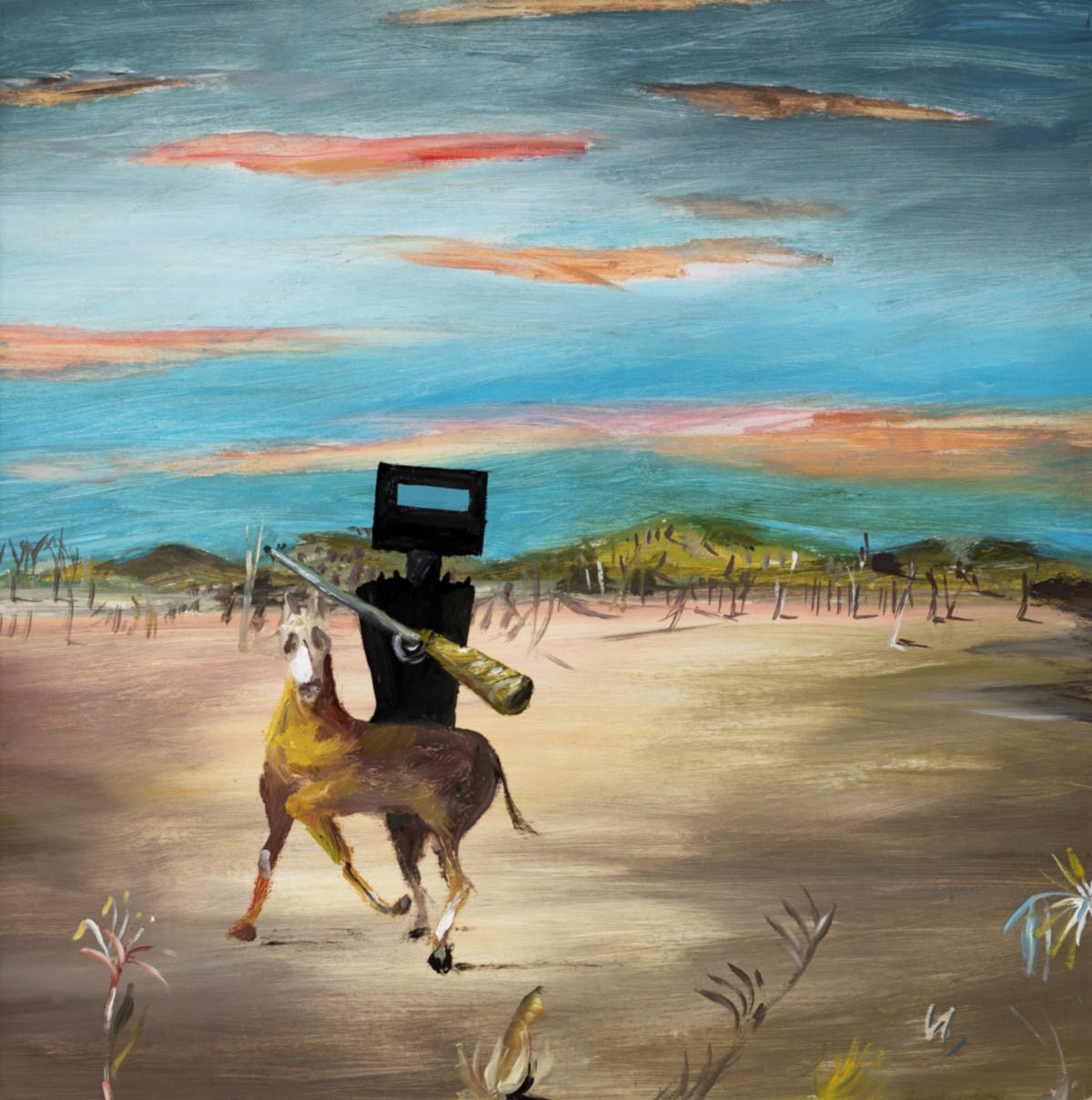
Nolan ranked second, largely because of Ned Kelly and Horse. 16 of his 23 offered works sold, giving him one of the weaker sell-through rates among the leading artists.
Most other artists on the list achieved their place through a few significant works selling for high prices. Albert Namatjira reached the top ten differently. None of his works exceeded $250,000, but all 16 sold. His $1.21 million total was built through broad and consistent demand rather than a single major result.
Competitive bidding, selective demand
Several works attracted bidding well beyond their low estimates:
Brett Whiteley, Shampoo: $250,000 hammer against a $70,000 low estimate (3.57x)
Cressida Campbell, Parsley Bay, Sydney: $600,000 against a $200,000 low estimate (3.0x)
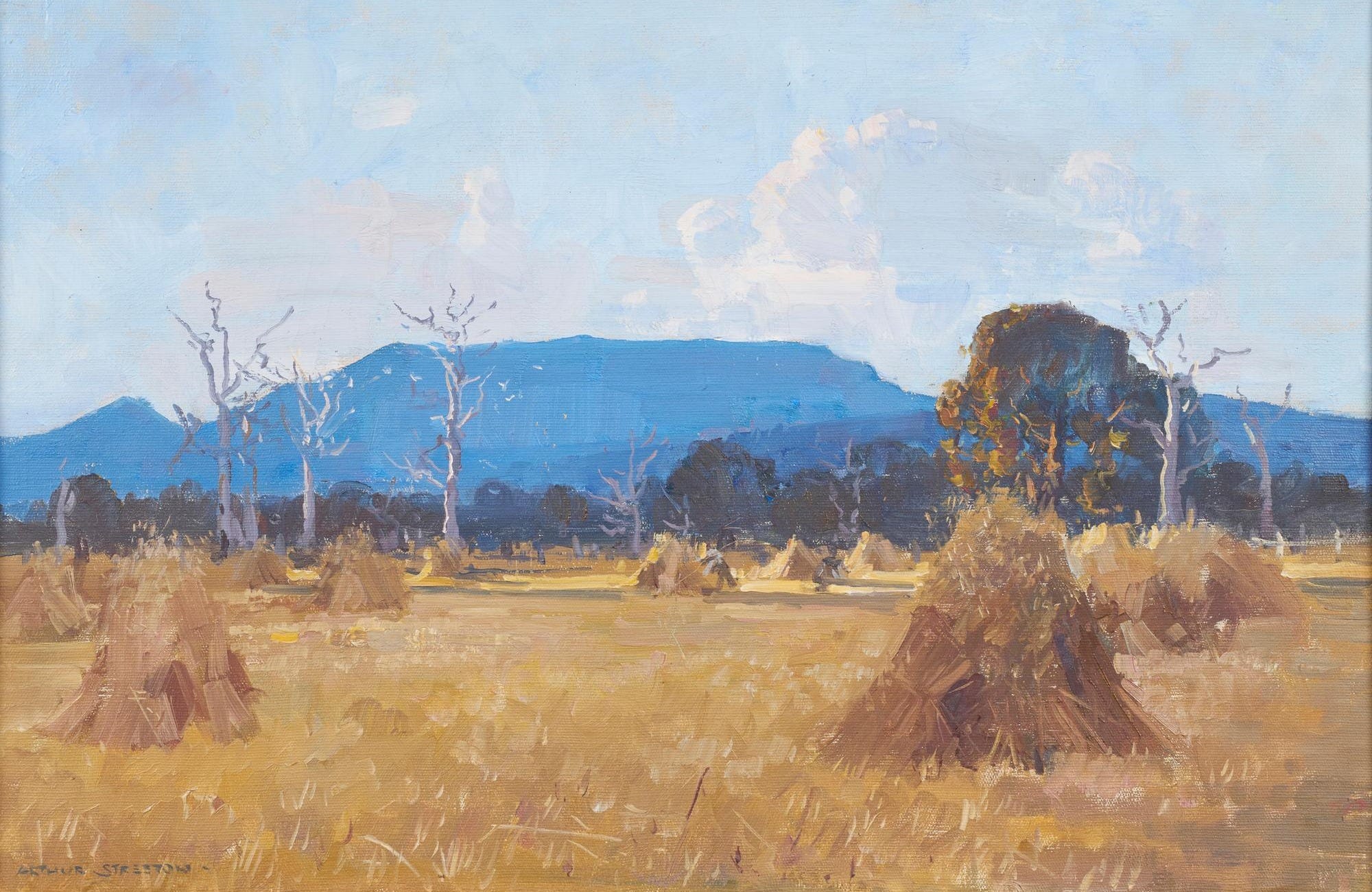
Arthur Streeton, Harvest and Mt. William: $550,000 against a $200,000 low estimate (2.75x)
Sidney Nolan, Ned Kelly and Horse: $2.7 million against a $1.2 million low estimate (2.25x)
Russell Drysdale, Drovers on the Barkly’s: $1.89 million against a low estimate of $1 million (1.89x)
At lower price levels, Oscar Namatjira’s Ghost Gums Near Hermannsburg hammered for $7,500 against a $500 low estimate. Mary Cecil Allen’s Studio Nude with Blue Headscarf reached $8,500 against $800, while two John Coburn works each made $13,000 against low estimates of $1,500.
The stronger market did not eliminate selectivity. Several significant works failed to sell:
Sidney Nolan, Burke and Wills, estimated at $300,000–$500,000.
Tom Roberts, Curlew Camp, Sirius Cove, Mosman Bay, estimated at $300,000–$400,000.
Fred Williams, Flooded Creek, estimated at $300,000–$400,000.
Fred Williams, Goomoolahra Falls, Queensland, estimated at $250,000–$350,000.
John Olsen, Wet Lands, estimated at $250,000–$350,000.
Rupert Bunny, La Cassette (The Casket), estimated at $200,000–$300,000.
Fred Williams provides the clearest example of the uneven demand. Pond in Landscape sold for more than $1 million, but two other substantial paintings failed to sell. His overall sell-through rate fell to 53%, from 68% in H1 2025.
Buyers were prepared to compete strongly for particular works, but an important name and a substantial estimate were not enough on their own.
Women mostly held their ground
Works by women accounted for 23.7% of sales above $5,000,3 almost unchanged from 23.4% in H1 2025, while the number of works stayed stable, increasing slightly from 177 to 182.

Their share of value moved in the opposite direction. Works by women generated $9.6 million, down 9.1% from H1 2025. Their share of sales value fell from 24.2% to 18.6%.
Part of the difference was the absence of a result comparable to Kngwarreye’s million-dollar Untitled (Awelye) in H1 2025. More broadly, the half-year’s largest prices were concentrated among male artists. The three highest-priced works generated $9.3 million, almost as much as every work by a woman artist combined.
5 of the 21 highest-priced works were by women:4
Grace Cossington Smith, The Sideboard — $797,727.
Cressida Campbell, Parsley Bay, Sydney — $736,364.
Ethel Carrick Fox, Place de la Concorde — $490,909.
Grace Cossington Smith, Drapery and Fruit in the Window — $429,545.
Emily Kame Kngwarreye, Awelye I, II, III & IV — $429,545.
Kngwarreye was the leading woman artist by aggregate value, with 14 works generating $2.35 million. She was followed by Cossington Smith at $1.26 million, Campbell at approximately $804,000, Clarice Beckett at $750,000 and Carrick Fox at $598,000.
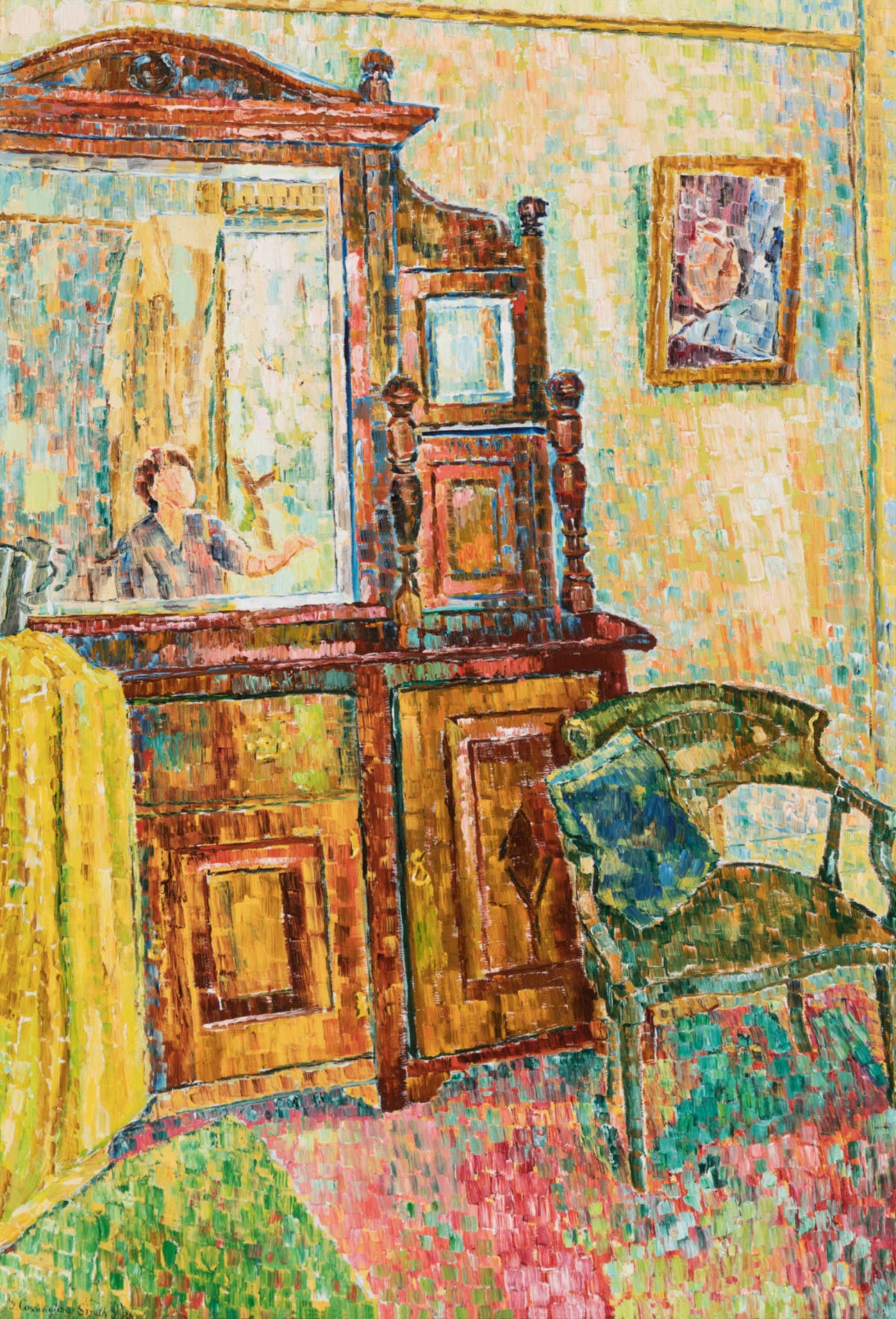
Cossington Smith had an especially strong half-year. All three works sold, including two of the five highest-priced works by women. Campbell’s Parsley Bay, Sydney was another standout, hammering for three times its $200,000 low estimate and realising $736,364 including premium.
Women maintained their share of higher-value transactions. They did not participate to the same extent in the surge at the very top.
More First Nations works sold, but their share of value declined
First Nations artists occupied two of the ten leading positions by aggregate value and supplied a significant group of the half-year’s strongest results. Among works sold above $5,000, the number by First Nations artists increased 10%, from 164 in H1 2025 to 181 in H1 2026. Their share of transactions also increased from 21.5% to 23.4%.
Despite those improvements, their share of value moved in the opposite direction. First Nations works generated $8.06 million, down 3.7% from $8.37 million a year earlier. Their share of sales value fell from 19.0% to 15.6%. As with the gender results, much of that decline was caused by the mix at the top of the wider market. H1 2025 included three Kngwarreye works above $500,000, including one above $1 million. No First Nations work appeared among the 20 highest-priced lots in H1 2026.
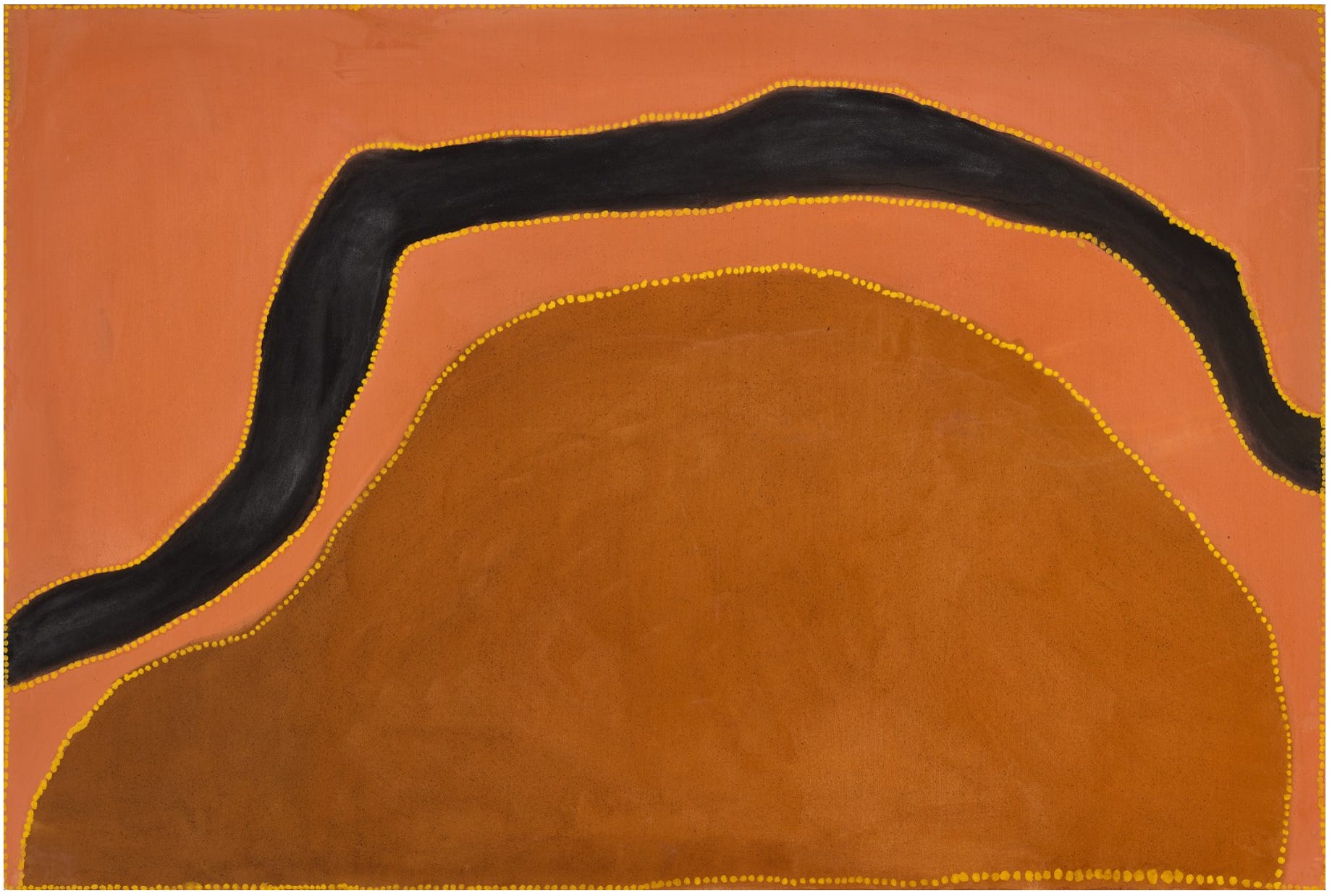
Kngwarreye nevertheless led First Nations artists with $2.35 million in aggregate sales, followed by Albert Namatjira at $1.21 million.
Other notable totals included:
Rover Thomas — approx. $725,000
Lin Onus — approx. $675,000
Paddy Bedford — approx. $368,000
Sally Gabori — approx. $362,000
Kngwarreye’s total was supported by several substantial results. Awelye I, II, III & IV sold for $429,545, while six other works exceeded $100,000.
Rover Thomas’s Langurr (The Rainbow Serpent) Making the River sold for $392,727, and two Lin Onus works exceeded $300,000.
While more First Nations works sold and their share of transactions increased, their lower share of value reflected the absence of a comparable result at the very top.
Recovery, with one substantial qualification
The H1 results provide evidence of a genuinely improving Australian auction market. Sales increased by almost 16%. Sell-through rose by more than six percentage points. Both the average and median prices increased. Every price band above $10,000 generated more revenue than it had a year earlier. Even after the ten or 20 most expensive works are removed, the remaining market still recorded growth. The improvement therefore extended beyond a handful of trophy lots.
But the recovery was not evenly shared. Smith & Singer generated 42% of sales from one auction. The lower end also weakened, with fewer works selling below $10,000 and less money spent in that segment.
Demand was strong for major works and improved through the middle of the market. The continuing question is whether auction houses can secure enough high-quality supply to sustain that momentum.
The first half of 2026 was stronger than the same period last year. The second half will show whether that strength was the beginning of a broader trend or the result of one exceptional auction season.
This analysis covers auction records from January to June 2026 at Smith & Singer, Deutscher + Hackett, Menzies, Leonard Joel, Bonhams, and Art Leven, Shapiro, and Gibson’s. Not all auctions are included: the focus in on the main Australian and Aboriginal auctions at each auction house, but also include multiples sales, individual significant works sold, and estate / single owner collections that appear to be focused on fine art and/or include important Australian works. Selling exhibitions are excluded. Unless otherwise stated, prices include buyer’s premium (but don’t include the GST component) and are in AUD. If a work has sold but no price has been published, then that sale value is not included in the sales totals - this happens infrequently and usually when a lot sells under the low estimate.
My data records only $22.4 million in sales including buyers premium. The discrepancy between this and what Smith & Singer reports is likely that their sales figures include (a) GST on top of their buyer’s premium; and (b) four lots that were recorded as sold without any price stated, usually an indication it sold below the low estimate, and impossible for me to include in sales totals.
For both women and First Nations, I’ve applied a $5,000 threshold as there is a long tail of artists below this threshold with incomplete artist demographics that limits the ability to get accurate results.
Out of 21 because 20th and 21st places were tied.