
They shall grow not old, as we that are left grow old:
Age shall not weary them, nor the years condemn.
At the going down of the sun and in the morning
We will remember them.
As ANZAC Day approaches this coming weekend, I wanted to look at one particular expression of remembrance through art and how that project now shows up at auction.
The Art of Remembrance
The Art of Remembrance opened just before ANZAC Day in 2015 as one of the country’s most ambitious public artworks, installed on the exterior of St David’s Soldiers’ Memorial Church in Auckland.
Max Gimblett created 7,000 brass quatrefoils for the project, which was inspired by Paul Cummins’ sea of ceramic poppies in the moat around the Tower of London in 2014 to commemorate the centenary of WWI.
The quatrefoil was already central to Gimblett’s practice, but here it took on new associations: part poppy, part cross, part abstract sign of peace. Each piece was designed to be about the size of a soldier’s hand. In that context, the project offered buyers both a small Max Gimblett work and a personal act of remembrance.
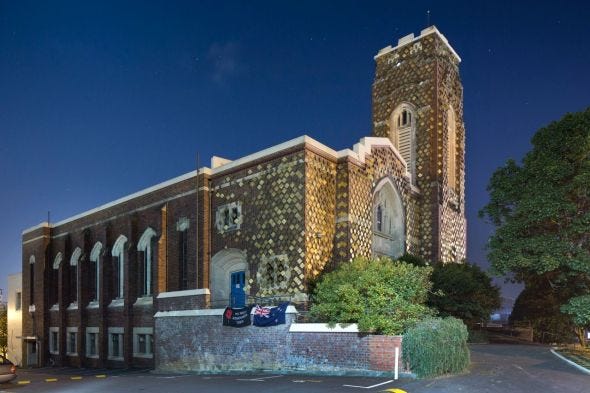
Those 7,000 quatrefoil were installed across the church for three months, turning the building into a glimmering act of remembrance while also raising money to help save St David’s. The project ultimately raised over $1 million for the preservation of the church.
The Remembrance Auction Market
The individual works were originally sold for $100 each and featured one of seven designs. These quatrefoils have come up at auction around 250 times over the last 5 years. That probably makes them the most resold work in New Zealand art history. The highest price paid for an individual quatrefoil was a staggering $5,069, while a full set of seven sold for just under $20,000.
Below, I’ve dug into the numbers to examine how prices have evolved and what people are actually prepared to pay for one of these works.

Across the top 10 prices realised (all above $4,000), one design appears three times, while another two designs appear twice each. But it does not look as though collectors are gravitating decisively toward one design over the others. In my analysis, I’ve treated all seven quatrefoils as equal, and I haven’t factored in condition, surface variations, or imperfections between individual works.
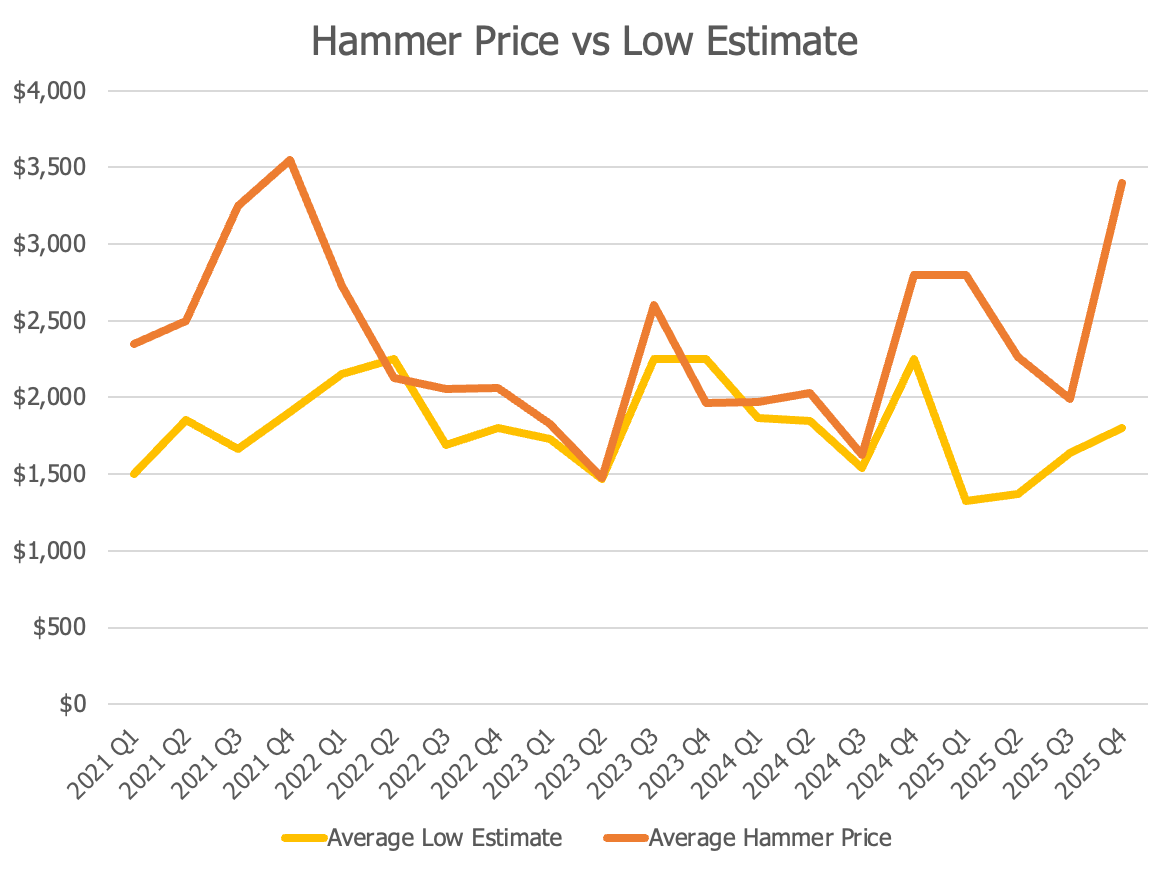
Let’s start with average prices over time. The chart below shows the average hammer price (dark orange) against the average low estimate (light orange) by quarter.
A few things stand out:
Peak Prices: Prices peaked in 2021 and early 2022. In response, auction houses lifted estimates above $2,000, but sell-through then fell away, with more than half the lots in Q2 2022 failing to sell1. That suggests buyers thought expectations had run too high.
Market Stabilised: Average prices then stabilised through the rest of 2022, before lifting again in late 2024 and throughout 2025.
Conservative Estimates: Despite swings in hammer prices, low estimates have mostly remained in the $1,500 to $2,000 range. In other words, auction houses have stayed relatively disciplined in their expectations, and if anything were particularly conservative in 2025 relative to the actual hammer prices.
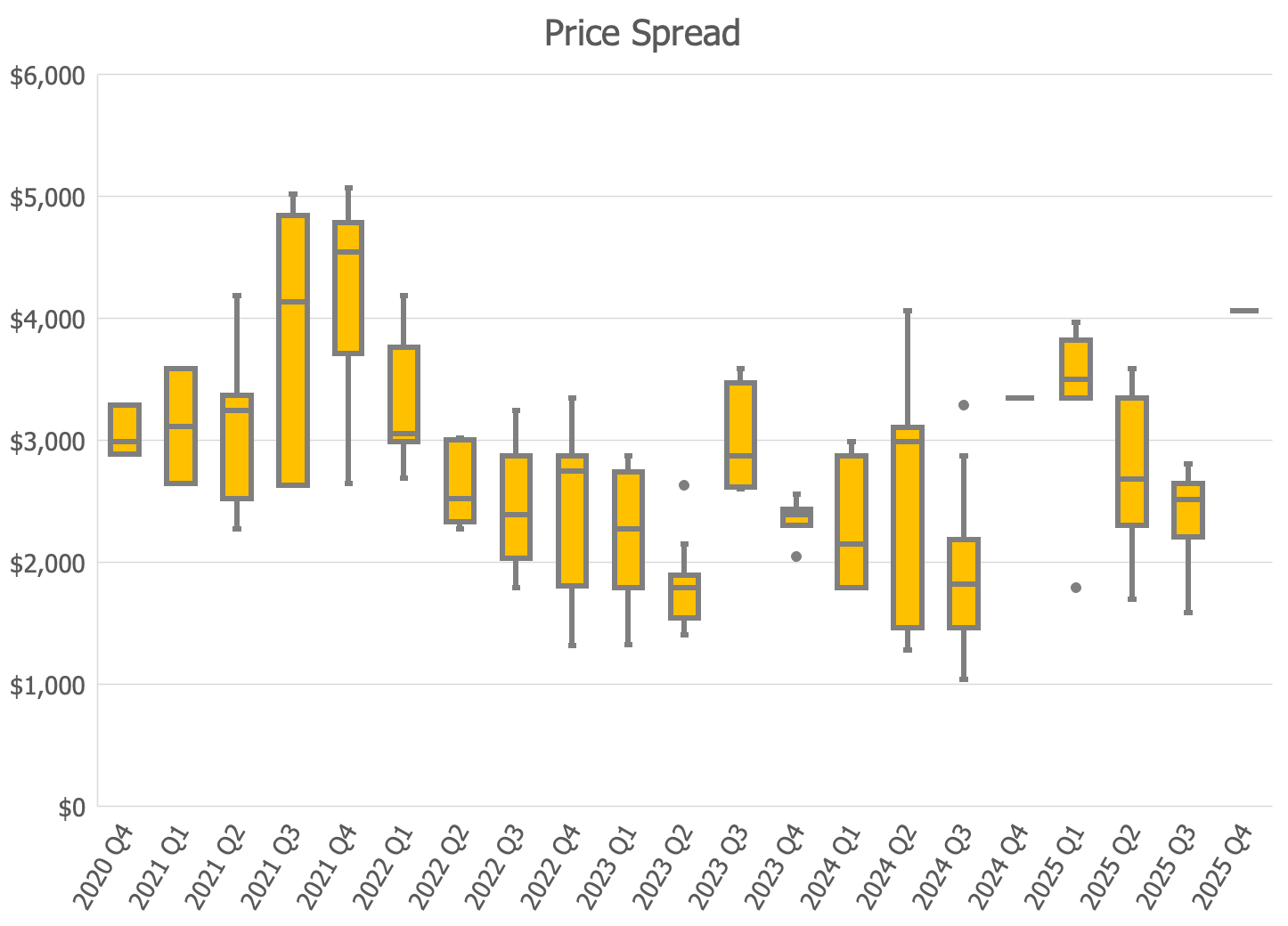
For those who want to go deeper into the numbers, the chart below shows the spread of individual prices, with the horizontal line inside each box marking the median. These prices include buyer’s premiums.
A few observations:
Peak Prices: This reinforces the strength of the market in 2021 and early 2022, with median prices above $3,000 for five consecutive quarters. and that buyers were willing to pay up to $5,000 for a quatrefoil in late 2021, a peak that has not since been matched.
Wide Spreads: Median prices then mostly sat in the $2,000 to $3,000 range until mid-2024 reinforcing what we saw with average hammer prices above, but what’s interesting is the wide spreads within individual quarters, with top and bottom prices sometimes more than $2,000 apart.
A bounce back? In late 2024 and 2025, there were three out of five quarters where median prices moved back above $3,000, with some individual sales again topping $4,000. Despite these promising recent price points, I think we’re more likely entering a phase of lower prices, read on to my conclusions to see why.
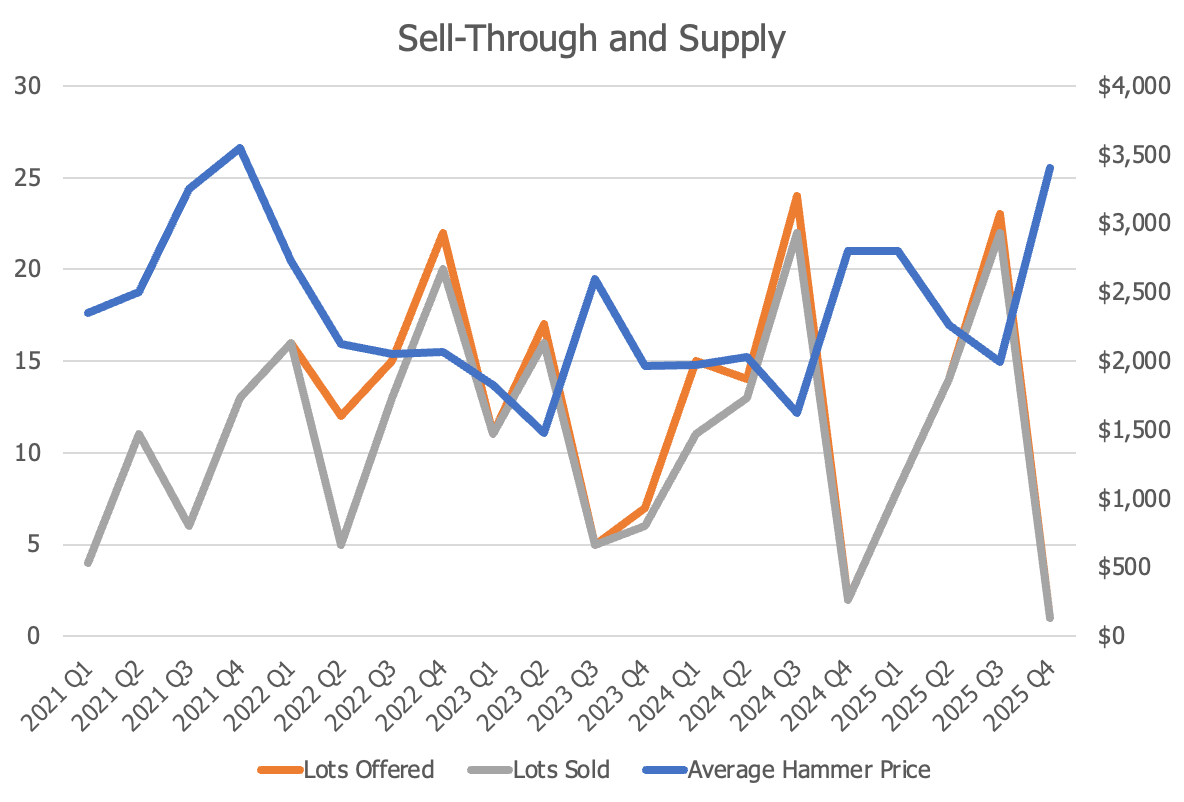
The sell-through on these Remembrance works is high. Across the 20 quarters of between 2021 - 2025, 11 of those quarters saw every lot sell. There were only 4 quarters were sell-through dropped below 90%, that was Q2 / Q3 2022, ie. the period noted above after the peak prices of early 2021, and Q4 2023 / Q1 2024 which came right after a brief rebound of prices in Q3 2023.
Interestingly, most of these quatrefoils have been sold at Webb’s. Over the last five years, around 63% of sales have gone through Webb’s, with Art+Object the next highest at 24%. Together, those two houses account for almost 90% of the market. Webb’s is not the biggest art auction house in New Zealand, but it certainly owns the secondary-market for these works. If you are in the market to buy one, that is the first place I would be looking.
My Conclusions
I don’t think these Remembrance works move in a neat cycle. But there is a pattern. Prices rise over a run of quarters, then cool as more works come back to auction, before prices lift again when supply tightens. The price drop is often followed by a quarter or two of poor sell-through rates.
What matters most here is supply. These works were made in an edition of 7,000, so scarcity is not really the story. When only a few appear, prices can jump. When more come up, prices tend to soften.
Where do prices go in 2026? Will see a repeat from mid-2022 with prices dropping further? Or is this more like early 2024 with prices building back up again?
I expect we’ll see another quarter or two of prices staying flat or dropping a little further, before we see a rebound of prices in late 2026.
My hunch is that it’s more like 2022 and we’re in the middle to late stages of another cycle of decreasing prices. With 7 works auctioned in Q1 2026 but only 2 of these selling ($2,868 and $2,681 including buyer’s premium), I expect we’ll see another quarter or two of prices staying flat or dropping a little further, before we see a rebound of prices in late 2026. Of course, with someone willing to pay over $4,000 in Q4 2025, don’t rule out seeing some high prices realised even while median prices continue to drop, but buyers look more price-sensitive than they did at the peak
Personally, I still would not buy one. At these levels, I think there are more interesting Max Gimblett works to spend that money on. Good unique works, particularly on paper, can come up at auction for around $5,000, and there are also a number of interesting screenprints available below that level.
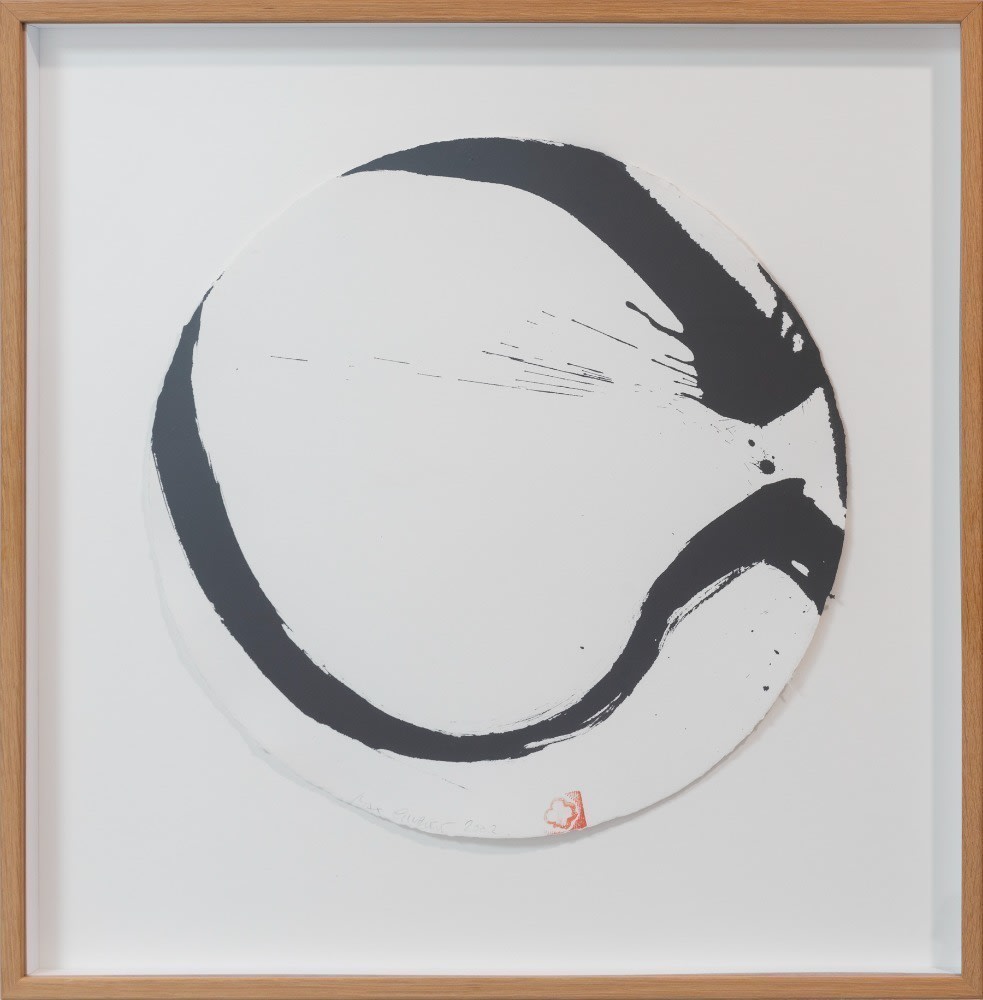
But if I were buying one of the Remembrance quatrefoils, I would stay disciplined and wait for the right price: under $2,500 including buyer’s premium, and ideally under $2,000.
To me, this is a market where patience matters. In most quarters, you’ll find a work selling for these prices, you do not need to chase. There is nearly always another one coming.
Whatever you think of these Remembrance works, do remember the reason they were made in the first place.
The only time sell-through rates dropped below 70%, aside from Q1 this year