
These are three artist snapshots from the 2025 New Zealand Fine Art Auction Market Report. A comprehensive, data-driven review of the year’s key results, trends, and pricing signals. Highlights from the report were previously covered here.
Robyn Kahukiwa
Art rooted in mana wāhine and Māori sovereignty
Robyn Kahukiwa (1938–2025) was a pioneering Māori artist whose bold, narrative paintings played a defining role in expressing tino rangatiratanga (sovereignty) and mana wāhine (female leadership and authority). Her work is instantly recognisable, often depicting atua wāhine (Māori goddesses) in vivid colour and strong graphic forms, and is deeply rooted in Māori identity, women’s empowerment, and political activism.
Across a career spanning more than five decades, Kahukiwa used her art to reframe New Zealand history through a Māori lens, foregrounding resilience, whakapapa, and cultural strength. Early recognition, including the landmark Wāhine Toa exhibition in 1983, established her national profile, while later honours such as the Te Waka Toi Supreme Award in 2020 confirmed her lasting influence. A major retrospective at the New Zealand Portrait Gallery in 2024 further cemented her standing. She passed away in April 2025.
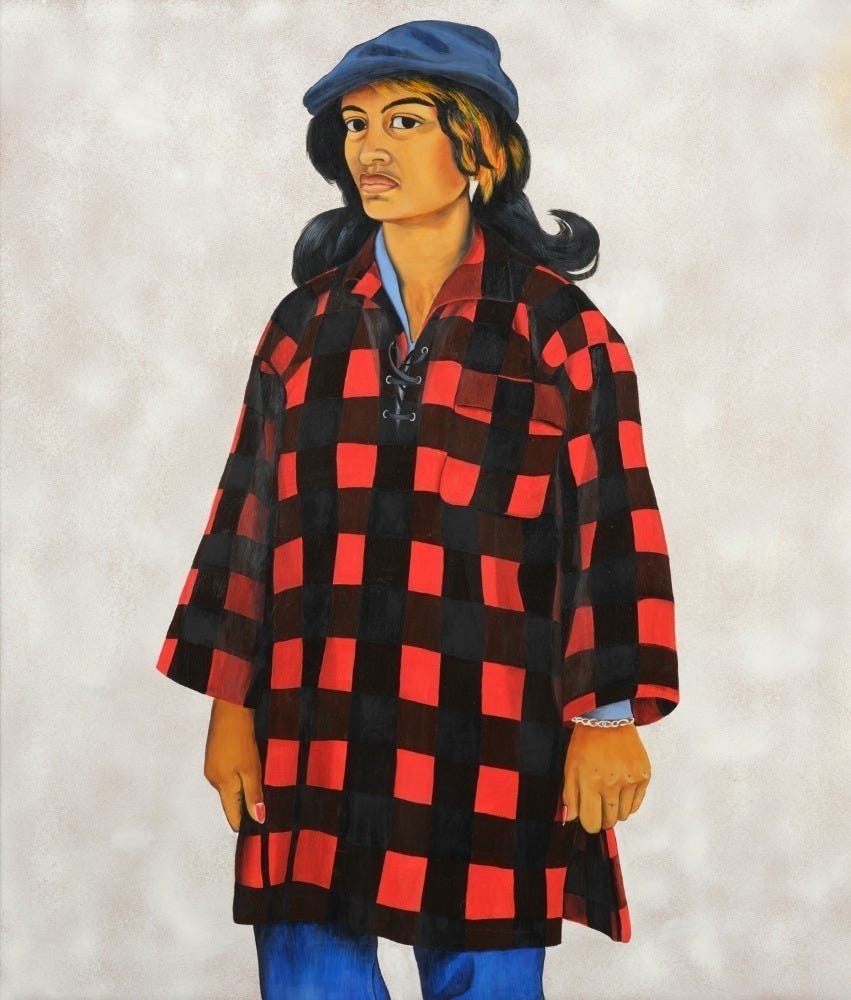
In the wake of her passing, auction activity for Kahukiwa’s work increased sharply. The number of works sold more than doubled year-on-year, rising from 15 in 2024 to 34 in 2025, while total sales value also more than doubled. Notable results included Girl in a Bush Shirt (1982), which achieved $52,580 at Webb’s in March. Two works on paper, Hongi at Dunbar Sloane and Wāhine with Three Feathers at International Art Centre, also attracted strong bidding, selling well above their high estimates.

Kahukiwa’s career auction record remains Family Group (1973), which sold for $64,865 in 2021. Importantly, her market continues to offer accessible entry points, with more than half of her works selling for under $2,000 in 2025.
The 2025 results point to increased recognition of Kahukiwa’s importance within New Zealand art history, with her work attracting renewed attention in the secondary market following decades of cultural and artistic impact.
Peter Peryer
A defining voice in New Zealand photography

Peter Peryer (1941–2018) was one of New Zealand’s most significant photographers, best known for psychologically charged images that sit between documentary and the surreal. Working primarily in black and white, he photographed animals, objects, landscapes, and people with a deliberate stillness that transformed familiar subjects into something quietly unsettling. Works such as Dead Steer (1987), Self-Portrait with Rooster (1977), and later still-life images established Peryer as a central figure in New Zealand photography. His work is held in all major public collections, and in 2023 he was the subject of a major retrospective at the Sarjeant Gallery, featuring 180 prints produced between 2003 and 2018.
Peryer’s inclusion among the strongest momentum gains of 2025 reflects a material shift in auction activity. The number of works sold more than tripled year-on-year, rising from 10 in 2024 to 34 in 2025, while total sales value increased from just over $12,000 to more than $163,000. This resurgence was driven largely by Art & Object’s March 2025 sale of the Grant Kerr Collection, described as the most important grouping of Peryer prints held in private hands. The auction included the triptych Jam Rolls, Neenish Tarts, Doughnuts (1983), which set a new auction record at $30,463.

Despite this renewed momentum, Peryer’s market remains relatively accessible. Many works continue to trade at modest price levels, offering entry points for collectors even as demand strengthens for key images and higher-quality prints. The 2025 results suggest a broader reassessment of Peryer’s contribution to New Zealand art history, with his work attracting renewed attention in the secondary market.
Pauline Yearbury
Modern Māori narratives carved in wood
Pauline Yearbury (1926–1977) was a pioneering Māori modernist whose carved and painted panels reimagined Māori creation narratives through bold form and design. Of Ngāpuhi descent and trained at Elam School of Fine Arts in the 1940s, she was one of the first Māori women to graduate from the school. Working from a studio in Russell with her husband James Yearbury, Pauline designed intricately stylised rimu panels that James helped carve and stain. This collaboration produced some of the most distinctive works of mid-century Māori art.
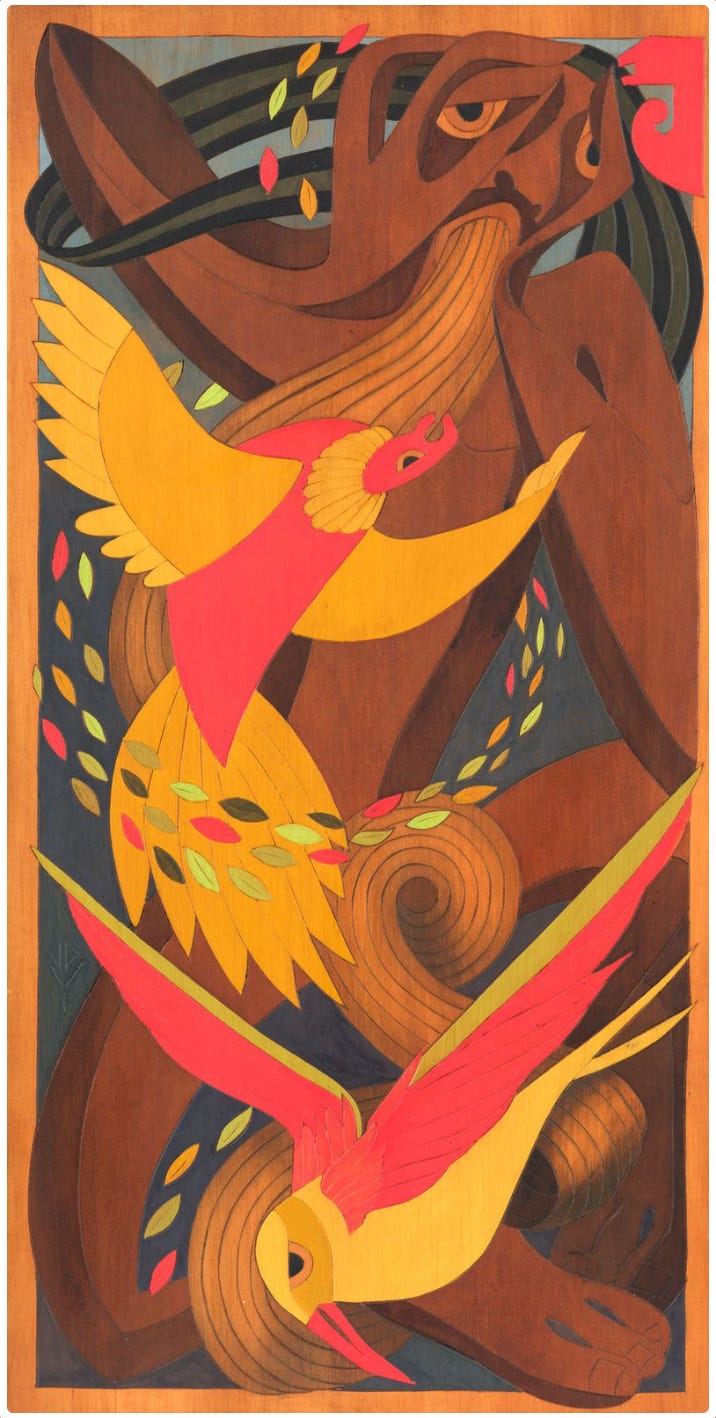
Yearbury’s carvings often depicted atua (Maori gods) and ancestors with bold lines, geometric abstraction, and earthy colour palettes. Her work brought traditional storytelling into a strikingly modern form. Yearbury’s contributions have recently gained renewed institutional recognition, with major inclusions in Modern Women: Flight of Time at Auckland Art Gallery and a solo survey at Te Uru Contemporary Gallery in 2025. The Russell Museum also holds a permanent collection of the carvings.
Following this curatorial spotlight, demand for the Yearburys’ work has surged. In 2024, two carved panels sold in Auckland for around $30,000 each — around 15x their low estimates. In 2025, a rare oil painting by Yearbury, The Offering (1968), achieved a new record of about $37,000 at International Art Centre.

The recent resurgence reflects growing collector awareness of Pauline Yearbury’s cultural and artistic importance. Her carved and painted works occupy a distinctive place in New Zealand art history, and availability remains limited, particularly for works of scale and quality.