
This analysis is an excerpt from the 2025 Australian Fine Art Auction Market Report.1 A comprehensive, data-driven review of the year’s key results, trends, and pricing signals. Highlights from the report were previously covered here. I have updated the article with insights from H1 2026.
A market dominated by a handful of names
Two things moved the Australian Indigenous art market in 2025: museum attention and good works coming to auction.
On the institutional side, Tate Modern staged a major solo exhibition of Emily Kame Kngwarreye in 2025, while the NGV’s The Stars We Do Not See is touring the United States as the largest exhibition of Aboriginal and Torres Strait Islander art ever staged in North America, both meaningful signals of global recognition. In Australia, exhibitions including Yolŋu power: the art of Yirrkala at the Art Gallery of NSW sustained attention, building on major 2024 programming such as Ever Present: First Peoples Art of Australia and the National Gallery of Australia’s exhibition of Vincent Namatjira.
The auction market also benefited from a strong supply of major works. Deutscher + Hackett described its March 2025 Indigenous sale as its strongest in nearly two decades by sales value, with several works materially exceeding estimates.
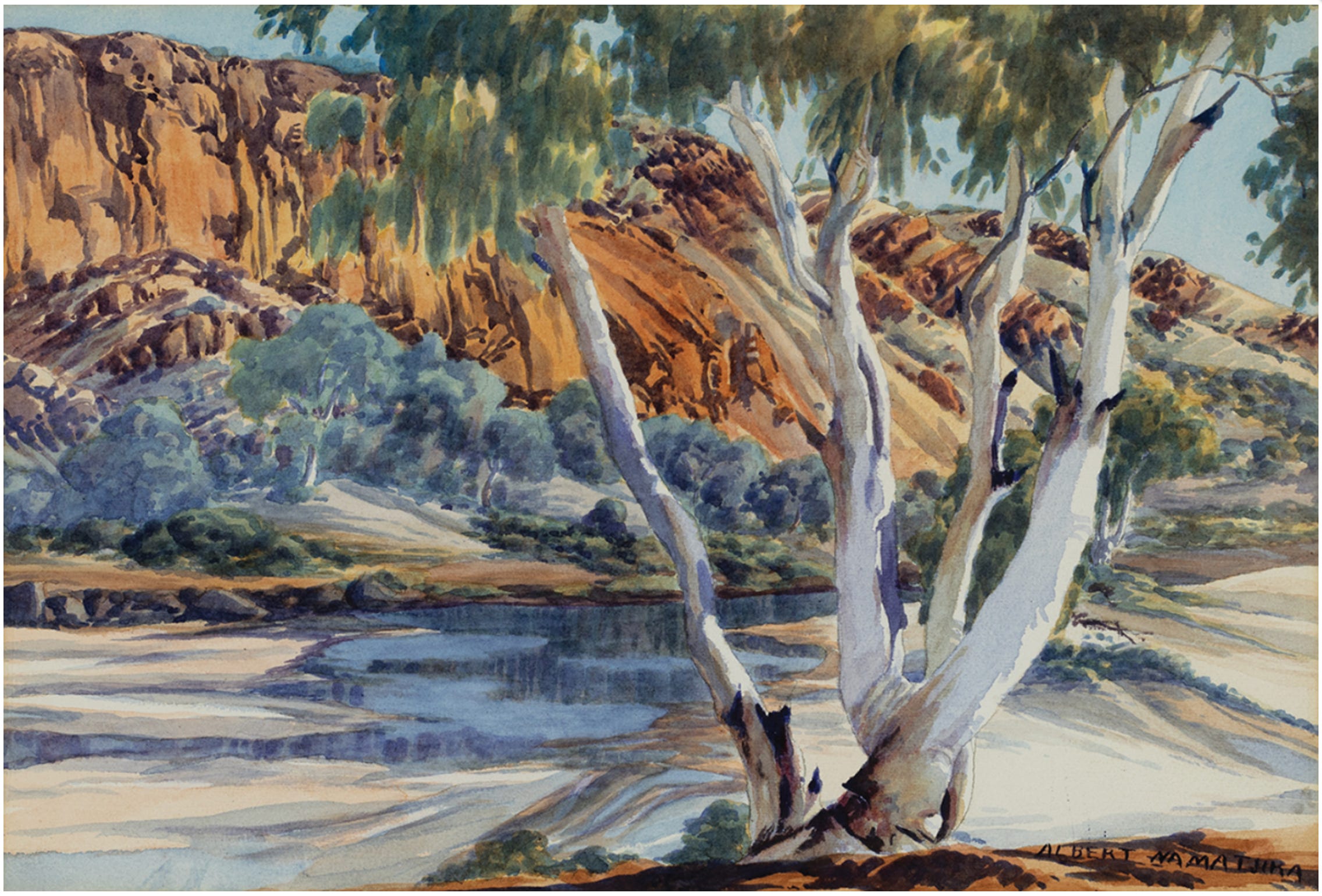
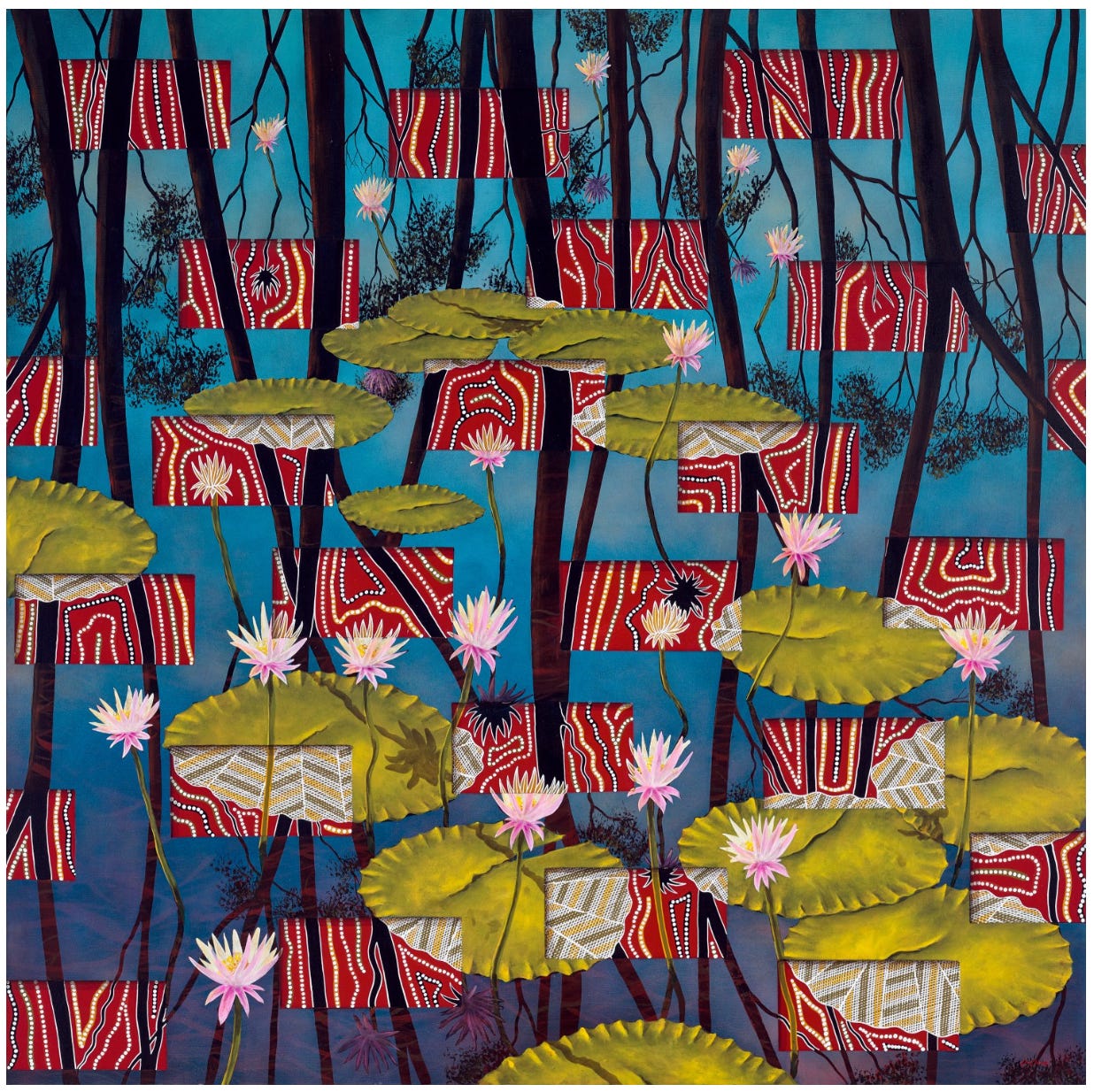
At the top of the market, results remained highly concentrated. Kngwarreye accounted for five of the ten highest-priced First Nations works of the year, with Lin Onus and Albert Namatjira taking two positions each. Kngwarreye alone represented roughly 38% of total First Nations auction sales by value, illustrating sustained demand for her works.
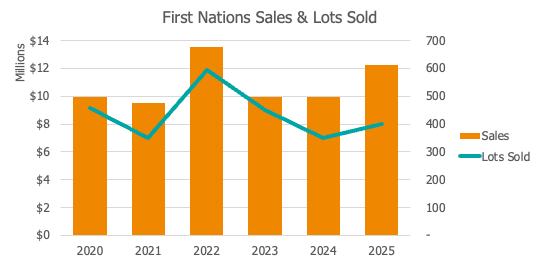
Even so, the broader figures suggest the market was strengthening beyond a single artist. Total sales reached $12.2 million, up 23% on 2024. The average sold price increased to $30,500, while 25 works sold for more than $100,000, up from 19 the year before.
At the same time, entry points remained relatively accessible. The median sold price fell from $8,600 to $7,500, partly reflecting a 14% increase in the number of works sold.
Taken together, 2025 showed a market strengthening at both ends: higher prices for important works, but also more transactions at lower price levels. The major caveat was concentration. A relatively small group of artists, particularly Kngwarreye, continue to account for a disproportionate share of total value.
H1 2026: Steady sales and continued concentration
The first half of 2026 broadly reinforces the view from 2025.
First Nations works generated $8.1 million, slightly down 4% from $8.4 million in H1 2025. The reason was largely at the very top of the market. H1 2025 included three Kngwarreye works above $500,000, including one above $1 million. In H1 2026, no First Nations work appeared among the 20 highest-priced Australian auction results.
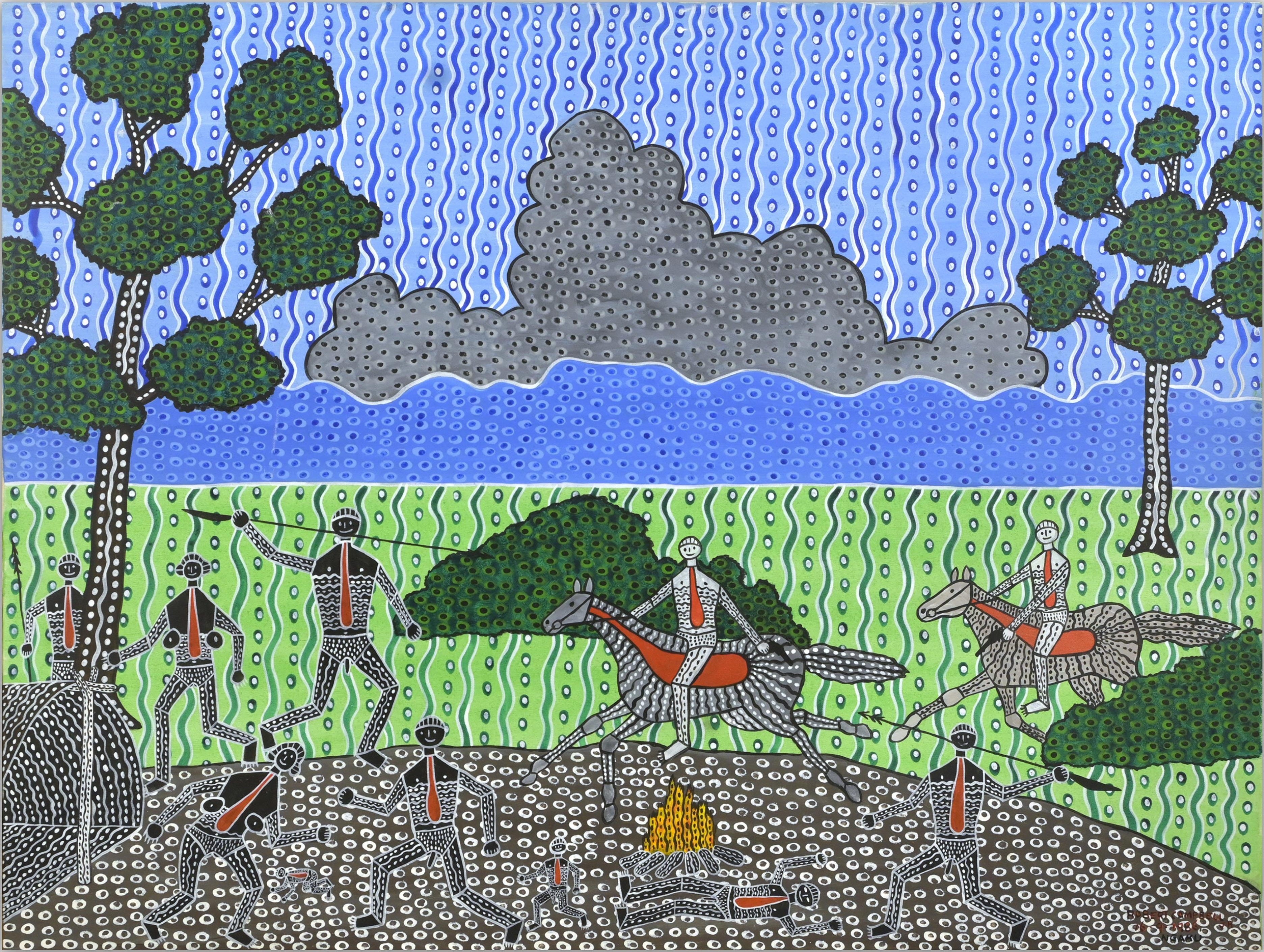
Kngwarreye nevertheless remained the leading First Nations artist, with 14 works generating $2.35 million. Albert Namatjira followed with $1.21 million from 16 works, all of which sold. Lin Onus generated approximately $675,000, while other leading artists not previously mentioned included Rover Thomas with approximately $725,000 in sales, Paddy Bedford $368,000 and Sally Gabori $362,000. Robert Campbell Jnr was the only other artist whose works delivered more than $100,000.
Kngwarreye’s strongest result was Awelye I, II, III & IV at $429,545. Rover Thomas’s Langurr (The Rainbow Serpent) Making the River sold for $392,727, while two works by Lin Onus exceeded $300,000.
Among works selling for more than $5,000, the number of First Nations works increased 10%, from 164 in H1 2025 to 181 in H1 2026.2 Their share of transactions also increased from 21.5% to 23.4%. That suggests demand remained broad, with First Nations artists representing almost one in four works sold above $5,000 during the half-year.
Institutional attention has also remained strong into 2026. The National Gallery of Australia’s Indigenous Art Triennial, the NGV’s FUTURE COUNTRY and AGWA’s I AM all point to sustained museum support for First Nations art across both established and emerging artists.
The first half of 2026 therefore reinforces the strength of the underlying market. Sales value held close to last year despite the absence of any exceptional $500,000+ results, while the number of works sold increased.
The more interesting question is which First Nations artist the market rallies around next. Robert Campbell Jnr is having his moment in the spotlight, with auction records reaching new highs over the past 12 months.
Methodology: Data has been compiled from six Australian auction houses: Art Leven, Bonhams, Deutscher and Hackett, Leonard Joel, Menzies, and Smith & Singer. The analysis covers auctions held between 1 January 2025 and 31 December 2025 and includes only sales primarily focused on fine art. The 2026 update includes results from Shapiro and Gibson’s.
I’ve applied a $5,000 threshold as demographic data for artists below this is not as accurate.